Review

REVIEW: Melissa Ashley’s ‘The Birdman’s Wife’

AusRomTodaymelissa-ashley

What AusRom Today thought:

Detail rich, and perhaps rather heavy at times, The Birdman’s Wife is overall a rather compelling read which highlighted the historical tendency for women to be relegated to stand behind their husbands regardless of how much they contributed to his fame. Throughout the novel it is clear that Melissa Ashley’s research is comprehensive and extensive and this extends from her depictions of life in the 1800’s in both London and Australia, life as a woman, wife, and mother during these times, the discoveries made by husband John Gould, and Elizabeth’s life as a professional illustrator and wildlife pioneer in what was essentially a man’s world.

A fascinating read that will endear itself to those interested in historical fiction, issues faced by women historically (arguably still today), ornithology, and the creative arts.

A simply stunning debut novel from a novelist, who given how little Elizabeth Gould was acknowledged in her lifetime, has posthumously shone the spotlight on Gould celebrating her personal and professional achievements in a touching and considered manner.

Review

Isobel Blackthorn review: The Birdman’s Wife

What a delight it is to read stories of historical figures passed over by history probably because they were women. An even greater delight when they are told well, as is very much the case with Melissa Ashley’s The Birdman’s Wife.

30634833

Elizabeth Gould was indeed a remarkable woman. “Inspired by a letter found tucked inside her famous husband’s papers, The Birdman’s Wife imagines the fascinating inner life of Elizabeth Gould, who was so much more than just the woman behind the man.

Elizabeth was a woman ahead of her time, juggling the demands of her artistic life with her roles as wife, lover and helpmate to a passionate and demanding genius, and as a devoted mother who gave birth to eight children. In a society obsessed with natural history and the discovery of new species, the birdman’s wife was at its glittering epicentre. Her artistry breathed life into hundreds of exotic finds, from her husband’s celebrated collections to Charles Darwin’s famous Galapagos finches.

Fired by Darwin’s discoveries, in 1838 Elizabeth defied convention by joining John on a trailblazing expedition to the untamed wilderness of Van Diemen’s Land and New South Wales to collect and illustrate Australia’s ‘curious’ birdlife.

From a naïve and uncertain young girl to a bold adventurer determined to find her own voice and place in the world, The Birdman’s Wife paints an indelible portrait of an extraordinary woman overlooked by history, until now.”

It is only the hardboiled cynic who won’t fall into this story as though in love, won’t be seduced by the intimate narrative style. Here is a story, articulated in a voice commensurate with the era, of a life acutely observed, the sort of story that seems to flow from the pen, belying the many hours and months if not years of research that went into it. It isn’t easy to breathe life into history in fictionalised form. Too often the reader will sense contrivance, or stumble through an unconvincing scene. It’s a fine balance between fact and narration every step of the way and Ashley pulls it off with aplomb.

This is a work imbued with optimism and hope. There is an almost playful romantic quality at first, as a flirtation between Elizabeth and her soon to be husband evolves, yet the story soon departs from romance, as the practicalities and the tragedies of her life unfold, along with what can only be described her life’s work.

The Birdman’s Wife is a story of passion and depth of thought told with an empathy so deep the reader may look up from time to time to find herself in a room filled with specimens, the floor littered with sketches, and Elizabeth herself seated nearby.

Many thanks to NetGalley and Affirm Press for my review copy.

Isobel Blackthorn

Review

The Birdman’s Wife – Book Review by Kali Napier

the-birdman%27s-wife-coverThe spoiler alert in this book review is that it is based on a real-life woman: Elizabeth Gould, the wife of an eminent ornithologist / taxidermist, John Gould. If you look up John Gould, you’ll find his Wikipedia entry, which says, “A bird artist”, describing his monographs as “illustrated by plates that he produced with the assistance of his wife, Elizabeth Gould”.

Further enquiry into Elizabeth’s life yields an Australian Dictionary of Biography entry, written by A.H. Chisholm in 1944: “It would appear that the strain of motherhood, together with the executing of approximately 600 drawings for publications, had sapped her vitality.”

600 drawings? Executing? Not merely assisting? In addition to ‘motherhood’, without explanation that this meant eight births.

Too often I hear (usually from men) that women never did anything in history to write about. What they are generally referring to are those ‘great deeds’ of men who were able to dedicate their lives to and sustain an uninterrupted focus on their area of specialisation. Women’s yearnings were sidelined and their lives circumscribed by multiple childbirth.

A.H. Chisholm wrote a ‘complete’ biography of Elizabeth Gould in 1944. In contrast, Melissa Ashley has written a fictional biography, or biographical fiction, of her in The Birdman’s Wife, which revitalises Elizabeth, colouring in her passions, her struggles, her continual negotiation of the demands of being a working artist and a mother.

This beautifully written novel presents a ‘complete’ picture of a family unit—that one man’s crowning achievements were in fact a family enterprise. John Gould may have been able to strut about like a peacock, but his ‘story’ his more complete when put in context alongside the female of his species, their young, and the materials from which he made his nest.

Early in the novel, approaching her first childbirth, Elizabeth muses:

“I would line the nest for our future collaborations. I was made for foraging. I would gather reeds and sticks, bits of straw and cobweb, mosses and grasses, insect wings and shell particles, torn petals and seed husks, all of which I would weave and press into place. My role for now was to assemble a dwelling in which we might raise our complementary talents. What did it matter if I were the nest-based hen, while John flared his pretty peacock’s tail strutting about Regent’s Park?”

As a work of historical fiction, The Birdman’s Wife does not attempt to make Elizabeth a ‘feisty heroine’ anachronistically questioning the gender inequalities of the day. Instead, her voice feels authentic, and Elizabeth wants to be able to raise a family, make a home, and to draw. But she is conscious that she has ambitions, pushing gently against the gender norms. “By my works, I stood apart. As did Lady Franklin… a woman who, like me, was not following the path society had set out for her, but rather forging her own way.”

Statements by her husband, such as “I have a bird-sketcher of my very own. Trained, talented. And she costs nothing at all” do not have the same effect on her that they would on a modern-day woman. She does not see herself as on a par with Edward Lear, whom her husband employs, rather she is excited at the opportunity for professional development by working alongside the noted lithographer.

Ashley has done Elizabeth Gould a great service for imagining her life within the parameters of what would have been possible in her circumscribed life of multiple childbirth and limited professional opportunities. It is because of these parameters that the reader perceives how incredible it was for Elizabeth to venture with her husband to Australia, making personal sacrifices in leaving the children behind.

This sacrifice is a constant sore spot for Elizabeth, as preoccupied as she is with sketching birds in Australia, bearing more children, raising her eldest, and making friends with Lady Franklin. On more than one occasion she questions: “Did obtaining the one set of observances, for the betterment of natural history, justify the negligence of the everyday milestones reached by my own children?”

This conflict is at the heart of women’s stories, whether historical or contemporary fiction.

“It was an exciting thought that the hen had never been drawn by an illustrator. As if the beauty of the male overwhelmed any interest in the mundane, domestic aspects of the species as a whole. But that was my husband, who never viewed the more spectacular sex in isolation from its mate. John wished to know the behaviour of the entire family, of the larger tribe, and how each individual’s role played out.”

Melissa Ashley’s The Birdman’s Wife, shows how historical fiction can somehow be more ‘complete’ than a biography. As so few women’s lives, inner or outer, have been documented historically, it is critical that fiction enters the interstices of archives, to render in full colour an understanding of the past. That men’s great deeds were interdependent on the women and families around them.

My copy courtesy of Netgalley.

Kali Napier

Review

The Birdman’s Wife by Melissa Ashley

The Vince Review

Inspired by a letter found tucked inside her famous husband’s papers, The Birdman’s Wife imagines the fascinating inner life of Elizabeth Gould, who was so much more than just the woman behind the man.

Elizabeth was a woman ahead of her time, juggling the demands of her artistic life with her roles as wife, lover and helpmate to a passionate and demanding genius, and as a devoted mother who gave birth to eight children. In a society obsessed with natural history and the discovery of new species, the birdman’s wife was at its glittering epicentre. Her artistry breathed life into hundreds of exotic finds, from her husband’s celebrated collections to Charles Darwin’s famous Galapagos finches.

Fired by Darwin’s discoveries, in 1838 Elizabeth defied convention by joining John on a trailblazing expedition to the untamed wilderness of Van Diemen’s Land and New South Wales to collect and illustrate Australia’s ‘curious’ birdlife.

From a naïve and uncertain young girl to a bold adventurer determined to find her own voice and place in the world, The Birdman’s Wife paints an indelible portrait of an extraordinary woman overlooked by history, until now.

Genre: Historical fiction, faction, literary fiction.

MY THOUGHTS:
I requested this title not knowing what to expect. It turns out to be faction novel based on the life of nature artist Elizabeth Gould, and told in her own voice. Elizabeth was married to British ornithologist John Gould, and produced hundreds of scientific illustrations for his works, most of which were birds. This novel is not only thick but dense with detail, so don’t start it if you’re not committed. Having said that, here are all my reasons for ranking it 5 stars.

1) The cameo appearances from other famous historical figures of their time are great fun. There’s Edward Lear, shown as a clever, talented young man with a flair for the comical, and Charles Darwin, a celebrated scientist recently returned from his collecting expedition on the HMS Beagle. He inspires John to want to embark on their own, once in a lifetime Australian expedition. There’s Sir John Franklin, the governor of Tasmania, and his powerful and scientific wife Lady Jane, who even leads expeditions of discovery.

2) Elizabeth’s voice always comes across like that of a nineteenth century woman. She notices the things they’d notice, and doesn’t notice things a more modern woman might. This shows how deeply immersed in her character the twenty-first century author must have been while writing it.

3) The husband/wife partnership is interesting to read, and their essential character differences are highlighted. John is depicted with a good natured manner, yet he’s still a driven fanatic, and taxing task master to his staff of helpers, including his wife. Elizabeth is kind hearted and endlessly grapples with guilt about having to kill birds and animals in the name of science. ‘Few creatures were spared my husband’s ambition.’ She also admits that even though she’s a woman of science, she still enjoys what she calls the ‘myths of unenlightened men’ including stories, legends, folklore and symbols.

4) It’s good to learn the difficulties and expenses nineteenth century artists faced, so we can give them the respect they deserve. Elizabeth used all sorts of rare and wonderful ingredients to make her palette mixes accurate, including the imported urine of Brahmin cows which had been fed special mango leaves. Seriously!

5) The pages of notes by Melissa Ashley at the end shows how this project became her consuming passion. She was already an avid birder, but set herself the task of learning the different, complex art techniques and lithography, to help bring Elizabeth’s voice to life. She even became a volunteer trainee taxidermist, to add authenticity. That’s commitment!

6) I recorded heaps of quotes, but will choose to share just this one, about our passions and how the things we spend our days doing end up becoming our identity. Elizabeth said, ‘I painted, I studied, and in this constant striving, became me.’ Although she died sadly young, it can be argued that she’d lived a fuller life than many ladies in their eighties or nineties. Also, I’ve got to appreciate the way Melissa Ashley gave a voice to this remarkable lady whose name had been eclipsed by her husband’s fame for over a century.

7) One of my favourite features of this book is that it helped cure my own wanderlust and discontentment. The Goulds sacrificed so much to travel to Australia, a journey many thought they were mad to undertake. Elizabeth’s maternal heartstrings were torn when she had to leave her three younger children with relatives for two years, since the gruelling voyage would likely have proven too taxing for them. Yet when they arrived in Australia, their wonder and delight with the flora and fauna which is so familiar to me is described brilliantly. Nowhere else in the world is like it, and I don’t have to go through all they did to appreciate it, since I’m already down here.

The chapters in the story are all named after the different birds that surround me each day. Superb fairy wrens, sulphur crested cockatoos, red wattlebirds, willy wagtails, honey eaters, zebra finches, Major Mitchell cockatoos, just to name a few.  There’s some touching reminders that the nation must remain poles apart from the rest of the world. On the way back, the Goulds’ healthy specimens perished in transit, including kangaroos, wombats, koalas and possums, as well as birds. Once again, what a wonderful ecosystem we Aussies get to enjoy. I wouldn’t have expected a novel named ‘The Birdman’s Wife’ to give my patriotism a boost, but that’s just what it did.

Thanks to Simon and Schuster (Australia) and NetGalley for my review copy.

5 stars.

Paula Vince 

Review

Book Review: Melissa Ashley, The Birdman’s Wife (spoilers)

Paper, Ink and Glue.

Note: I got this book as a netgalley advance copy and I’m exceedingly grateful for that.

Some of the books I get as advanced reading copies are nice. Some I can’t bear to finish. Some, I can’t put down and I want to shout about them from the rooftops. The Birdman’s Wife is one of the latter.

So while I know who the Goulds were, I have no more than a passing interest in ornithology and have never looked at their works. After reading this, I went and googled the lithographs and they are just as exquisite as the novel makes them sound. If you’re not a bird-lover, this book will make you interested in them. If you are, I imagine this book will absolutely enchant you.

It’s the story of Elizabeth Gould, a governess who meets and soon marries ornithologist John Gould, a curator and preserver at the Zoological Association of London. In 1830, John starts on a project to catalog and publish a collection of bird specimens from the Himalayas and Elizabeth agrees to do the illustration. After another four works (and six children, two of whom sadly don’t survive), Elizabeth, John and their eldest child Henry join Elizabeth’s brothers in Australia where they study and collect the local wildlife. Back in London two years (and another child) later, Elizabeth works on ‘Birds of Australia’, an epic work of 600 lithographic plates. This contribution to ornithology (including 328 new species) is what the Gould’s are most know for. Elizabeth then unfortunately dies of childbed fever shortly after the birth of her 8th child, in 1841.

That’s the basic premise of the book and outlined as such, looks stiff and boring.

Luckily, the prose is gorgeous, the flow fast paced and eager and the characters beautifully rendered. Ashley has done an amazing job of getting the reader to dive deep into Elizabeth’s world – not only do you go on her journeys with her, but you do so as an intimate friend. I felt like I was immersed in her life, following along as if Elizabeth herself was talking to me over tea (or a nice port), and the tragic ending caught me a little off guard.

But it’s not just a wonderfully written and easy to read story – it’s a very well researched work, with impeccable science to back it up. Ashley wrote the novel for her PhD, and spent four years doing the work, including becoming a volunteer taxidermist and avid birdwatcher. Science doesn’t make the book boring, instead it enriches it. I knew this was a first novel when I requested it, but Ashley writes as a master (which she indeed is, having received several awards and scholarships for her prose) and effortlessly integrates her research with her storytelling. She is currently (according to her website) researching a book on the “scandalously audacious life of a seventeenth-century French fairy tale writer” which I’m sure will be every bit as delicious as her debut.

I loved the setting of this book, early to mid 19th century Britain and Australia, and I loved even more when birds were mentioned that I knew about. I loved the diary style writing, including the daily ephemera of every day life and conversations with her husband. I loved that Ashley delves into the process of artwork, the vagaries of the muse and the excitement of new technology. I loved the dilemma of leaving her children behind, which is heartwrenching and real and beautifully written. I didn’t love that the book starts when she meets Gould, as I see that as taking some of Elizabeth’s extraordinary personhood away (although, it is called the Birdman’s Wife, so I guess it makes sense to start when she becomes that). I didn’t love that the book wasn’t a million pages longer (although I see the need to keep it under 400 pages). Also, goddammit, I didn’t love that she up and dies. It’s actually quite devastating, which shows Ashley’s skill as a writer – not only do you enter the world of the Gould’s, but you become friendly with them. You forgive John his never ending drive, seeing it as passion. You think fondly of Mary and Daisy, their devotion to Elizabeth. You look forward to seeing the children blossom and grow. And you come to love Elizabeth as a cherished friend, one whose untimely passing is deeply mourned.

To write a book based so heavily in a narrow branch of natural sciences where you still fall in love with the characters is surely the sign of an accomplished and amazing author – Melissa Ashley is certainly that.

5/5 stars

By Shannon

Articles

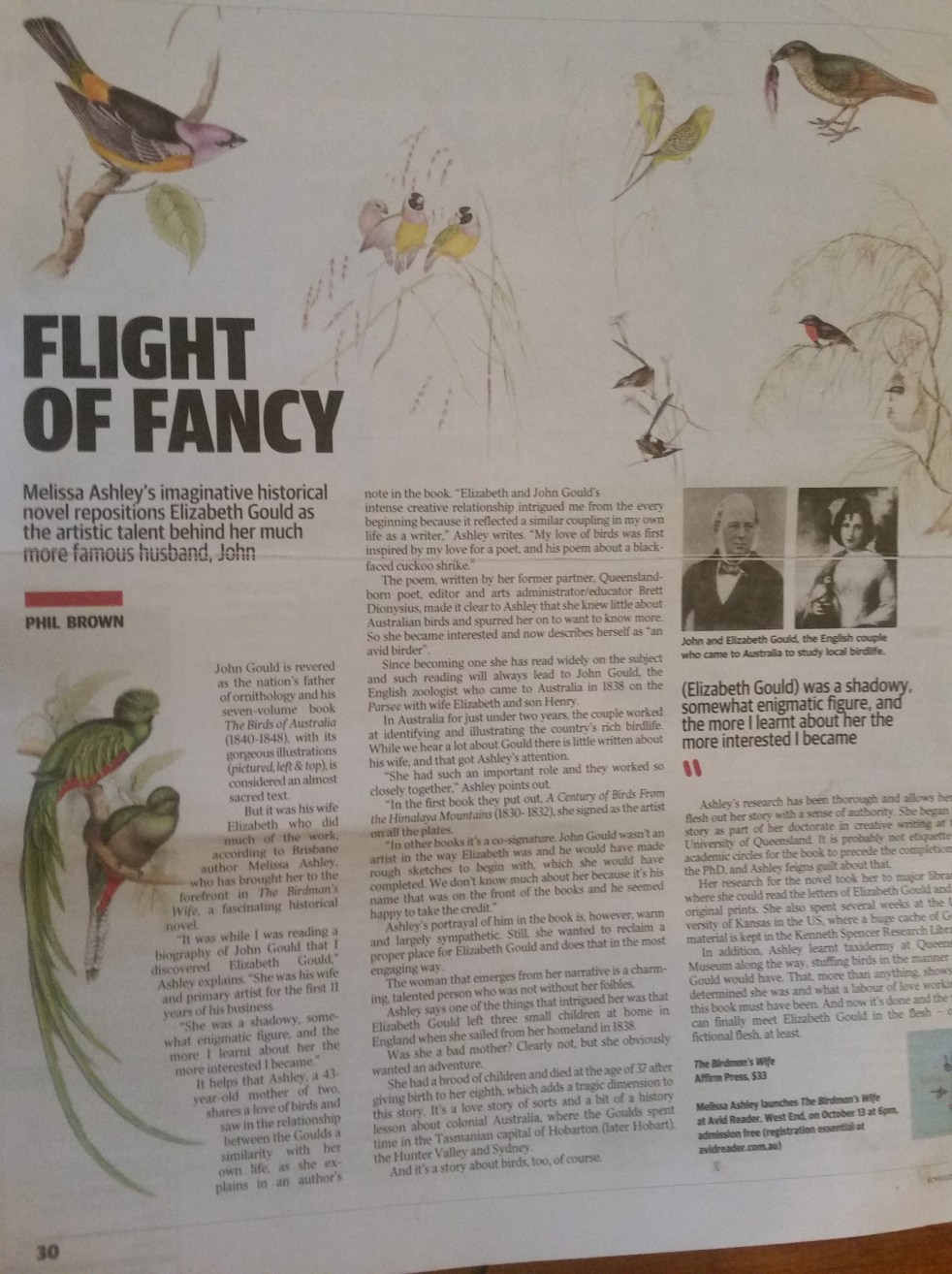
Flight of Fancy

Melissa Ashley’s imaginative historical novel repositions Elizabeth Gould as the artistic talent behind her much more famous husband, John

Phil Brown “Books” QWeekend, 1 October, 2016

John Gould is revered as the nation’s father of ornithology and his seven-volume book The Birds of Australia (1840-1848), with its gorgeous illustrations, is considered an almost sacred text.

But it was his wife Elizabeth who did much of the work, according to Brisbane author Melissa Ashley, who has brought her to the forefront in The Birdman’s Wife, a fascinating historical novel.

“It was while I was reading a biography of John Gould that I discovered Elizabeth Gould,” Ashley explains. “She was his wife and primary artist for the first 11 years of his business.

“She was a shadowy, somewhat enigmatic figure, and the more I learnt about her, the more interested I became.”

It helps that Ashley, a 43-year-old mother of two, shares a love of birds and saw in the relationship between the Goulds a similarity with her own life, as she explains in an author’s note in the book. “Elizabeth and John Gould’s intense creative relationship intrigued me from the very beginning because it reflected a similar coupling in my own life as a writer,” Ashley writes. “My love of birds was first inspired by my love for a poet, and his poem about a black-faced cuckoo shrike.”

img_5594

The poem, written by her former partner, Queensland-born poet, editor and arts administrator/educator Brett Dionysius, made it clear to Ashley that she knew little about Australian birds and spurred her on to want to know more. So she became interested and now describes herself as an “avid birder.”

Since becoming one she has read widely on the subject and such reading will always lead to John Gould, the English zoologist who came to Australia in 1838 on the Parsee with wife Elizabeth and son Henry.

In Australia for under two years, the couple worked at identifying and illustrating the country’s rich birdlife. While we hear a lot about Gould there is little written about his wife, and that got Ashley’s attention.

“She had such an important role and they worked so closely together,” Ashley points out.

“In the first book they put out, A Century of Birds from the Himalaya Mountains (1830-1832), she signed as the artist on all of the plates.

“In other books it’s a co-signature. John wasn’t an artist in the way Elizabeth was and he would have made rough sketches to begin with, which she would have completed. We don’t know how much about her because it’s his name that was on the front of the books and he seemed happy to take the credit.”

Ashley’s portrayal of him in the book is, however, warm and largely sympathetic. Still, she wanted to reclaim a proper place for Elizabeth Gould and does that in the most engaging way.

The woman that emerges from her narrative is a charming, talented person who was not without her foibles.

Ashley says one of the things that intrigued her was that Elizabeth left her three small children at home in England when she sailed from her homeland in 1838.

darwinsfinchelizagold

Was she a bad mother? Clearly not, but she obviously wanted an adventure.

She had a brood of children and died at the age of 37 after giving birth to her eighth, which adds a tragic dimension to this story. It’s a love story of sorts and a bit of a history lesson about colonial Australia, where the Goulds spent time in the Tasmanian capital of Hobarton (later Hobart), the Hunter Valley and Sydney.

And it’s a story about birds, too, of course.

Ashley’s research has been thorough and allows her to flesh out her story with a sense of authority. She began the story as part of her doctorate in creative writing at the University of Queensland. It is probably not etiquette in academic circles for the book to precede the completion of her PhD, and Ashley feigns guilt about that.

Her research for the novel took her to major libraries where she could read the letters of Elizabeth Gould and see original prints.  She also spent several weeks at the University of Kansas in the US, where a huge cache of Gould material is kept in the Kenneth Spencer Research Library.

In addition, Ashley learnt taxidermy at the Queensland Museum along the way, stuffing birds in the manner that John Gould would have. That, more than anything, shows how determined she was and what a labour of love working on this book must have been. And now it’s done and the world can finally meet Elizabeth Gould in the flesh – or the fictional flesh – at least.

the-birdman%27s-wife-cover

The Birdman’s Wife

Melissa Ashley

Affirm Press, October 2016

ISBN 9781925344998

Essay

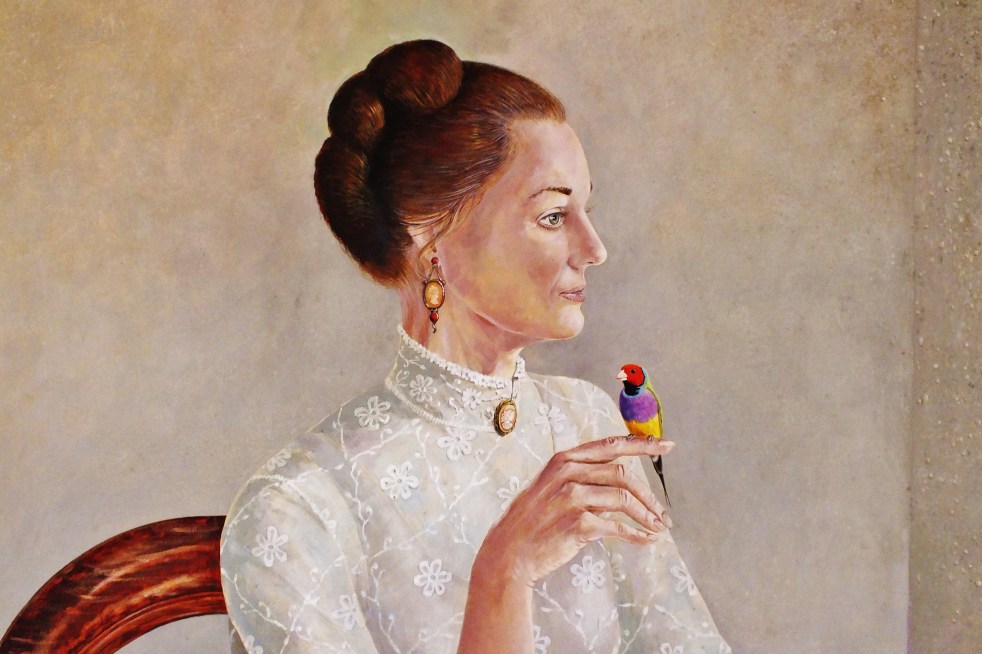
Australian bird artist Frank T. Morris paints Elizabeth Gould

001

Thanks to Phil Brown’s fantastic article about The Birdman’s Wife and Elizabeth and John Gould in last weekend’s QWeekend, I was contacted by renowned Australian bird artist, Frank T Morris. I was excited to learn that he completely agreed with me that John Gould had taken some (most?) of the limelight from Elizabeth Gould – I like to call him a shameless self-promoter – and that she deserved much greater recognition and respect than she has so far been given. Frank writes :
To my mind the final snub to her and her efforts was his naming of the Gouldian Finch. He claimed to the Royal Society that he named the bird in honour of his wife, but if he was for real he would have called it Elizabeth Finch, not Gouldian Finch. I think his ego was too big to truly honour her.
In his frustration and great love of Elizabeth’s artworks, he painted this wonderful portrait of Elizabeth Gould in 1986. The Gouldian Finch, which John Gould said was the most beautiful bird in the world, is perched on her finger. She sits at a table reading a letter John Gould wrote to her, explaining that he had named the Gouldian Finch in her honour. What I find so beautiful about the painting and the concept behind it is that the letter is one of the imagination. Elizabeth never knew that John named this stunning Australian finch to celebrate her passionate dedication to designing, drawing and painting exquisite hand-coloured bird plates, not to mention bearing his eight children and making the sacrifice of leaving three of them behind in England to accompany him to Australia to draw  and collect our ‘curious’ bird species.
Frank is not the only person who has come out ‘to bat’ for Elizabeth. During my research to write The Birdman’s Wife, I met one of Elizabeth Gould’s descendants, who lived in Brisbane. The sadly deceased Bruce Crawford, and three other members of the Coxen (Elizabeth’s maiden name) tribe came to a small presentation I gave about Elizabeth Gould and my research. Similarly, the family were very enthusiastic about my Elizabeth Gould novel project (as it was at the time). Their support, along with Frank’s, means so much to me.
Long live Elizabeth Gould’s glorious hand-coloured lithographs.
You can see more of Frank T. Morris’s beautiful bird paintings at franktmorrisart.com.au.
Interview

Good Reading Magazine interviews Melissa Ashley: Meet the woman responsible for John Gould’s Fame

Good Reading MagazineMelissa-Ashley-276x300.png

Elizabeth Gould’s artistry and technical skill as an illustrator breathed life into hundreds of newly discovered species, and was crucial modern ornithology and classification. She illustrated the species of finches that gave rise to Charles Darwin’s theory of evolution and produced hundreds of the lithographs of birds that made her husband, John, famous. In The Birdman’s Wife, Melissa Ashley has imagined the life of Elizabeth as a mother, birdwatcher and artist, giving well-deserved recognition to this incredible historical figure. Melissa tells gr about her passion for Australian birdlife, her dealings with taxidermy, and how falling in love with a poet lead her to write this book.

Why do you think Elizabeth Gould’s story and skill as an illustrator have been largely uncelebrated, and what made you decide to dedicate an entire book to rectifying this lack of recognition?

John Gould, the famous 19th ornithologist, created one of the most enduring brands in natural history as ‘The Birdman’ and the ‘father’ of Australian ornithology and is renowned for creating the most sublime images of birds the world had ever seen before. But few people know that his wife, Elizabeth Gould, was the artist who illustrated and designed more than 600 of the exquisite hand-coloured images he is famous for. Yet her legacy has been overshadowed by his fame. Almost two hundred years of analysis of John Gould and his contributions to ornithology and zoological illustration have created a colossal figure. Conversely, time and time again, Elizabeth has been consigned to his shadow. Elizabeth was viewed as either John Gould’s faithful and supportive wife, or his willing assistant and acolyte. Onto these interpretations were projected all kinds of stereotypical feminine qualities, that she was delicate, polite, elegant and deferent. Some critics even go so far as to suggest that she sacrificed her very life for her husband’s pursuits.

But the real Elizabeth was a woman of substance and a woman ahead of her time, juggling her work as an artist with her role as wife and mother to an ever-growing brood of children. Yet her creative output was extraordinary. She was a passionate and adventurous spirit, defying convention by embarking on a two-year expedition to the Australian colonies with her husband to collect and illustrate our unique birds and plants. At a time when the world was obsessed with discovering natural wonders, Elizabeth was as at its epicentre, working alongside legends like Edward Lear and Charles Darwin. Yet in many of the books about John Gould it would be impossible to find this woman. At last in The Birdman’s Wife I have been able to tell her amazing story and overturn some of the outdated misconceptions about her.

What motivated you to imagine and evoke Elizabeth’s life with fiction rather than as a biography?

It all started when I fell in love with a poet, and with his poem about a bird. We became avid birdwatchers together. Writers, too. When he rescued a ringneck parrot and we adopted it as a pet, a friend gave me a book about caring for parrots and a biography about John Gould. That was how I discovered that his wife, Elizabeth, created the beautiful images of birds he wrote about in his exquisitely illustrated folios. She was portrayed as such a shadowy figure yet her work as an artist was so key to his fame and the history of birds that I became enthralled with her. I began researching Elizabeth’s life in earnest and the more I learned about her, the more determined I became to uncover her story.

I’ve always loved stories about women who are overlooked by history, and I find creative artistic relationships fascinating – Frida Kahlo and Diego Rivera; Mary Shelley and Percy Bysshe Shelley; Robert and Elizabeth Barrett Browning – so Elizabeth and John Gould’s intimate creative relationship added an extra spark of interest. Elizabeth Gould was such an intriguing enigma that I became convinced that she would be the ideal protagonist for an historical novel and so I made her the subject of my PhD in creative writing. Writing a novel rather than biography allowed me to fill in the gaps of her narrative, to imagine and bring to life what it might have felt like to be a mother to six children, a busy career woman and an adventuress in the early 19th century. It’s not possible to achieve the level of lyricism and emotional depth I wanted to bring to the story in a biography. For me, it was never a question of writing biography. From the get-go I wanted to write a fictional reimagining and revitalisation of her incredible experiences and personality.

How did you go about imagining her voice and personality to the extent that you were able to focalise through her? What was she like?

180px-Elizabeth_Gould.jpg

I’m a researcher by training and I love nothing more than digging into files and archives. For Elizabeth’s story that meant 1830s London and Australia; ornithology, zoological illustration, voyages of exploration, childbearing practices. I came to a stage where I felt I had spent enough time with printed books. I needed to follow in the footsteps of my heroine and get out into the field, go birdwatching, learn bird-stuffing and, ideally, to handle archival materials that Elizabeth Gould made herself, which I was finally able to do in the State Library of NSW. The discovery of her letter book in John Gould’s papers helped me to make the jump from the biographical Elizabeth to imagining her emotional journey, her personal experiences and challenges, and finding her voice as the narrator of The Birdman’s Wife.

Elizabeth was a naïve young woman when she fell in love with a passionate and ambitious genius but she came into her own as a woman, an artist and a mother. She was fierce and loyal, a loving mother and a loving partner. She was a talented artist, with an artist’s flair not only for the visual but what lies beneath. She loved poetry and literature and the symbolism of birds rather than just the science behind them. Her letters showed she was was clever and witty, and her strength of character is clear in her ability to get on with life for the sake of her family after losing two of her children. Elizabeth’s experiences as a working mother will certainly resonate with many modern readers but her achievements, her warmth and humour, her loving nature and her willingness to take risks, so unusual for a woman of her time, make her an irresistible and exciting character for a novel.

What forms of research were the most useful in yielding details about Elizabeth? Did you discover anything that surprised you?

I researched by reading biographies, histories of the discovery of Australian birds, and also went on field trips to the Upper Hunter Valley and Hobart, where Elizabeth spent most of her two year expedition in Australia. Thanks to a travel grant from the University of Queensland, I was able to visit a little town in Kansas called Lawrence, where the largest Gouldian archive in the world is held. There I found countless resources, manuscripts, original versions of Elizabeth and John’s beautiful folios, and a swathe of correspondence from researchers into the Goulds’ lives. I discovered that the Goulds’ son, Charles, a character in The Birdman’s Wife, wrote a book called Mythical Monsters, where he tried to argue that creatures like the hydra and the gorgon had really existed and were now extinct. I also found documents related to the deaths of Elizabeth’s sons, John Henry Gould and Franklin Gould – characters in the novel as well – who both died of dysentery while at sea. They perished in separate incidents and the detailed reports from the chaplains and surgeons aboard their ships regarding the medicines and religious rites they received helped me to write about Elizabeth’s experience of childbed fever.

What do you think drew the Goulds – and yourself – to the investigation and illustration of birdlife?

My passion for birds and how they fascinate and inspire us. I am an avid birdwatcher and I am fascinated by antique etchings and prints of birds; I love the illustrations’ awkward grace. In 2004, the discovery of a cache of 56 paintings of Australian birds and plants by George Raper, a midshipman and navigator on the First Fleet, seized my imagination. The watercolour paintings were uncovered in England during an inventory of the estate of Lord Moreton, the Earl of Ducie. Intrigued by the illustration of a laughing kookaburra, one of the evaluators brought the buried collection to light. Once part of Sir Joseph Banks’ First Fleet materials, the collection had passed into the Ducie family and lain untouched for two hundred years. This was a truly astounding find. Although Raper’s paintings were naïve, his attention to the details and colours of the birds’ wings and feathers was extraordinary. By this time my birdwatching had intensified into a near obsession, and I began to travel great distances to encounter new species, which I would excitedly add to my ‘life list’, a record of birds seen for the very first time. The excitement of this pursuit led to me wonder what it might have felt like for George Raper and his fellow First Fleet bird enthusiasts’ when they encountered Australia’s unique birds, so utterly different to the species of Britain and Europe, for the first time.

The appeal of delving into Elizabeth Gould’s forgotten history, of trying to imagine how it must have felt for them to see, paint and collect species that had never been encountered before, connected to my own thrill when twitching a new species of bird for the first time. Elizabeth began illustrating birds for John well before they embarked on their publishing venture. So John was already aware of her great skill. The crucial experience for John and Elizabeth was meeting 18-year-old Edward Lear. The young artist was going to publish a monograph on parrots, vowing to illustrate every caged parrot in England. Upon viewing his magnificent lithographs of macaws and black cockatoos, Gould – already making a good living as a taxidermist and museum curator – became inspired to undertake his own publishing and illustrating venture, employing Elizabeth as his artist. Elizabeth was a crucial part of John’s enterprise from the very beginning. Indeed, I think it is safe to say that if Elizabeth wasn’t willing or such a skilled artist, Gould would never have attempted the project.

Are many of the species brought to life by Elizabeth’s artistry now extinct?

There are two that I can think of; the Norfolk Island Kaka, a ground parrot like the Kea from New Zealand. Never particularly abundant on the island – it had been hunted for food by Polynesians who travelled to Norfolk Island to gather food – as well as the starving penal colony that arrived on the island in 1788 and further decimated the scant population. The last kaka to perish was a caged pet, expiring in London in 1851. Elizabeth’s lithograph of the species is very special, both in an artistic and a scientific sense. Not only is the illustration utterly beautiful – it’s featured in the endpapers of The Birdman’s Wife – but it’s one of the last records of this extinct species.

The other is the Huia, a New Zealand endemic. This black, yellow-beaked bird was hunted to extinction thanks to a 19th century passion for its feathers, worn by women – like ostrich plumage – in their fashionable hats. King George was seen with a Huia feather in his hat, which ignited demand for the sleek black feathers. Although John Gould killed species for science, he only took what was needed. He strongly disapproved of using bird feathers for fashion. On his expedition to Australia he criticised the settlers’ cruel treatment of black swans, which were trapped and killed in large numbers for their downy under-feathers, for use in pillows and other insulation.

You learned to produce taxidermied bird skins at Queensland University –could you describe this process briefly? Do you view taxidermy as a rather morbid practice?

Not at all. A bit strange and smelly by all means. A strong stomach is required. I took a behind the scenes tour of the Queensland Museum’s zoological collection, thinking that this would be a great opportunity to view the scientific side of taxidermy, and also to see some taxidermied birds up close. The preparation of scientific birdskins for the musuem’s collections are carried out by volunteers. At the end of the tour, one of them challenged me to come along and learn more about taxidermy. And so I became a volunteer trainee bird-stuffer – as they referred to it in the 19th century – submitting myself to the pungent and visceral task of preparing scientific study skins.

I would enter the zoological vertebrate laboratory of a Wednesday morning and take up my stool at a shared worktable. Neatly arranged at my place was a stuffing kit—toothbrush, Dacron (more commonly used to stuff mattresses), paper towels, cornflour, clamps, forceps, scalpel, bonecrusher—and a plastic bag containing a thawed specimen from the museum’s enormous storage freezer: a black-shouldered kite, a barn owl or grey petrel, its thick skin making it easier to remove the body or ‘meat’, as Gould’s stuffers referred to a specimen’s tissue and bones. Slicing into skin, removing muscle and fat, separating joints and scraping ligaments from bone, with my hands and senses I learned the processes John Gould followed to prepare specimens for Elizabeth to sketch.

taxidermy

Which illustration of Elizabeth’s is the most brilliant?

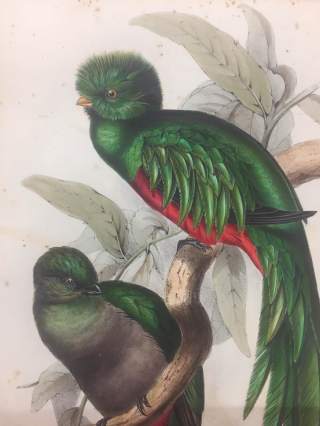
I have to say my favourite illustration is the resplendent quetzal, a trogon from Central America. To this day the Guatemalans still name their currency after the species. Elizabeth illustrated the resplendent quetzal from a stuffed skin around 1836, and I devoted part of a chapter to exploring her almost mystical experience in attempting to capture and paint a faithful likeness of this incredible bird. Quetzals were believed to have magical qualities by the ancient Mayans and were revered as living gods. It was forbidden to kill a quetzal and only the most powerful chiefs were permitted to wear its glorious tapering tail feathers. High priests travelled into the remote cloud forests to capture the males and pluck tail feathers before releasing them to grow more.

It was a challenge to render the brilliance of the resplendent quetzal in words so I’m happy to say that readers of The Birdman’s Wife can fully appreciate the beauty it beauty by seeing Elizabeth’s painting in the endpapers. We have also featured it on a bookmark.

What are some of your favourite Australian bird species to observe? Is there a particularly rare species on your bird-watching bucket list that you’d be thrilled to spot in the wild?

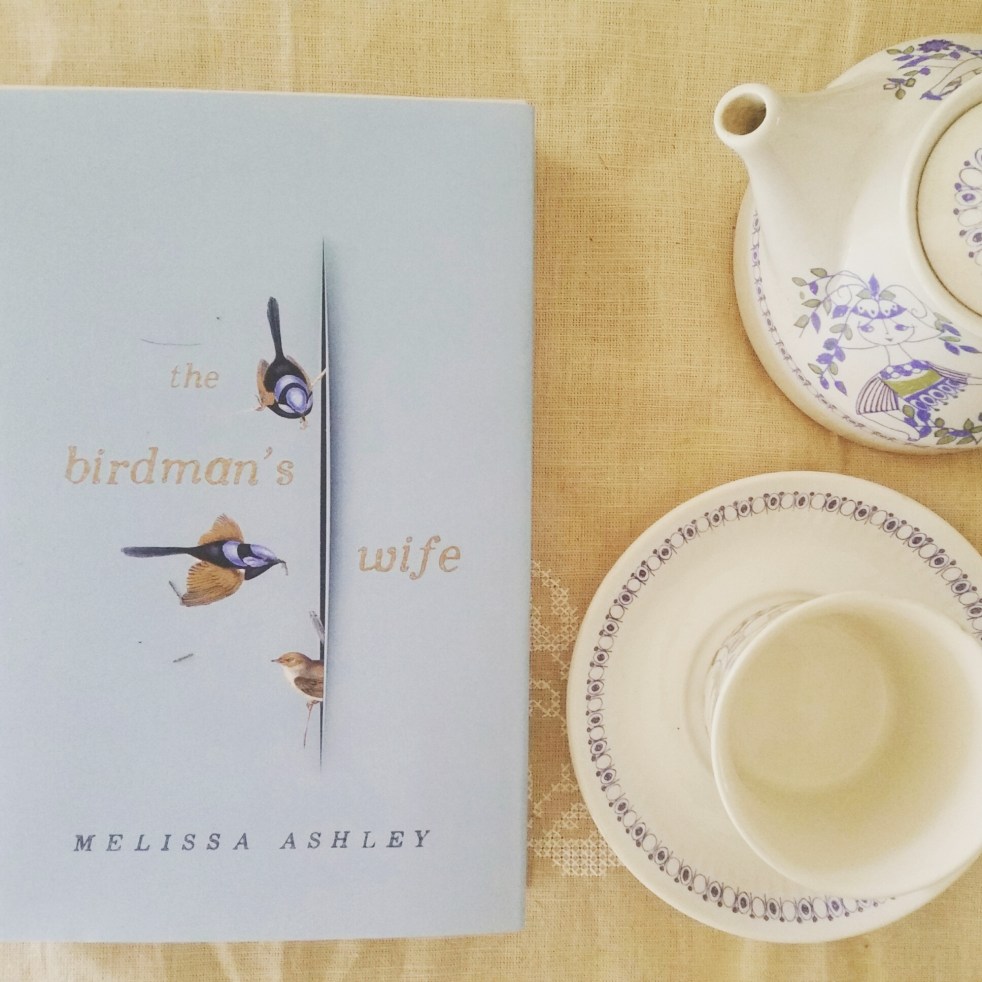
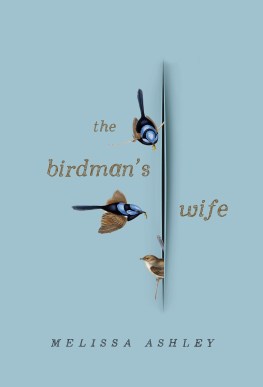
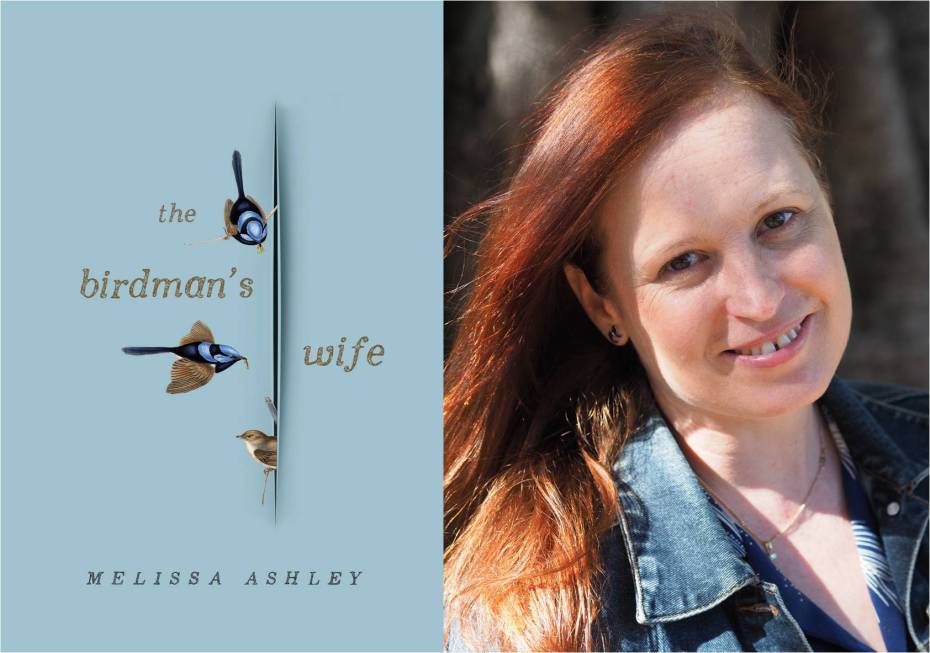
One of my favourite Australian birds, the beloved and easily recognisable superb fairy wren – the male has such an iridescent blue and black upper body – is featured as the cover of The Birdman’s Wife, as well as on the cloth cover of the case of the book.When researching the novel at the John Gould Ornithological Collection in the Spencer Research Library in Kansas, I came across the original pencil design that Elizabeth made of the beautiful species. I love the life in the lithograph, the male bringing a worm to the juvenile in its nest, and think it’s a great example of Elizabeth’s illustrative genius.

One of the most fun parts of birdwatching is using it as an excuse to travel to remote places. I once drove 800 kilometres west of Brisbane to a bird sanctuary to see four of our magnificently coloured arid parrots: the mulga, the ringneck, the pink cockatoo and Bourke’s parrot. I have a chapter in The Birdman’s Wife about a funny little bird known as the plains wanderer. It’s a rare species, found in arid South Australia, and has an ancient lineage with no living relatives. It was only recently, with the aid of DNA, analysis that ornithologists were able to agree upon its classification in the taxonomic tree of birds. I would dearly love to see this strange little critter in the wild.

13692655_10209613170342152_2518697375758487952_n.jpg

Could you share with us a favourite sentence or teaser paragraph from The Birdman’s Wife?

‘Drawing was my central preoccupation: perfecting my designs directed the compass of my hours. Pencils, my sloped desk, a study skin, its eyes replaced by cotton wool, were all the materials I required. The plumage brushed and set in place, I flipped the specimen onto its back and sketched the feet, imagining the creature flitting about, incubating eggs, defending territory. Later, as I grew accustomed to my subject’s morphology and was ready to experiment with composition, I mused on other thoughts. My mind drifted. For a time I was so taken by the work of looking – of switching my eyes from the materiality of the bill to the intricacy of the cere – little else existed. It was a kind of marvelling, because in trying to replicate a bird’s form with my brush, I came to admire and to know it. I painted and I studied and, in this constant striving, became me.” (pp. 329)

The Birdman’s Wife is published by Affirm Press.

Source: Meet the woman responsible for John Gould’s Fame Good Reading Magazine

https://goodreadingmagazine.wordpress.com/2016/10/05/meet-the-woman-responsible-for-john-goulds-fame/

Interview

AUTHOR OF THE MONTH: Melissa Ashley

AUSROM.jpg

Thank you ausromtoday.com for featuring me on your gorgeous website.

AUTHOR OF THE MONTH: Melissa Ashley What at first began as research for a PhD dissertation on Elizabeth Gould has now eventuated into your debut novel, The Birdman’s Wife. What sparked…

Source: AUTHOR OF THE MONTH: Melissa Ashley