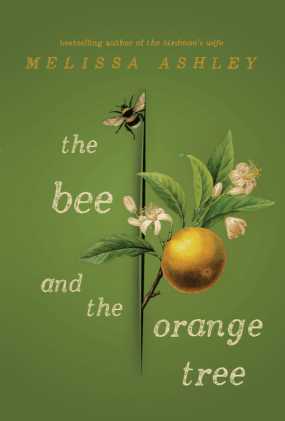
On Monday, 4th November, I had the extraordinary honour of being interviewed by Phillip Adams for Late Night Live, to discuss the heroine of my new novel, The Bee and the Orange Tree, Marie Catherine d’Aulnoy.
Marie Catherine D’Aulnoy was the first author to use the term ‘Fairy Tale” when she published her book “Contes des Fées” in the 1690s in France.
Although a celebrated author in her own time, the fairy tales penned by Marie Catherine D’Aulnoy are less well known than those of her male contemporaries and those that came after her like the Brothers Grimm.
Her fairy tales and novels reveal much about the life of women in the 17th century.
Australian author Melissa Ashley has written a fictionalised account of the scandalous life of Marie Catherine D’Aulnoy.
In late October I had the pleasure of dropping in to Booktopia’s Sydney offices to sign copies of The Bee and the Orange Tree and to record a podcast with Ben Hunter and Olivia Fricot on delving into the life of 17th century French writer Marie Catherine d’Aulnoy.
Melissa Ashley is a writer, poet, birder and academic who tutors in poetry and creative writing at the University of Queensland. She has published a collection of poems, The Hospital for Dolls, short stories, essays and articles. Author of The Birdman’s Wife, Melissa is now back with The Bee and the Orange Tree, a beautifully lyrical and deeply absorbing portrait of a time, a place, and the subversive power of the imagination.
Booktopia’s Ben and Olivia sat down with Melissa to discuss her new book and where she got her inspiration from, history, her research and so much more.
Books mentioned in this podcast:
The Bee and the Orange Tree by Melissa Ashley —> bit.ly/34e8ppc
Hosts: Ben Hunter and Olivia Fricot
Guest: Melissa Ashley
Right now, I’m wrists-deep in metaphorical ink, writing and plotting my middle-grade fantasy series Stella Duke and the Sandgirl’s Curse. The history and politics of the magical world I’m painstakingly building have their beginnings in French author Charles Perrault’s 1697 version of Cinderella, the first iteration of the tale to feature a fairy godmother. I tell you this fun fact to explain why this period in literary history—the time of the first fairy tales—was pinging on my authorial radar.
Enter: The Bee and the Orange Tree and that blurb!
Promising to reveal the life of Marie Catherine d’Aulnoy, the seventeenth-century author who invented what would become modern-day fairy tales, the back cover appealed to my professional curiosity as well as my penchant for any story that puts strong women front and centre. I just had to know more about this time in our literary history as well as the impressive, mysterious woman who created a genre.
Why I couldn’t put it down
Melissa Ashley nails the monumental task of creating a piece of historical fiction that embodies the character and personality of an era while also engaging the contemporary reader. She does it with well-defined language, spellbinding imagery and super-tight dialogue; Melissa herself says it’s a balance that required multiple drafts to get right.
Not only did I enjoy the foray into the seventeenth-century literary circles, where fierce creative women—otherwise oppressed by government, church and men—came together to support each other through story and social convention, but I was captivated by the lives of the story’s three main characters. I couldn’t get enough of the insights into literary salons and old-world publishing, and I couldn’t look away from these characters until their destinies were finally revealed.
Why writers will want to read it
The Bee and the Orange Tree is a beautiful book with a strong, distinctive voice, making it a must-read novel for writers of all fiction, historical or otherwise. Falling in love with this book was a dual experience for me. As a reader, I was consumed by the world-building—the characters, the plot, the tension… As a writer, I was struck over and over again by the voice, the art and the stamina. More than once, lost in the story-telling, I stopped short at a particular paragraph or turn of phrase and had to read it twice or more again, just to marvel at the craftsmanship. And Melissa does not drop the ball once—the writing is solid and striking until the very last page.
In 1600s Paris, one woman undertook an act of rebellion. Her weapon was fairy tales
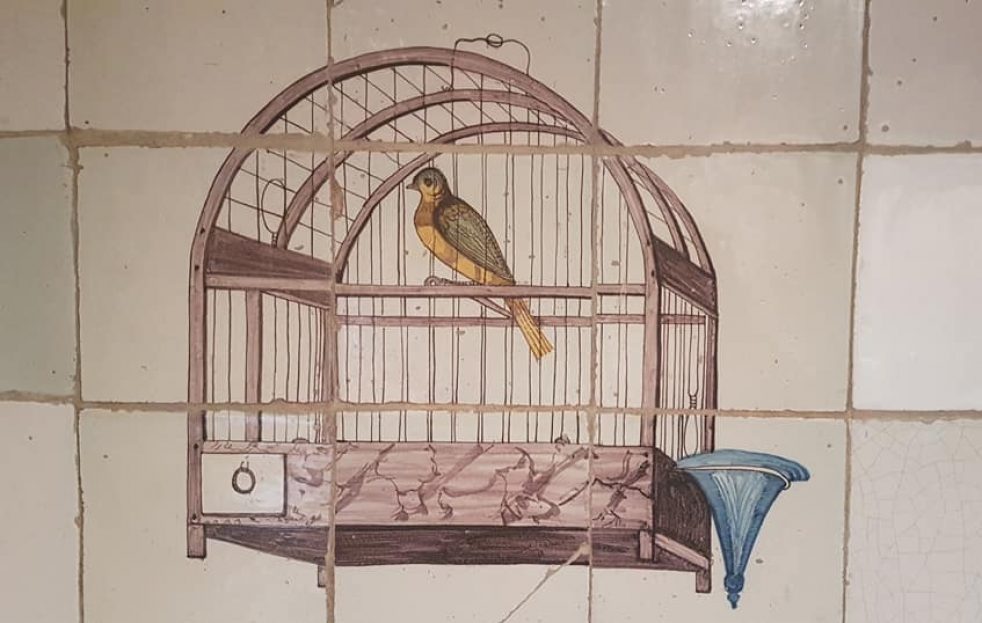
Marie-Catherine d’Aulnoy — who’d been married off at 15 to an abusive man three decades her elder — slipped messages of resistance into her popular stories, risking jail in the process.
D’Aulnoy lived in a punishing patriarchy: women couldn’t work or inherit money, and were forbidden from marrying for love.
Through her work, she showed an alternative.
“She subversively wrote against some of the cultural norms for women at the time,” says Melissa Ashley, whose book The Bee and the Orange Tree is a fictionalised account of d’Aulnoy’s life.
“She was incredible.”
Going against the grain to write strong women
D’Aulnoy was born in 1650 and grew up to work in the “golden age of fairy tale writing”.
She even coined the term ‘fairy tale’ — ‘conte de fée’.
“We have this idea that fairy tales came from the Grimm Brothers in the 19th century and Hans Christian Andersen,” Ashley says.
But Ashley says it was d’Aulnoy who wrote “the very first fairy tale” — The Isle of Happiness.
It tells the story of a prince who travels to an enchanted island and meets Princess Felicity, who’s never seen a human. She entertains the prince with operas and lavish art, and before he knows it he’s been on the island for 300 years.
It was published in 1690 — seven years before fairy tales took off with the publication of Tales of Mother Goose by Charles Perrault, who also wrote Sleeping Beauty, the Little Glass Slipper and Puss in Boots.
The women who created the first fairytales were far more radical than the Brothers Grimm have led us to believe
Most revolutions begin quietly, in narrative. Take, for instance, fairytales. The popular understanding is that fairytales evolved exclusively from oral folktellers – from the uneducated “Mother Goose” nurse, passing into the imaginations of children by centuries of fireside retellings.
But this story is a myth. Fairytales were invented by the blue blood and pomaded sweat of a coterie of 17th century French female writers known as the conteuses, or storytellers.
The originator of the term “fairytale”, Baroness Marie Catherine d’Aulnoy, didn’t need another hero when she published the very first fairytale in 1690. Her resourceful fairy queen Felicite was a true heroine, ruling over a magnificent kingdom and showering her lover, Prince Adolph, with devotion and gifts, only to be abandoned when he sought fame and glory over their mutual happiness.
In the closing years of Louis XIV’s reign, French society had become dangerously religious and conservative. Prominent clerics argued for the banning of plays at Versailles, and art forms such as female-authored novels suffered increasing criticism.
Women’s lives during this period were deeply constrained. They were married as young as 15 in arranged unions to protect family property, often to men many years older than themselves. They could not divorce, work, nor control their inheritances. And where husbands were allowed mistresses, women could be sent to a convent for two years as punishment for so much as the whiff of rumour at having taken a lover.
It was in the repressive milieu of the troubled last decade of 17th century France that fairytales crystallised as a genre. Performed and recited in literary salons, from 1697 the fairytales of D’Aulnoy, Comtesse Henriette-Julie de Murat, Mademoiselle L’Héritier and Madame Charlotte-Rose de la Force were gathered into collections and published.
In La Mercure Galant, Paris’s most fashionable literary magazine, these new stories and their authors were celebrated as the latest vogue. The subversive genre incorporated motifs and tropes from classical myth, the codes of medieval chivalry, the fables of La Fontaine and novels by the early feminist French writers Mademoiselle de Scudéry and Madame la Fayette.
D’Aulnoy and her peers used exaggeration, parody and references to other stories to unsettle the customs and conventions that constrained women’s freedom and agency. Throughout her writing career, D’Aulnoy’s central theme was the critique of arranged marriage, her heroines repositioned as agents of their own destinies. While the quest continued to be love, it was on the terms of the Baroness’s female readers, whom she took immense care to entertain. Gender roles were reversed; princesses courted princes, bestowing extravagant favours and magnificent gifts – such as a tiny dog encased in a walnut that danced and plays the castanets.
Melissa Ashley 11 November, 2019 published in The Guardian.
TM: Your second novel, ‘The Bee and the Orange Tree’, tells the tale of Marie Catherine and her battle for French women’s’ equality in 1699. How did you come across Marie Catherine and what inspired you to tell her story?
MA: I discovered Marie Catherine while researching another project, to write a contemporary fairy tale – but in a novel form – inspired by the Grimm Brothers’ fairy tale, The Girl Without Hands. I was studying at university, and I discovered the incredible field of fairy tale studies, and along with it, that there was a golden age of fairy tale writing in France, between 1690 and 1725, and that most of the fairy tales were written by women. Contrary to our beliefs that fairy tales originated in the 19th century by the Brothers Grimm, and were passed on by oral peasant storytellers, the genre was pretty much ‘invented’ in the 17th century, and the first fairy tales were written by individual authors. They are a literary genre, if you will.
I uncovered the extraordinary early life of Marie Catherine d’Aulnoy – she was married at just fifteen, to a man 30 years older than herself – and by 19 had given birth to 4 children, only 2 of whom survived. There is a gap in her historical record – following a scandal – but in 1690, at 40, she burst onto the Paris salon scene, a fully formed writer, and during the next ten years published thirteen books, including 26 original fairy tales. Marie Catherine published the very first fairy tale, in 1690, ‘The Isle of Happiness,’ within the pages of her first novel, and she also coined the term, ‘fairy tale.’
TM: When starting out, you would have had to decide whether to write a biography or a novelisation of Marie Catherine’s life. How do you choose between the two and what factors need to be taken into consideration?
MA: That is an easy question! Marie Catherine was a bestselling author during her life, she supported herself from her writing, and less than a year after being published in France, many of her works were translated into English (and other languages) and printed overseas. She was even pirated, and other authors tried to sign her name to their books! But, her reputation fell into oblivion about seventy years after her death. The growth of an industry of fairy tales for children in the 19th century contributed further to her being forgotten, with the Grimm Brothers discounting her fairy tales, and those of her female colleagues, believing them too embroidered, baroque and complex for the oral, peasant-delivered ‘folk tale’ they were interested in publishing. But the Grimms’ project was a bit of a myth, fairy tales were not directly traced from oral folklore, they were also written down, deliberately structured and constructed, they were original stories, authored by individual women.
Jump forward a few centuries and it was university academics, in France and the US in the late 20th century who began to publish and write about Marie Catherine, reviving her reputation, and creating great interest in her life and works. It is an easy question because I am a novelist at heart. While new details about Marie Catherine’s life might yet still be unearthed, as a writer of historical fiction, I’m interested in the imaginative, interior life she lived. I want to crawl inside the gaps and spaces and missing parts of her story, and imagine how she felt, what was it like to live that life, at this period in history, how did it feel, smell, look, taste and touch? I think the material details of place, texture, setting and so forth that are in a novel, are behind my impulse to share an individual like Marie Catherine’s story in this form, to bring to readers the exquisite and incredible details of what she had to do, the sacrifices she had to make, the alliances she needed to forge, how she survived, to become the incredible writer that she was. How was the great Marie Catherine d’Aulnoy created?
TM: The book is set more than 300 years ago and another hemisphere away. What were the greatest challenges in researching the time and place? What resources were most helpful to you?
MA: We live in a time of incredible digital egalitarianism. It’s possible, from one’s online study and laptop to travel into palaces, hotels, streets, museums, to discover, often in immense detail, information about places, people and times past. Many newspapers and magazines have been digitised and there is a lot of open access material available. Failing that, there are university and public library portals one can use. I think the online availability of digitised sources is the reason why I write historical fiction today, it would have been much more difficult twenty years ago, you needed expensive physical resources and institutions, behind you.
That said, travelling to Paris, and living in the Marais for three months on an Australia Council residency is the other significant reason that I was able to write this novel. Living in a very old and very well preserved part of Paris for an extended period enabled me to unconsciously absorb the city and its splendours – its history, its smells, the light, the colour of the sky, the trees, the river, its contemporary inhabitants and housing – into my mind and body. It gave me the confidence to write Paris as the setting of my novel. I could visit palaces that have interiors preserved from the time period I was researching, and map out the lay of the city, so to speak, travelling to the street where Marie Catherine used to live, and envisioning it several hundred years into the past.
It was very challenging writing that far back into the past. There were small details about the existence of various technologies that we take for granted today, that I had to continually check up. For instance, people didn’t have bathrooms, they bathed in the kitchen in a portable tub; literary salons were held in someone’s bedchamber, as they didn’t have the sort of living rooms we have in our homes today. But, to answer these queries, there are extraordinary historical books – Joan de Jean is one author – exploring the history of Paris in the 17th century – that I could consult for answers to any niggling questions about objects, habits and customs. A large part of my research involved looking into the history of what life was life for women at the time, and this was more challenging. But I eventually found an excellent resource in Wendy Gibson’s history of women’s lives in France in the 17th century. It can take a bit of ferreting and digging around, but there is much digital and print material available to help an author find the sort of information needed to write historical fiction, which in large part involves bringing a long-forgotten era back to life.
TM: Marie Catherine employs fairy tales as a weapon in the fight for equality. As children, we’re enthralled by fairy tales, but sadly as adults, we’re not encouraged as much to enjoy them. Can you tell a little about how Mary Catherine employed story to effect change?
MA: Marie Catherine’s fairy tales, and her novels and travel stories too, were concerned with questions of agency and freedom in women’s lives. The contuses or French female fairy tale writers invented fairy tales during this period, perhaps in order to very cunningly critique practices of the church, state and family unit that greatly restricted women’s lives. In France, it was not possible to be published without the support of the Royal Censor, who would not allow any critiquing of Louis XIV’s Ancien Regime. For that, writers needed to go to Amsterdam, which had a free press. But, the fairy tales of Marie Catherine, in their baroque detail, their hyperbole and pastoral, courtly and marvellous settings, circumvented such restraints, by disguising criticisms of a failing sovereign, of a corrupt church or the cruel, unfair practices of forcing women into arranged marriages by portraying these targets as animals, insects and magical creatures who resided in miniature, fantastical courts, basically a stand-in for the customs and conventions of the period.
Marie Catherine’s fairy tales were directed at adults, rather than children, and perhaps mostly they were written for fifteen-year-old girls, about to be married off. Time and again, they offered templates, if you will, archetypes of female heroines who were resourceful, crafty, cunning, kind, and intelligent, using all of their wiles and ways to adjust to and perhaps even subvert, a future in which at least materially, they had very little control. Marie Catherine’s heroines, through the arts of conversation and connection – very modern ideas I think – managed to find ways to cope with the constraints in their lives. They did this by forming meaningful relationships with significant people, kindred spirits perhaps. At heart, this is what Marie Catherine’s fairy tales were about, agency and being able to choose who you lived with and hung out with, who you loved, surely the most fundamental choice we ever make.
TM: As a professional researcher, what advice do you have for other authors looking to produce an authentic historical novel?
MA: I think number one is to be passionate about your topic, person, era, that is absolutely key. If you have a subject and time that you wish to research, there are so many wonderful online resources out there to explore. Make use of librarians, and other researchers or experts who might help you with difficult questions. If you can get away from your desk and into the ‘field’ or the setting of the place you wish to write about, do it as soon as you can in the writing process. Research on the page and in books is one side of the writing, but the emotional connection to the place and to the story or persons or event that you are hoping to write about, is by far the main energy or force to drive you through to produce a work. Don’t be afraid to ask the experts. Keep organised files! Good luck. Workshops are very helpful, and writers’ groups, too, for feedback and encouragement. Don’t be shy. Enjoy yourself, that’s so crucial. Follow the interest and sparks in your imagination as you go along, pay attention to what you find exciting; dive down in there and discover, invent and explore, as that’s where your reader will also be drawn.
About Melissa Ashley
Melissa Ashley is a writer, poet, birder and academic who tutors in poetry and creative writing at the University of Queensland. She has published a collection of poems, The Hospital for Dolls, short stories, essays and articles. What started out as research for a PhD dissertation on Elizabeth Gould became a labour of love and her first novel, The Birdman’s Wife, which has been printed in three formats and sold more than 30,000 copies since release. Melissa’s second novel, The Bee and the Orange Tree, will be published in November 2019 with Affirm Press.
It’s 1699, and the salons of Paris are bursting with the creative energy of fierce, independent-minded women. But outside those doors, the patriarchal forces of Louis XIV and the Catholic Church are moving to curb their freedoms. In this battle for equality, Baroness Marie Catherine D’Aulnoy invents a powerful weapon: ‘fairy tales’.
When Marie Catherine’s daughter, Angelina, arrives in Paris for the first time, she is swept up in the glamour and sensuality of the city, where a woman may live outside the confines of the church or marriage. But this is a fragile freedom, as she discovers when Marie Catherine’s close friend Nicola Tiquet is arrested, accused of conspiring to murder her abusive husband. In the race to rescue Nicola, illusions will be shattered and dark secrets revealed as all three women learn how far they will go to preserve their liberty in a society determined to control them.
This keenly-awaited second book from Melissa Ashley, author of The Birdman’s Wife, restores another remarkable, little-known woman to her rightful place in history, revealing the dissent hidden beneath the whimsical surfaces of Marie Catherine’s fairy tales. The Bee and the Orange Tree is a beautifully lyrical and deeply absorbing portrait of a time, a place, and the subversive power of the imagination.
My Thoughts:
It was such a pleasure to read The Bee and the Orange Tree, the second novel by acclaimed author, Melissa Ashley. Set in 1699, under the gaze of three women, Melissa Ashley takes us back to Paris, where a woman could write and perform stories within literary saloons, but have no agency whatsoever over their own life.
‘She felt it her duty to lay bare the dark and piquant potential of women unafraid of their own minds.’
While this novel in part tells the story of the invention of fairy tales – long before the Brothers Grimm and Hans Christian Andersen – it is also an illuminating sociological examination of the layers of patriarchy set firmly in place within 17th century France.
‘…a marriage, however poisonous, is to be protected at all costs. There are no grounds for separation. Not adultery, not cruelty, not even fraud. Women are minors in the eyes of the law. Either they’re owned by their parents or their husbands.’
Never more is this demonstrated than in the fate of Nicola Tiquet. Yet, there are other examples of these restrictions in action throughout the story. Marie Catherine’s own experiences with her elderly wastrel husband; Angelina’s experiences as a daughter who was given over to be raised in a convent, despite not being an orphan. These women are oppressed, they have been cheated out of experiencing their lives as fully as their male counterparts’ experience, but they have not been beaten. Their strength prevails and Melissa Ashley articulates this with vivacity.
‘A convent or a marriage – the twin prisons of women’s lives.’
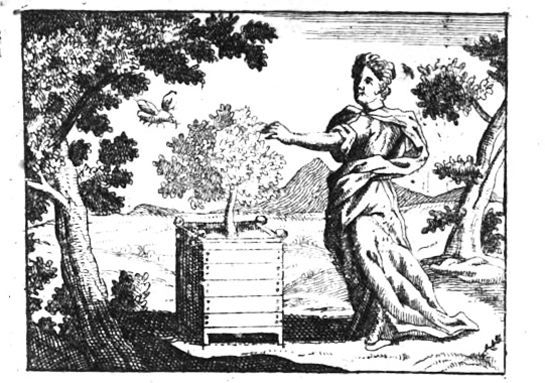
The writing throughout is lyrical, giving the reader the illusion of being caught within a fairy tale whilst reading about fairy tales. Yet there is also a brutality in evidence, reminding the reader that within every fairy tale, there is darkness before light, and not every character is destined to achieve their happy ending. There is a strong presence of history throughout the novel and coupled with Melissa’s elegant prose, the story is dripping with atmosphere. I felt like I was walking alongside the characters on the streets of Paris, experiencing, as they were, the literary saloons, the cafes, and most horrifying of all, the prisons. I fell in love with this story and found myself lingering over it far longer than what I normally do with a novel. In addition, it is just so beautifully presented. Affirm have published this as a hardback with the most gorgeous endpapers and fairy tale illustrations throughout, turning this novel into a sensory experience that goes beyond just reading a story. It rather makes me long for the days when all new releases were hardbacks. I highly recommend The Bee and the Orange Tree, particularly to those who enjoy reading about writers and the origins of stories from the past.
☕☕☕☕☕
Thanks is extended to Affirm Press for providing me with a copy of The Bee and the Orange Tree for review.
About the Author:
Melissa Ashley is a writer, poet, birder and academic who tutors in poetry and creative writing at the University of Queensland. She has published a collection of poems, The Hospital for Dolls, short stories, essays and articles. What started out as research for a PhD dissertation on Elizabeth Gould became a labour of love and her first novel, The Birdman’s Wife, which has been printed in three formats and sold more than 30,000 copies since release. Melissa’s second novel, The Bee and the Orange Tree, will be published in November 2019 with Affirm Press.
The Bee and the Orange Tree
Published by Affirm Press
Released November 2019
Author Melissa Ashley came to prominence when her debut novel, The Birdman’s Wife, expertly re-imagined the life of Elizabeth Gould. Following this theme of uncovering the lives of fascinating but largely forgotten women from history, her second novel The Bee and the Orange Tree (Affirm Press 2019) is an engaging and previously untold story about Frenchwoman Baroness Marie Catherine D’Aulnoy, the inventor of fairy tales long before the Brothers Grimm.
Set in Paris in 1699, this novel is a completely immersive experience of French aristocratic life and the strong and independent women who battled constantly for agency against the constraints of the church, the monarchy and the patriarchy. But it is also a much deeper and plot-driven book – the story of Marie Catherine’s friend, Nicola, accused of attempting to murder her husband, and the Baroness’ youngest daughter, Angelina, adjusting to the glamorous and often confusing life of the City of Lights after being raised in a convent. Told from the perspectives of these three woman – each feisty and determined, each talented and generous, each struggling to assert their identity while tied by societal expectations – The Bee and the Orange Tree explores what it means to be female, to be an artist, to be a benefactor; what it meant to be the 17th century equivalent of today’s ‘Influencer’!
I had expected this book to be about the secret history of fairy tales, and it certainly is that. In her research, the author has uncovered many wonderful fables and fantastical stories that were written, often by women, and usually for adults, rather than for children. The fairy tales were a coded way of addressing the inequalities and injustices of the times, particularly against women. The language, the evocative imagery, the delightful characters – all were woven together to construct escapist stories with moral or instructive or cautionary advice for young women about to navigate the world of marriage, children and expectations. As was common in the day, Marie Catherine held regular literary salons in her bedchamber, where artists gathered to listen to each other recite their work and to offer feedback, suggestions and encouragement.
But what I didn’t expect was that this book would be so full of intrigue, scheming, plotting, murder, mayhem, cunning, torture, crime, racy sexual liaisons, indiscretions, ancestral secrets, lies, backstabbing and passion.
At the opening, Marie Catherine’s friend Nicola Tiquet is under suspicion for conspiring to murder her husband, and the plot is driven by Nicola’s increasingly desperate situation, her pleas of her innocence, Marie Catherine’s attempts to help her plight, and the terrible hypocrisy and unfairness of the time around how women were treated, their lack of rights and power, and the unjust and seemingly random operation of the legal system, fuelled more by money changing hands than actual facts. But also right from the beginning, we know that Nicola’s husband Claude is a brutish man who terrorised his wife…and so we are left wondering whether perhaps she could indeed be guilty of trying to enact revenge. This unsolved mystery propels the story forward as it is a race to uncover the truth before it is too late.
The other aspect of this novel that I found surprising was the tender, joyful, supportive and endearing friendships between women, who may have been subjugated by the men around them, but who nevertheless forged strong bonds of companionship and intellectual rigour that sustained them from the powerlessness they often felt in other areas of their lives. This is very much a story about female friendship – loyalty, betrayal, forgiveness – and the lengths women will go to in order to protect each other.
The sumptuous setting of The Bee and the Orange Tree is rich in meticulously researched details of the time. The intricate fashions, wigs and powders; the minutiae of preparing for dressing and bathing and one’s toilette; the blood-letting and other common medical cures; the class levels of servants and attendants; the extraordinary furnishings – canopied beds and exquisite handmade armoires and curtained carriages. Reading from these pages feels like being on a film set; the smells, sounds and sights of a place 300 years ago and across the other side of the world brought to life.
Much is made of the writing muse and I particularly love this passage that depicts Marie Catherine’s anguish over her writing life: ‘All the advice and experience and practice in the world was not necessarily any help when one’s well had run dry of ideas … What had happened to those hours she used to spend, wresting an idea that would not leave her in peace … If it were her last act, she would again seduce the gods of story to toss their net of wonders at her feet, to strew their gifts before her, and out she would pluck one starfish, one mushroom, one invisible cloak, one prince dressed as a pauper, one naked king. Oh, she would take it all and rush, her apron lifted and bulging with treasure, back to her desk to make sense of the hoard.’ Which of the writers amongst us cannot recognise that feeling?
Or this exchange and piece of writing advice still relevant today:
“‘But I set my works in courts from a hundred years past, and in distant countries.’
‘But the books’ concerns are from the life you live.’ …
‘An author must be brave,’ said Marie Catherine. ‘You can say whatever you like in your writing. It’s your opportunity to re-imagine the world as you would have it turn.’”
The Bee and the Orange Tree is written in beautiful, literary language reminiscent of the time, imbued with French sensibilities and an ornately described setting. It is an intriguing mystery, the pages filled with uncertainty about the literal life or death fate of the characters. And it is a tender homage to female friendship and to the inimitable and innate power of women to bond together and to support each other in times of difficulty. Complete with a handful of reproductions of original black and white drawings, this book is an engrossing read and a lovely objet d’art.


![20120804-110811[1]](https://melissaashley.com.au/wp-content/uploads/2019/10/20120804-1108111.jpg?w=357&h=273) Why I had to pick it up
Why I had to pick it up
 Marie-Catherine d’Aulnoy — who’d been married off at 15 to an abusive man three decades her elder — slipped messages of resistance into her popular stories, risking jail in the process.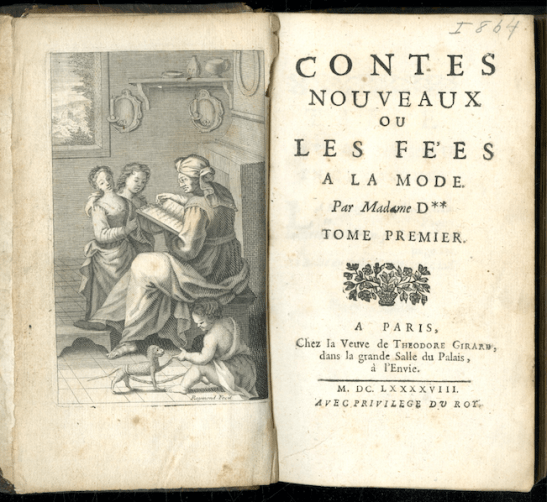
![160bcdabb99fe24ca648c273a751d9ca[1]](https://melissaashley.com.au/wp-content/uploads/2019/10/160bcdabb99fe24ca648c273a751d9ca1.jpg?w=242&h=319) Most revolutions begin quietly, in narrative. Take, for instance, fairytales. The popular understanding is that fairytales evolved exclusively from oral folktellers – from the uneducated “Mother Goose” nurse, passing into the imaginations of children by centuries of fireside retellings.
Most revolutions begin quietly, in narrative. Take, for instance, fairytales. The popular understanding is that fairytales evolved exclusively from oral folktellers – from the uneducated “Mother Goose” nurse, passing into the imaginations of children by centuries of fireside retellings.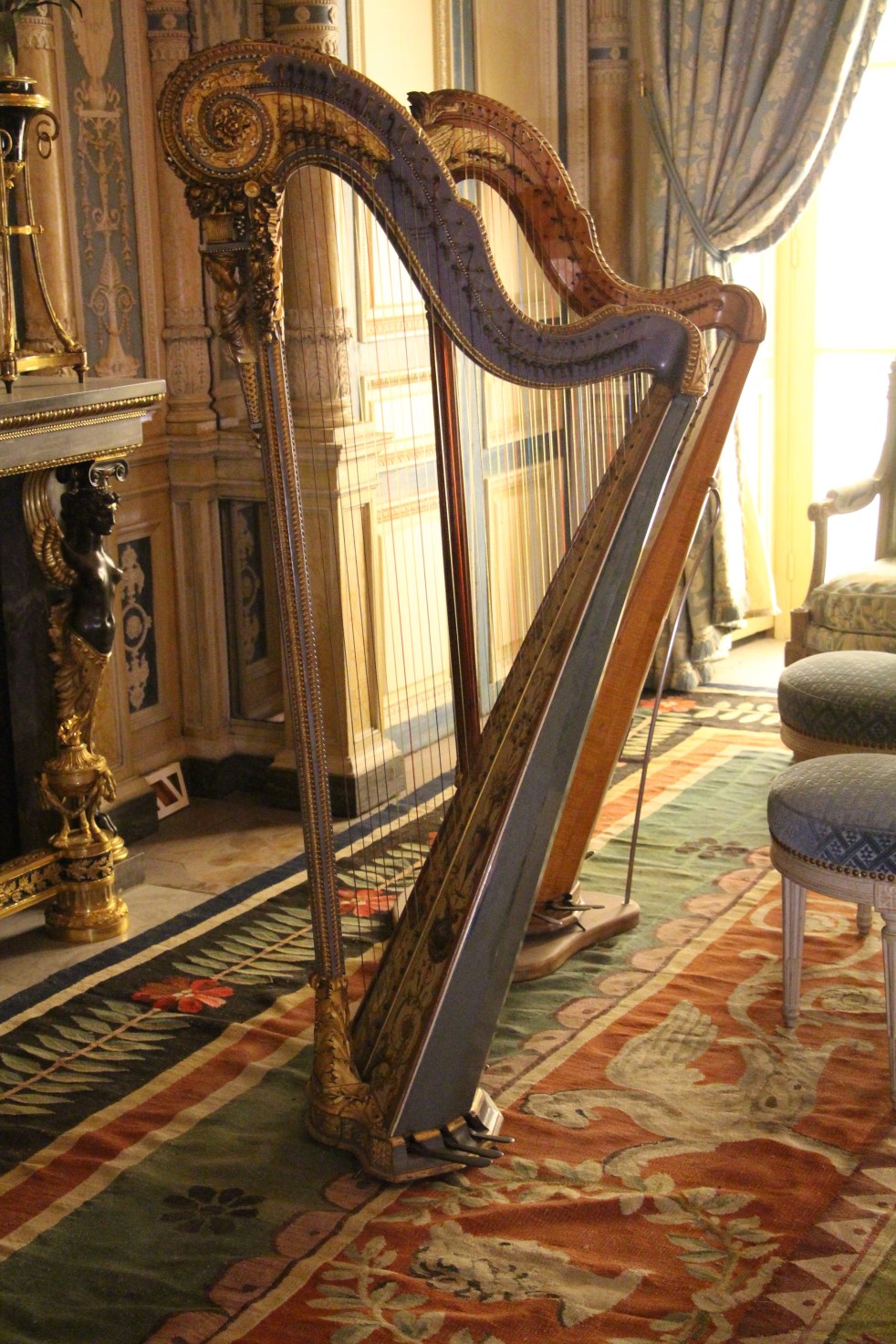


 Author
  At the opening, Marie Catherine’s friend Nicola Tiquet is under suspicion for conspiring to murder her husband, and the plot is driven by Nicola’s increasingly desperate situation, her pleas of her innocence, Marie Catherine’s attempts to help her plight, and the terrible hypocrisy and unfairness of the time around how women were treated, their lack of rights and power, and the unjust and seemingly random operation of the legal system, fuelled more by money changing hands than actual facts. But also right from the beginning, we know that Nicola’s husband Claude is a brutish man who terrorised his wife…and so we are left wondering whether perhaps she could indeed be guilty of trying to enact revenge. This unsolved mystery propels the story forward as it is a race to uncover the truth before it is too late.
 Melissa Ashley