Articles

The woman who coined the term ‘fairy tale’ risked prison to write coded messages of rebellion

Updated 

In 1600s Paris, one woman undertook an act of rebellion. Her weapon was fairy tales

TheBlueBirdMarie-Catherine d’Aulnoy — who’d been married off at 15 to an abusive man three decades her elder — slipped messages of resistance into her popular stories, risking jail in the process.

D’Aulnoy lived in a punishing patriarchy: women couldn’t work or inherit money, and were forbidden from marrying for love.

Through her work, she showed an alternative.

“She subversively wrote against some of the cultural norms for women at the time,” says Melissa Ashley, whose book The Bee and the Orange Tree is a fictionalised account of d’Aulnoy’s life.

“She was incredible.”

Going against the grain to write strong women

D’Aulnoy was born in 1650 and grew up to work in the “golden age of fairy tale writing”.

She even coined the term ‘fairy tale’ — ‘conte de fée’.

“We have this idea that fairy tales came from the Grimm Brothers in the 19th century and Hans Christian Andersen,” Ashley says.

But Ashley says it was d’Aulnoy who wrote “the very first fairy tale” — The Isle of Happiness.

It tells the story of a prince who travels to an enchanted island and meets Princess Felicity, who’s never seen a human. She entertains the prince with operas and lavish art, and before he knows it he’s been on the island for 300 years.

It was published in 1690 — seven years before fairy tales took off with the publication of Tales of Mother Goose by Charles Perrault, who also wrote Sleeping Beauty, the Little Glass Slipper and Puss in Boots.

For the remainder of the article, please go to

https://www.abc.net.au/news/2019-11-07/fairytale-author-marie-catherine-daulnoy-wrote-a-rebellion/11627040

Articles

The first fairytales were feminist critiques of patriarchy. We need to revive their legacy

The women who created the first fairytales were far more radical than the Brothers Grimm have led us to believe

160bcdabb99fe24ca648c273a751d9ca[1]Most revolutions begin quietly, in narrative. Take, for instance, fairytales. The popular understanding is that fairytales evolved exclusively from oral folktellers – from the uneducated “Mother Goose” nurse, passing into the imaginations of children by centuries of fireside retellings.

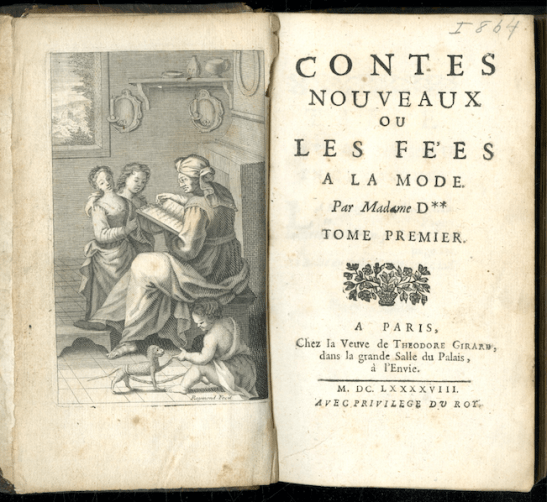
But this story is a myth. Fairytales were invented by the blue blood and pomaded sweat of a coterie of 17th century French female writers known as the conteuses, or storytellers.

The originator of the term “fairytale”, Baroness Marie Catherine d’Aulnoy, didn’t need another hero when she published the very first fairytale in 1690. Her resourceful fairy queen Felicite was a true heroine, ruling over a magnificent kingdom and showering her lover, Prince Adolph, with devotion and gifts, only to be abandoned when he sought fame and glory over their mutual happiness.

In the closing years of Louis XIV’s reign, French society had become dangerously religious and conservative. Prominent clerics argued for the banning of plays at Versailles, and art forms such as female-authored novels suffered increasing criticism.

Women’s lives during this period were deeply constrained. They were married as young as 15 in arranged unions to protect family property, often to men many years older than themselves. They could not divorce, work, nor control their inheritances. And where husbands were allowed mistresses, women could be sent to a convent for two years as punishment for so much as the whiff of rumour at having taken a lover.

It was in the repressive milieu of the troubled last decade of 17th century France that fairytales crystallised as a genre. Performed and recited in literary salons, from 1697 the fairytales of D’Aulnoy, Comtesse Henriette-Julie de Murat, Mademoiselle L’Héritier and Madame Charlotte-Rose de la Force were gathered into collections and published.

In La Mercure Galant, Paris’s most fashionable literary magazine, these new stories and their authors were celebrated as the latest vogue. The subversive genre incorporated motifs and tropes from classical myth, the codes of medieval chivalry, the fables of La Fontaine and novels by the early feminist French writers Mademoiselle de Scudéry and Madame la Fayette.

D’Aulnoy and her peers used exaggeration, parody and references to other stories to unsettle the customs and conventions that constrained women’s freedom and agency. Throughout her writing career, D’Aulnoy’s central theme was the critique of arranged marriage, her heroines repositioned as agents of their own destinies. While the quest continued to be love, it was on the terms of the Baroness’s female readers, whom she took immense care to entertain. Gender roles were reversed; princesses courted princes, bestowing extravagant favours and magnificent gifts – such as a tiny dog encased in a walnut that danced and plays the castanets.

Melissa Ashley 11 November, 2019 published in The Guardian.

For the rest of the article, please go to

https://www.theguardian.com/books/2019/nov/11/the-first-fairytales-were-feminist-critiques-of-patriarchy-we-need-to-revive-their-legacy

Articles · Essay

Writers’ Festivals: Losing my Virginity

Last week I had the great privilege of being invited to perform as an artist at the 2017 Perth Writers’ Festival (23-26 February) to promote my first novel, The Birdman’s Wife, put into print by the incredible independent Australian publisher, Affirm Press.
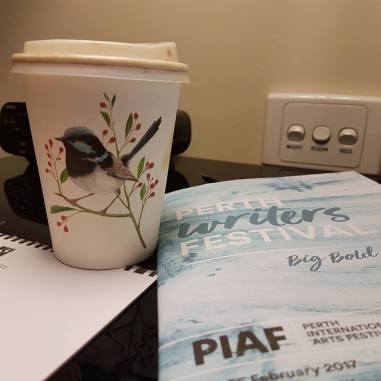
perthI have been very lucky in being invited to speak at a huge range of gigs: Newtown Festival; The Big Bookclub at the Avid Reader; Riverbend Books; QLD Museum; Mitchell Library; Farrells’ Bookstore in Hobart; Book Face; and a local environmental group. These events went really well (to my nervous relief). Terrified of public speaking, I was surprised to discover much enjoyment in signing books and meeting readers, discovering their various links to Elizabeth Gould’s story. Some were bird-watchers, some historians, others artists in their own right.

Having spent many years (too many to confess) as an eager punter at writers’ festivals, someone who would look in awe at the authors’ taking up each panel and speaking intelligently and eloquently about their books, I used to wonder at their nerves. I panicked, fearful of how they managed to follow each others’ conversations, how they weren’t intimidated by the huge crowds, how they didn’t have a nervous breakdown before and after each event.

gettingreadyTo prepare myself, I read all of the books of my fellow panelists, supplied by their publishers. I had no idea being a published writer entailed such perks. But, come the week I was flying to Perth, I felt myself consumed by a horrid stomach-full of nervous energy.

The first way that I spoke back to such intense emotion was to go shopping. New dresses, new earrings, hell, a new handbag even, to match my shoes. I couldn’t quite concentrate on my writing in the days precipitating my flight.

It was my first visit to Perth, and the festival organisers were brilliant, securing a lovely hotel room, shuttle buses, cash for food, and a bunch of other writers to get to know. Before my first gig, I met the beautiful Nadia L King, author of Jenna’s Truth, blogger, reviewer, instagram star and all-round supporter of writers. nadiafriends

berniceThe following day, I was so nervous about my impending first conversation, with the erudite Bernice Barry, author of a biography on Georgiana Molloy, a 19th century botanist from Western Australia, I wasn’t sure if I would make it to the outdoor space where I was to perform. And it was really hot, the 36+ degree temperature (not unlike the whole of Brisbane’s heatwave summer) following me all the way to Perth.

To my great relief and gratitude, Martin Hughes, CEO of Affirm Press, flew in to accompany me, to talk me up and talk down my nerves before I stepped in front of the microphone and crowds. My first gig was a full house and it went well, despite my discomfort at being out of a familiar place, and several paramedics turning up 55 minutes into our conversation to cart off several members of the audience who had succumbed to the heat. We stopped immediately, though I felt concerned about the temperature forecast for the following day: over 40 degrees.

fullhouse

As if in some sort of compensation, an audience member had sketched Bernice, Barbara Horan, our lovely chair, and myself, while we spoke. Afterwards, the artist  came up to the stage and introduced herself, asked us all to autograph her sketch. What a gift.
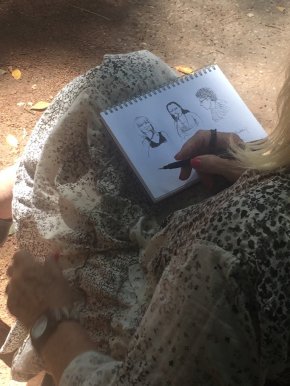
sketchI signed a few books, and then scurried away for a cigarette, my rapidly beating heart slowed, at least for the moment. I had a great dinner with Martin, laughs and drinks, all precipitated by a confused wander through the streets of Perth’s CBD (neither of us has much of a sense of direction).

Nevertheless, I couldn’t sleep much that night. I worried incessantly about my two gigs the following day. One of which was with my literary heroine, Hannah Kent. Would I turn to jelly in her presence? And then I moved on and fixated on the belief that I was not comfortable talking about The Birdman’s Wife without notes for the proscribed ten minutes the panel required. Once our chair, the lovely Geraldine Blake, and Martin reassured me that I could present in the manner which made me most comfortable, my nerves gripped onto another unknown. Due to the fame of Hannah, I panicked that we were about to perform in an indoor Roman arena. Would I get ‘the chokes’ like Howard Moon from The Mighty Boosh and humiliate myself entirely? Or fall over a mike lead or spill my water and electrocute Hannah or some other unanticipated embarrassment? Exposed as a buffoon, the butt of everyone’s jokes.

Somehow — it really is a blur –I got a hold of my nerves and turned up the following morning to meet Hannah Kent, author of Burial Rites and The Good People. To gush over Jessie Burton, writer of the bestselling novels The Miniaturist and The Muse. I sweated in a most unladylike fashion in their company, pressing my legs together (the toilet line was looong), trying to not fan-girl them too badly. Though I could not help raving about their mastery of structure, plot, dialogue, character, lyricism. When I stilled my jabbering jaws, I marvelled as they engaged in pre-gig laughs about jetlag from visiting Iceland, New York. I nodded and grinned, trying to not appear insane, shaking hands pinned behind my back.

Jessie-a trained actor-and Hannah, a consummate writer – spoke with intelligence, respect, humour and openness. I was proud that I managed to not stumble my own answers to Geraldine’s questions. I felt the warmth in the room that lit up their fans, turned out to see their favourite writers in the flesh. Afterwards, we traipsed over to the book-signing room; Martin reckoned I smashed it, and I felt pretty chuffed that I managed to save face. That was until the extraordinary Clementine Ford (deep bows) arrived and I noted that I was seated between her beautifully fierce self and my literary crush, Hannah Kent. Luckily my hand-bag carrier/publisher was lurking, and bade me make a hasty exit.

hannahandjessieBoth evenings I had dinner with my publisher. I think I told him about five times that I signed with Affirm Press because of their manifesto of building a relationship with their writers. They have integrity, guts, and are willing to take a risk with somebody whose writing they believe in. That evening, apart from trawling half of Perth’s CBD in search of a restaurant, I learned much about publishing, book sales, prizes, and literary passion. I returned to my hotel feeling looked after and reassured. Affirm Press believed in me.

Nevertheless, it wasn’t long before my anxiety reared up and grasped me by the throat. To calm my nerves, Martin distracted me by asking about the poem I loved best in all the world. It was in fact resonating through my brain all weekend, written by the maddest of mad poets, Robert Lowell. I dare not share Waking in the Blue (my real favourite) and instead confessed a penchant for the mysterious Skunk Hour:

Skunk Hour

For Elizabeth Bishop


Nautilus Island’s hermit
heiress still lives through winter in her Spartan cottage;
her sheep still graze above the sea.
Her son’s a bishop.  Her farmer
is first selectman in our village,
she’s in her dotage.

Thirsting for
the hierarchic privacy
of Queen Victoria’s century,
she buys up all
the eyesores facing her shore,
and lets them fall.

The season’s ill--
we’ve lost our summer millionaire,
who seemed to leap from an L. L. Bean
catalogue.  His nine-knot yawl
was auctioned off to lobstermen.
A red fox stain covers Blue Hill.

And now our fairy 
decorator brightens his shop for fall,
his fishnet’s filled with orange cork,
orange, his cobbler’s bench and awl,
there is no money in his work,
he’d rather marry.

One dark night,
my Tudor Ford climbed the hill’s skull,
I watched for love-cars.  Lights turned down, 
they lay together, hull to hull,
where the graveyard shelves on the town. . . .
My mind’s not right.

A car radio bleats,
‘Love, O careless Love . . . .' I hear
my ill-spirit sob in each blood cell,
as if my hand were at its throat . . . .
I myself am hell;
nobody’s here--

only skunks, that search
in the moonlight for a bite to eat.
They march on their soles up Main Street:
white stripes, moonstruck eyes’ red fire
under the chalk-dry and spar spire
of the Trinitarian Church.

I stand on top
of our back steps and breathe the rich air--
a mother skunk with her column of kittens swills the garbage pail
She jabs her wedge-head in a cup
of sour cream, drops her ostrich tail,
and will not scare.

All weekend, I wanted desperately to connect with my fellow writers but I was so overwhelmed by my professional responsibilities that it was simply not possible. I would have gushed, stuttered and knocked something over — I had already done all of this in front of my work colleague and friend Elspeth Muir, with whom I caught the plane — and decided I would be better off saving myself for the next festival.

By the time I got to my final gig, a conversation with Kate Summerscale, author of The Wicked Boy, a biography of a 13 year old boy who stabbed his mother to death, spent 17 years in a mental asylum and then emigrated to Australia to become a decorated ANZAC medic, my brain had nearly imploded. Despite Susan Wyndham’s excellent facilitation as chair, a week of intense anxiety resulted in a challenging panel. I felt my responses to anticipated questions running away from my consciousness before I had even started speaking. Yes, I rambled somewhat.
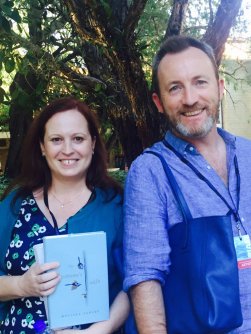
perthfestivalmartinI burst into embarrassing tears following my last panel, and yet, despite my red eyes and blubbering, I felt as if I had pushed myself to the very limits of my abilities with regard to public speaking. I was sorta proud, despite my feelings of utter humiliation. I think many writers feel this. It’s just how we are.

That evening I had a few too many (deserved) champagnes, which led to a remarkable opportunity. I hung out with Deng Adut, a former child soldier from South Sudan who runs a human rights legal practice and has been honoured as a New South Welshman of the year, one of the real superstars of the festival.

All in all, my first writers’ festival was an incredible experience. I’m still thinking about it three days later. At the airport, I ran into Elspeth Muir, author of Wasted, a memoir about alcohol consumption in Australia and a family tragedy, recently long-listed for the Stella Prize, who I work with at the University of Queensland. It seems my intense nerves are not unique. We commiserated about speaking alongside literary superstars, about our guts and relief, laughing, spilling coffee, giggling and riffing off one another, so much so that we almost missed our flight home.perthbubblies
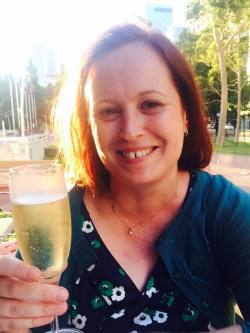
I have several more festivals this year, and am so relieved I survived my first. An initiation in no small sense of the term. Six months ago, after ten years’ effort, I published my first novel. It was a labour of love, and I thought that once I had got on the other side of the publisher’s door, all would be well. Little did I know that a whole other world of sales and publicists and editors and talks lay in wait. But I did it. I’m not sure if I will ever be totally comfortable with public speaking. But I’m still here, I signed a few books and my heart’s still beating. Next time, I’ve decided, I’m going to meet some writers!!
Articles · Booklists

The Birdman’s Wife: Shortlisted for Indie Book Awards

Congratulations to Jane Harper, author of The Dry, winner of the Debut Fiction category, and the Indie Book Awards Book of the Year. Well-deserved!
SHORTLIST ANNOUNCED FOR THE 2017 INDIE BOOK AWARDS

January 16, 2017


Australian independent booksellers are pleased to announce the Shortlist for The Indie Book Awards 2017.


The Indie Book Awards, as chosen by independent booksellers, members of Leading Edge Books, reward and promote excellence in Australian writing.  Galina Marinov, National Group Manager of Leading Edge Books says, ‘There are no bigger supporters of Australian writing and publishing in this country than independent booksellers. Their love of book, knowledge and passion for Australian stories play indispensable role in keeping Australian publishing and culture alive. The 2017 Indie Book Awards Shortlist is a tribute to the enormous depth and breadth of writing talent in this country. We are excited to be supporting and working on the Indie Book Awards campaign again and look forward to the announcement of the Category Winners and the overall Indie Book Awards Winner on 20th March.’


Affectionately termed ‘indies’, Australian independent booksellers have a proud reputation for choosing the best in Australian writing, with many of the shortlisted books in previous years going on to be bestsellers and win other major literary awards. Since its inception in 2008, the Indie Book Awards have chosen Breath by Tim Winton, The Happiest Refugee by Anh Do, Jasper Jones by Craig Silvey, All That I Am by Anna Funder, The Light Between Oceans by M.L. Stedman, The Narrow Road to the Deep North by Richard Flanagan, The Bush by Don Watson and The Natural Way of Things by Charlotte Wood as previous overall winners.


The twenty shortlisted books will be vying for the top spot as the Indie ‘Book of the Year’ for 2017. Panels of expert judges (all indie booksellers and avid readers) will choose the winners in the five book categories – Fiction, Debut Fiction, Non-Fiction, Children’s and Young Adult. Independent booksellers from around the country will then vote to select their favourite book for the year.

The category winners and the overall ‘Book of the Year’ winner will be announced on Monday, 20th March, 2017 at the Leading Edge Books Annual Conference Awards Dinner, at the Marriott, Surfers Paradise.

The Shortlist for The Indie Book Awards 2017 is:

FICTION SHORTLIST
The Good People by Hannah Kent (Pan Macmillan Australia)

Truly Madly Guilty by Liane Moriarty (Pan Macmillan Australia)

Where the Trees Were by Inga Simpson (Hachette Australia)

The Last Painting of Sara de Vos by Dominic Smith (Allen & Unwin)

NON-FICTION SHORTLIST

The Hate Race by Maxine Beneba Clarke (Hachette Australia)

Ghost Empire by Richard Fidler (ABC Books, HarperCollins Australia)

Fight Like a Girl by Clementine Ford (Allen & Unwin)

Everywhere I Look by Helen Garner (Text Publishing)
DEBUT FICTION SHORTLIST
The Birdman’s Wife by Melissa Ashley (Affirm Press)

The Midnight Watch by David Dyer (Penguin Books Australia)

The Dry by Jane Harper (Pan Macmillan Australia)

Goodwood by Holly Throsby (Allen & Unwin)

CHILDREN’S SHORTLIST

Circle by Jeannie Baker (Walker Books Australia)

Pig the Winner by Aaron Blabey (Scholastic Australia)

The 78-Storey Treehouse by Andy Griffiths & Terry Denton (Illus) (Pan Macmillan Australia)

Wormwood Mire by Judith Rossell (ABC Books, HarperCollins Australia)

YOUNG ADULT SHORTLIST

Words in Deep Blue by Cath Crowley (Pan Macmillan Australia)

Gemina by Amie Kaufman and Jay Kristoff (Allen & Unwin)

The Road to Winter by Mark Smith (Text Publishing)

Our Chemical Hearts by Krystal Sutherland (Penguin Books Australia)

The Indie Book Awards would like to gratefully acknowledge the 2017 Awards Sponsors: HarperCollins Australia, Pan Macmillan Australia, Hardie Grant, Hachette Australia, Bonnier Publishing and Hardie Grant Egmont, and Awards supporter: Simon & Schuster Australia.

For an article about the indie awards click on the link below:
http://www.smh.com.au/entertainment/books/indie-book-awards-2017-shortlists-maxine-beneba-clarkes-hard-sell-20170113-gtr8iz.html
Articles

UQ graduate brings trailblazing woman out of shadows

A “naïve young girl…who defied convention by embarking on a trailblazing expedition” documenting Australia’s wildlife is the subject of a book by a University of Queensland graduate.

In her debut work of fiction The Birdman’s Wife, UQ School of Communications and Arts alumna Melissa Ashley has reimagined the life of artist and illustrator Elizabeth Gould.

“It’s a creative interpretation of her life capturing Australia’s unique birdlife,” Ms Ashley said.

“Elizabeth was very much a woman overshadowed in history by her husband John Gould, often credited with being the father of Australian ornithology.

“She juggled demands as a wife, lover and mother to an ever-growing brood of children with her prolific career relaying the sublime beauty of birds the world had never seen before.

“Her legacy was well eclipsed by the fame of her husband, despite her breathing life into hundreds of exotic new species through lithographs, including Charles Darwin’s Galapagos finches.”

The Birdman’s Wife began as a PhD project for Ms Ashley, but the “labour of love” eventuated into a nomination for the Indie Booksellers’ 2017 Book Awards.

In the author’s note she gave credits to UQ supervisors Associate Professor Bronwyn Lea and Dr Melissa Harper, the School of Communication and Arts, and acknowledged funding from the UQ Graduate School.

So inspired was Ms Ashley by bringing the life of Elizabeth Gould to print, she even volunteered as a taxidermist at Queensland Museum.

“Elizabeth was a woman ahead of her time,” Ms Ashley said.

“She was – and deserves to be remembered as – so much more than the lady behind the man.”

Born in Ramsgate, England as Elizabeth Coxen in 1804, she died at age 37 not long after the birth of her eighth child.

Elizabeth spent some of her final years in Australia, based in Hobart, before returning to England.

Her brother Charles Coxen also immigrated to Australia and was a member of the Queensland Philosophical Society.

Both the Gouldian finch and Mrs Gould’s sunbird were named in Elizabeth’s honour.

Author Ms Ashley will appear at Riverbend Books on Thursday, 16 February at 6.30pm to discuss The Birdman’s Wife.

Other events on her radar include the Perth International Arts and Writers’ Festival on 24-25 February and the World Science Festival at Queensland Museum on 25 March.

The Birdman’s Wife is published by Affirm Press.


https://www.uq.edu.au/news/node/120210

Articles · Essay

Audiobooks return the pleasures of reading to the print and visually impaired

410yemhlgal-_sl300_Not long after I sold the rights for The Birdman’s Wife to Affirm Press, I was delighted to be offered a publishing contract from Wavesound, a new audiobook imprint dedicated to making Australian titles available in alternative formats to print. Wavesound is an imprint of Audible, the world’s largest publisher of audiobooks. All of Wavesound’s audiobooks are recorded locally in Sydney, and employ Australian actors.
While readers may be aware of audiobooks as a new form of media by which to enjoy reading, few realise that for the print-impaired, audiobooks are the only means of accessing our culturally significant local and national stories.

At the age of 10, my 12 year old daughter was diagnosed with cone-rod dystrophy, a degenerative retinal condition that affects both her central and peripheral vision. Diseases of central vision, known as macular dystrophies in children, and macular degeneration in adults, make reading particularly difficult, as the fine focus needed to engage with print is severely degraded. For some, larger print titles are the answer, but for many, with significant central vision damage like my daughter, the only way to access written texts is via an audio channel. (If she does try to read very large text, it is by scanning words with her peripheral vision. This causes headaches and dizziness, which as you can imagine, destroys all pleasure of losing oneself in the imaginary world of a book.)

Unfortunately, there is a world-wide poverty in accessing audio books for the visually impaired. Indeed, only 5% of texts make it into audio formats. For my daughter, this means that contemporary literature by Australian authors suitable for her age group is often not available. For example, she cannot always access class texts in a suitable format, and instead has them read out to her by classmates or her teacher. My daughter is and always has been an avid reader. She is currently making her way through Anne of Green Gables. She has read Harry Potter several times over and is keen to begin The Lord of the Rings, but there many  recently published titles that her friends enjoy that she simply cannot access. And this is why an imprint like Wavesound’s commitment to publishing unique Australian stories in audio formats is so important.

The audiobook of The Birdman’s Wife was published in the same week that the printed text was released. With Wavesound and other imprints, there is no lag – determined by market popularity, for instance – in accessing an audio title. For the print-impaired reader, this means that having the same diverse choices as any other reader to engage with culturally relevant local and national stories is made possible.

Another bonus to able and impaired readers is that while you can purchase your own copy of an audiobook to listen to at your leisure,  you can also access audiobooks on a downloadable format from your council library – far more convenient than popping into the physical version to borrow the printed title.

I am filled with gratitude that Wavesound has taken the step of making The Birdman’s Wife into an audiobook. Natasha Beaumont’s beautiful narration gives a very different reading experience, rich, lush and nuanced, which can be enjoyed by all readers, not just the print-able. Although my daughter is a little young to connect with The Birdman’s Wife, I look forward to the day when she tells me that she is ready to read the novel I dedicated to her.

To hear a sample of Natasha Beaumont’s gorgeous narration of The Birdman’s Wife, follow the link below (it will take you to the audible website). Enjoy!

http://www.audible.com.au/pd/Fiction/The-Birdmans-Wife-Audiobook/B01M1SETYE


Articles

The Birdman’s Wife by Melissa Ashley: Elizabeth Gould’s forgotten talent

Caroline Baum

Spectrum October 14, 2016

The birds came first. Melissa Ashley was a twitcher before she decided to write The Birdman’s Wife, a historical novel that brings Elizabeth Gould out of the shadow of her husband John, Australia’s most celebrated ornithologist.

A New Zealander, Ashley, 43, came to Australia aged eight with her parents as the eldest of four children. As an adult living in inner-city Brisbane, she worked in disability care, helping deaf people talk on the phone before technology took over that role. She first became interested in birds when her poet partner wrote a poem about a black-faced cuckoo shrike. Ashley had also published a collection of poems, A Hospital For Dolls, in 2003 and decided that in order to share her partner’s other enthusiasm, she would join a birdwatching group.

sydneymorningherald

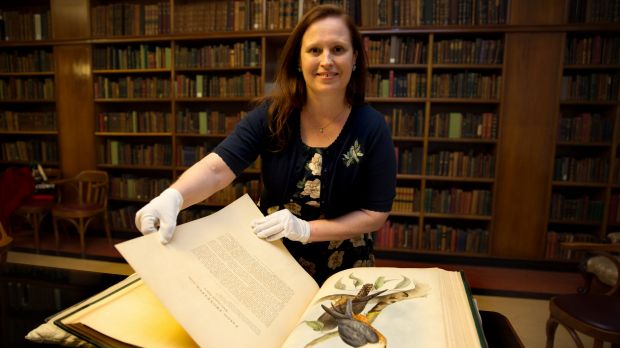
The Birds of Australia, Mitchell Library. Photo by Edwina Pickles

“I seemed to spend all my time focusing my binoculars,” she says of her amateur beginnings. But she caught the bug and was soon going out with more seasoned watchers to count waterfowl as part of a data-gathering project and spending holidays interstate to spot highly prized species, including going to Far North Queensland and paying a guide to find a golden bowerbird in its natural  habitat. “I became obsessed with my bird list to the point of competing with my partner.” Even her four-year-old daughter shared her interest: “She made herself wings and ran around the house flapping her arms.”

After the poet flew the nest, Ashley remained a committed birder (her website is called Satin Bowerbird). Her favourite species are the fairy wren she sees frequently in her backyard, featured in an exquisite painting by Elizabeth Gould on the cover of her novel, and the royal albatross – a scene-stealing presence in an entirely imagined episode in the book, but which Ashley has yet to see for herself.

elizabethsdiary
Elizabeth Gould’s diary, Mitchell Library. Photo by Edwina Pickles

As a self-confessed research nerd Ashley is happiest fossicking about in archives and says she enjoyed writing the scenes on board the ship that brings the Goulds to Australia because she loved learning the nautical terminology.

“It was The Birdman, Isabella Tree’s biography of John Gould that drew me to Elizabeth,” she says. “She made her such an enigma. I wondered how it felt to be pregnant every nine months, to lose two children, to leave family behind to join her husband’s expedition to Australia, to develop her skill as an artist and become such an essential part of Gould’s fame and success while being so under-acknowledged.”

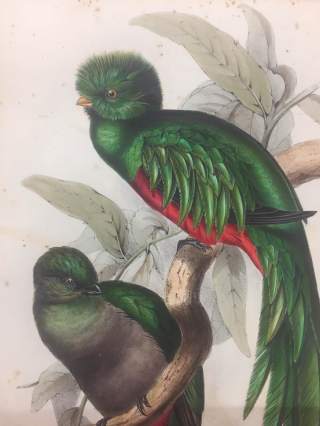
Elizabeth Gould designed and completed 650 superb hand-coloured lithographs of the world’s most beautiful bird species, including Charles Darwin’s Galapagos finches, before dying at the age of just 37. As well as being her husband’s secret weapon, she became close friends with Lady Jane Franklin, another woman remarkable for her curiosity and initiative in the Victorian era, as wife of the Governor of Tasmania. And she formed a professional friendship with the eccentric artist Edward Lear, who joined the Goulds for seven years due to his impecunious circumstances. “He was an ally to Elizabeth in that he teased John slightly about being a bit of a miser and very demanding.”

These secondary characters act as a foil to John Gould, who comes across as relentlessly energetic, ambitious and entrepreneurial. In real life, he was no match for his his wife’s artistic skill, despite his fame for the book Birds of Australia. Ashley says she too lacks drawing ability.

<i>The Birdman's Wife</i>, by Melissa Ashley.

Not to be deterred, Ashley took up a dare from an unusual source, a volunteer taxidermy group member at the Queensland Museum. In order to fully appreciate Elizabeth Gould’s talents for making dead, stuffed specimens come alive on the page, Ashley learned the basics of the craft. “I needed to look at plumage, beaks, claws,” she says.

It was a fitting decision, given that Elizabeth’s brother Charles worked for John Gould as a taxidermist and introduced the couple. John Gould employed a team of so called-stuffers; Ashley joined the volunteers’ circle for a year. “It was terrible to start with, my fingers bled from the sewing. It’s quite a business, you get the specimens out of a giant freezer and use scalpels to cut them open to and remove the innards, including removing the meat out of the wings, which is very fiddly, and then you fill the body cavity with Dacron and cotton wool before stitching them up to be wrapped in gauze like a shroud.

“The best part was the stories the others told about the dangers involved in collecting fresh specimens of roadkill. One volunteer had almost fallen into the carcass of a rotting humpback whale. Another had given her med-student daughter a taxidermied rat she had dressed in a tiny coat and equipped with a doll-sized stethoscope. It was like a sewing circle although the smell was pretty terrible and made me retch.”

Fortunately, she was not faced with the task of stuffing an albatross. “The scene in which the albatross is captured is a turning point for Elizabeth as a character, when she questions the killing of all those birds and ultimately accepts it. But I could not let the albatross be killed; it felt taboo. And although Elizabeth made 10 plates of seabirds, she never did an albatross.”

Thanks to a serendipitous connection with a fellow volunteer, Ashley met a descendant of Elizabeth Gould’s nephew and was shown precious photographs of the homestead where Elizabeth stayed with her brother, who had come out to Australia as a pastoralist. These leads whetted her appetite for further scholarly research.

Writing the novel as part of a PhD at the University of Queensland meant Ashley was able to deepen her investigation and speculation over four years during which she wrote five drafts of the manuscript. It was as a member of a scholarly nature-themed reading group that she met fellow novelist Inga Simpson, who would become a mentor. “She took me under her wing,” says Ashley, seemingly unaware of the pun. She was also inspired by Elizabeth Gilbert’s novel The Signature of All Things, about a heroine of great scientific curiosity, which she read halfway through writing The Birdman’s Wife.

As part of her research Ashley was lucky to have access to unpublished memoirs by Elizabeth and John’s daughter, the marvellously named Eliza Muskett Moon, held in the world’s biggest Gould collection at the University of Kansas.

At Sydney’s Mitchell Library she was able to view the so-called “pattern plates” or templates that Elizabeth painted as a guide for the colourists her husband employed. After making a case to the special collections  department, she was eventually given permission to look at the precious originals of Elizabeth’s diary, which were brought up from a natural-disaster-resistant safe.

“It was only eight pages and it was buried deep inside a cache of John Gould’s letters as if it had no significance in its own right. In fact it was indexed under his name,” says Ashley of the journal that Elizabeth wrote documenting  her impressions of a two-week visit to Sydney, Newcastle and Maitland. As diary keeping was a popular occupation for a woman of her rank, one can only assume that Elizabeth wrote similar accounts of her travels to Tasmania, where she spent a year, and her time in the Upper Hunter Valley staying with her brother, but they have not survived. Only a dozen of her letters exist, while her husband’s correspondence runs to many thousands of letters.

Ashley’s achievement is even more impressive given that she is a single mother with two children, one of whom is losing her eyesight. “Thank goodness for audio books,” she says. Ashley has not written a poem for 13 years. “It’s as if I grew out of it,” she says, with a laugh that she quickly stifles as if to say such a thing were indecent.

She is already at work on her next novel, also a work of historical fiction, this time about a 17th-century aristocratic French woman who wrote fairytales pre-dating her well-known compatriot Charles Perrault and the Grimm Brothers.

“Once again I can immerse myself in research,” she says, acknowledging that “it may be a form of procrastination”. And again, she has chosen as her subject a woman written out of the history books. “That is my lifelong passion. I’ve tried writing contemporary fiction but I feel lost when it comes to writing about today. I seem to relate more to the past, but still want to address issues that are relevant today.”

The Birdman’s Wife is published by Affirm Press at $32.99.

And another thing: Ashley participated in a competitive “twitchathon” searching for 200 birds across Brisbane but was disqualified for getting a speeding ticket.

http://www.smh.com.au/entertainment/books/the-birdmans-wife-by-melissa-ashley-elizabeth-goulds-forgotten-talent-20161005-grvqxy.html

Articles

Flight of Fancy

Melissa Ashley’s imaginative historical novel repositions Elizabeth Gould as the artistic talent behind her much more famous husband, John

Phil Brown “Books” QWeekend, 1 October, 2016

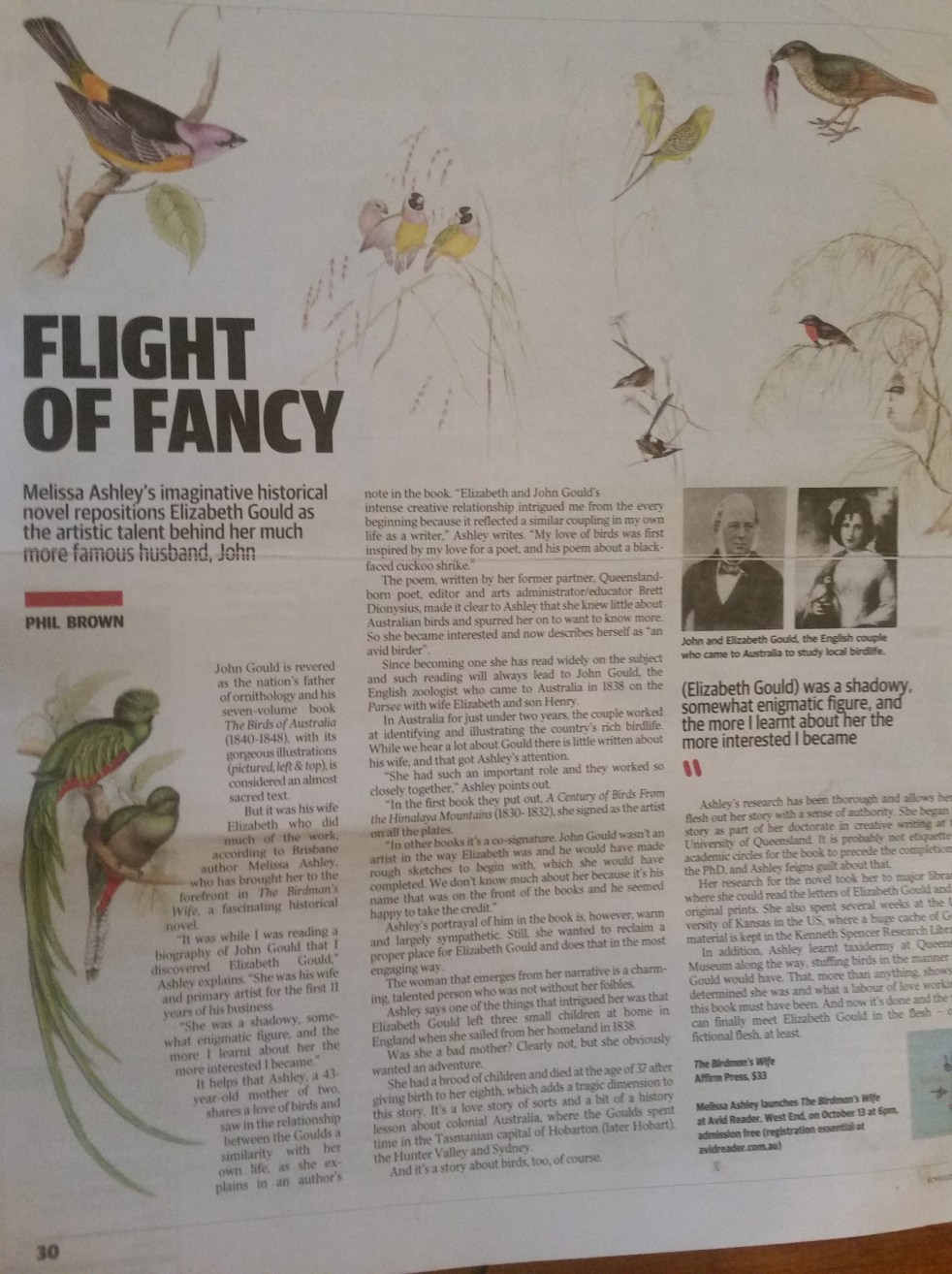
John Gould is revered as the nation’s father of ornithology and his seven-volume book The Birds of Australia (1840-1848), with its gorgeous illustrations, is considered an almost sacred text.

But it was his wife Elizabeth who did much of the work, according to Brisbane author Melissa Ashley, who has brought her to the forefront in The Birdman’s Wife, a fascinating historical novel.

“It was while I was reading a biography of John Gould that I discovered Elizabeth Gould,” Ashley explains. “She was his wife and primary artist for the first 11 years of his business.

“She was a shadowy, somewhat enigmatic figure, and the more I learnt about her, the more interested I became.”

It helps that Ashley, a 43-year-old mother of two, shares a love of birds and saw in the relationship between the Goulds a similarity with her own life, as she explains in an author’s note in the book. “Elizabeth and John Gould’s intense creative relationship intrigued me from the very beginning because it reflected a similar coupling in my own life as a writer,” Ashley writes. “My love of birds was first inspired by my love for a poet, and his poem about a black-faced cuckoo shrike.”

img_5594

The poem, written by her former partner, Queensland-born poet, editor and arts administrator/educator Brett Dionysius, made it clear to Ashley that she knew little about Australian birds and spurred her on to want to know more. So she became interested and now describes herself as an “avid birder.”

Since becoming one she has read widely on the subject and such reading will always lead to John Gould, the English zoologist who came to Australia in 1838 on the Parsee with wife Elizabeth and son Henry.

In Australia for under two years, the couple worked at identifying and illustrating the country’s rich birdlife. While we hear a lot about Gould there is little written about his wife, and that got Ashley’s attention.

“She had such an important role and they worked so closely together,” Ashley points out.

“In the first book they put out, A Century of Birds from the Himalaya Mountains (1830-1832), she signed as the artist on all of the plates.

“In other books it’s a co-signature. John wasn’t an artist in the way Elizabeth was and he would have made rough sketches to begin with, which she would have completed. We don’t know how much about her because it’s his name that was on the front of the books and he seemed happy to take the credit.”

Ashley’s portrayal of him in the book is, however, warm and largely sympathetic. Still, she wanted to reclaim a proper place for Elizabeth Gould and does that in the most engaging way.

The woman that emerges from her narrative is a charming, talented person who was not without her foibles.

Ashley says one of the things that intrigued her was that Elizabeth left her three small children at home in England when she sailed from her homeland in 1838.

darwinsfinchelizagold

Was she a bad mother? Clearly not, but she obviously wanted an adventure.

She had a brood of children and died at the age of 37 after giving birth to her eighth, which adds a tragic dimension to this story. It’s a love story of sorts and a bit of a history lesson about colonial Australia, where the Goulds spent time in the Tasmanian capital of Hobarton (later Hobart), the Hunter Valley and Sydney.

And it’s a story about birds, too, of course.

Ashley’s research has been thorough and allows her to flesh out her story with a sense of authority. She began the story as part of her doctorate in creative writing at the University of Queensland. It is probably not etiquette in academic circles for the book to precede the completion of her PhD, and Ashley feigns guilt about that.

Her research for the novel took her to major libraries where she could read the letters of Elizabeth Gould and see original prints.  She also spent several weeks at the University of Kansas in the US, where a huge cache of Gould material is kept in the Kenneth Spencer Research Library.

In addition, Ashley learnt taxidermy at the Queensland Museum along the way, stuffing birds in the manner that John Gould would have. That, more than anything, shows how determined she was and what a labour of love working on this book must have been. And now it’s done and the world can finally meet Elizabeth Gould in the flesh – or the fictional flesh – at least.

the-birdman%27s-wife-cover

The Birdman’s Wife

Melissa Ashley

Affirm Press, October 2016

ISBN 9781925344998