Essay

Leaves of a Diary

Searching for Elizabeth Gould in the Archives of the Mitchell Library

IMG_3622.JPG

‘Who was Elizabeth Gould (1804-1841), and why has her name now been elevated to equal status with that of John Gould?’ wonders Roselyn Russell (2009: 1), author of the recent biography The Business of Nature: John Gould and Australia (2011). While the taxonomist and natural history publisher John Gould is often regarded as the ‘father’ of Australian ornithology, having scientifically described almost two hundred new Australian species (Datta: 151), the important contributions made by his wife and principal artist, Elizabeth Gould, are less-well remembered. In 1838 the London-based zoological team travelled to Australia to collect and draw specimens for the seven volume publication, The Birds of Australia (1840-1848). The couple brought along their eldest son, John Henry, but left their three youngest children in London, in the care of Elizabeth’s mother and cousin. Residing in Hobart and the Hunter Valley, the Goulds spent almost two years in Australia, returning to London in 1840 with their hoard of sketches, field notes and study skins. Unfortunately, Elizabeth enjoyed only one year back in England designing and producing hand-painted lithographs for The Birds of Australia. She had completed 84 of the collection’s 681 plates, when she succumbed to puerperal fever in August, 1841, just four days after the birth of her eighth (surviving) child. She was thirty-seven.

Elizabeth Gould’s intriguing biography, her courage in leaving her children to participate in a scientific expedition, the controversy surrounding her contributions to the lithographic plates she co-authored with her husband, and her early death, demonstrated great potential for the explorations of historical fiction. However, eighteen months into my creative dissertation, a fictional memoir titled, Elizabeth Gould: A Natural History, I was yet to be convinced by Russell’s assertion that the zoological illustrator’s reputation had been significantly elevated. I had undertaken an extensive amount of research: a handful of biographies of John Gould, two volumes of published correspondence, numerous studies of his zoological works, along with histories of ornithology and lithographic print-making. I familiarised myself with Elizabeth Gould’s drawing and painting style, viewing many of the 600 lithographs she designed and produced during her eleven year career. To learn more about Australia’s bird species, I took walks with bird-watchers and became a volunteer taxidermist, making study skins of native birds at the Queensland Museum.

Elizabeth Gould (nee Coxen) was born in 1804, in Ramsgate, Kent (Chisholm: 1). Her father held a military posting with the British navy. She married John Gould in her mid-twenties and soon after began drawing and painting for him, illustrating the novelty bird species that turned up among the caches of specimens he taxidermied for clients. In 1830, when John Gould made the decision to produce and publish a subscriber-paid volume of hand-painted lithographs of Indian birds, Elizabeth Gould served as principal artist. Biographical legend has it that when John shared the inspiration for his publishing adventure with Elizabeth, she was incredulous, asking who would do the work of transferring the images onto stone (Bowlder Sharpe: xii). John, who did not possess the skills of fine drawing, uttered his infamous reply: ‘Why you, of course’ (Bowlder Sharpe: xii).

Before reaching the age of thirty, Elizabeth had designed and illustrated eighty hand-coloured lithographs, representing one hundred species of Indian birds, the majority of which were not previously known to science. In 1832, the plates, published at quarterly intervals in issues of twenty, were bound together under the Goulds’ first title, A Century of Birds from the Himalaya Mountains. To reward Elizabeth’s achievement in creating the lithographed plates, the systematist, N.A. Vigors, who had assisted John Gould with the collection’s taxonomy, named a species of sunbird after her, Mrs Gould’s Sunbird, Aethopyga gouldiae. Elizabeth collaborated with her husband until her death, creating designs, drawings and lithographs for eight separate publications, including The Birds of Europe (1832-7) and monographs on the Toucan (1833-5) and the Trogon (1835-8) families. Elizabeth illustrated the avian specimens that Charles Darwin’s collected during his voyage of discovery on HMS Beagle and three collections that described Australian species. To acknowledge Elizabeth’s contributions to Australian ornithology, John Gould named the Gouldian Finch, Erythrura gouldiae, in her honour.

At the bottom of each plate in the Goulds’ first publication, A Century of Birds from the Himalaya Mountains, is the artist’s signature, ‘Drawn from Nature and On Stone by E Gould.’ ‘Drawn from nature’ indicates that the species depicted had been taken from the study of a taxidermied specimen. This was to distinguish it from an image that was a copy of another illustration and therefore considered inferior. When plates for the Goulds’ second book, The Birds of Europe (1832-1837), were released, a significant change was evident in the bottom left-hand corner of each plate. Rather than acknowledging Elizabeth as the artist responsible for designing and colouring the lithographs, a new signature appeared, ‘J & E Gould del et lith,’ suggesting joint authorship in the form of a husband and wife collaboration. ‘Del’ referred to the practice of delineation, or the artistic composition of the drawing, and ‘lith’ to transferring the design onto limestone during the process of lithographic printmaking. In all subsequent volumes that John and Elizabeth Gould worked upon, plate authorship was recorded as a combined effort, even though it was commonly accepted that John Gould was an ornithologist, taxidermist, book-producer and businessman, not a visual artist (Jackson: 39). Rather than elevating Elizabeth’s significance as Gould’s principal artist, this arrangement obfuscated her artistic contributions for the next 170 years.

This shift in authorship intrigued me, and I was sure that it had impacted upon John and Elizabeth Gould’s working and intimate relationship. By this time I was struggling to continue with my first draft of the fictional memoir. In my anxiety to familiarise myself with the Goulds’ biography, I had become distracted by the myriad detail of bird lists, painting supplies, research expeditions, and publication deadlines. The more I delved into the archive, the more overwhelmed I felt by information and data, losing the focus of story and narrative. Unable to make progress with a chapter, I would compile lists, copying the working approach of John Gould. I created files in which I cross-referenced dates referring to Elizabeth’s pregnancies; I collected the names of each species designed and lithographed by her; I inventoried each Australian species John Gould described; I listed his collecting trips and the dates and the order of publication of plates in The Birds of Australia.

I wondered if viewing physical artefacts used by Elizabeth and John Gould might help reconnect me with the process of characterising Elizabeth as my point-of-view narrator. In my obsessive research, I had lost touch with the spark that urged me to explore the artist and mother’s hidden legacy. I decided to visit the Mitchell Library in Sydney, the repository of the largest collection of Gouldian material in Australia. The library’s archive includes original drawings, paintings, designs, templates, hand-coloured lithographs, field journals, correspondence and diaries.

In conducting my trip I hoped to achieve a number of aims. Primarily, I wished to discover a kernel or two about Elizabeth Gould’s habits and temperament by examining personal effects that had survived her. I hoped this contact would help me to channel the historical persona into the character I needed to produce for the page. I also wanted to train my eye to recognise Elizabeth Gould’s artistic ‘hand.’ And lastly, I sought answers to questions raised during my research into the collaboration in plate-design between Elizabeth and John Gould. For I was yet to find a single example of John Gould’s major contribution to lithographic plate design during the period Elizabeth worked as principal artist in his production house. Contrary to Russell’s assertions, from my investigations it seemed that John Gould’s standing in Australian ornithology and as a zoological illustrator had been preserved and even enhanced during the last several years. Since embarking on my dissertation, three new books exploring his life and works had appeared in the natural history book market. Conversely, Elizabeth Gould’s reputation had suffered the opposite effects, her importance as a lithographic artist not only obscured and forgotten, but her original works often attributed to her husband.


Elizabeth Gould’s plant album

I am during his absence drawing as many native plants as I can, I mean branches of trees, some of which are very pretty. (Sauer: 6)

I find amusement and employment in drawing some of the plants of the colony, which will help to render the work on Birds of Australia more interesting. (Sauer: 13)

IMG_2290.JPG

I typed ‘Elizabeth Gould’ into the search aid Trove’s ‘pictures, photos and objects’ database, and seven links were returned. John Gould’s name elicited around 577. This was how I discovered ‘Elizabeth Gould’s plant album’, a collection of 76 drawings, paintings and sketches of plants, flowers, and occasional birds, created during her stay in Australia. The album was acquired by the Mitchell Library in the 1950s–it had been twice previously offered for purchase in the 1930s by the auction house Sothern. The plant album had been digitised by the library and before making my trip, I familiarised myself with the contents: hand-coloured fronds of acacias, eucalypts, casuarinas, native grasses and even a crimson Tasmanian waratah. Interestingly, a significant number of the backgrounds of the plates for The Birds of Australia showed plant and flower detail that was identical to the studies in Elizabeth’s plant album. Foliage, branch, gumnut, and flowering bud had been copied directly onto sketch paper and a thornbill, honeyeater, parrot or wren drawn perched on a branch, its diagnostic characteristics revealed by an appropriate parting of leaf and stem.

In my early reading about Elizabeth Gould, I’d encountered references to her described as a talented botanical artist with a background in flower painting and landscapes (McEvey 1973: 22). I had been unable to find any information about Elizabeth’s training in botanical drawing–Edward Lear claimed to have assisted with the foregrounds she painted on A Century of Birds for the Himalaya Mountains–and wondered if the plant album provided the source for these comments (Jackson: 35). While this was an interesting proposition, I had other reasons for subjecting the originals to a thorough examination. One of my ideas was to investigate the album for evidence that Elizabeth Gould made original contributions to The Birds of Australia, and did not merely act as handmaiden or studio copyist to the vision of John Gould, as suggested by art historian Allan McEvey (1967-68: 16). Eighteen months’ research had left me deeply unsettled by McEvey’s assertion that John Gould was the ‘guiding spirit’ behind all of the plates that bore his initial (1967-68: 16).To frame my research, I trained my focus on elements in the Gouldian ‘house’ style that might be attributed to innovations by Elizabeth Gould.

To view the album, a member of staff escorted me into an open-plan office space. My conditions of access were supervised and I was provided with various-sized magnifying glasses to decipher the album’s faded signatures, dates and marginal notes. On some pages there was a signature, ‘EG,’ ‘E Gould,’ on others, a few lines of handwriting recording collection details, a date and a place, ‘Yarrundi, May 1839’, or just simply the botanical name of the sketched plant. One interesting observation was that many of the drawings, especially the folio-sized images, were soiled, marked by what seemed like an oily, dirt-attracting substance that I thought might be lithographic crayon grime. This heavy use seemed evidence that the paintings were especially important to John Gould. Not only had the watercolours been preserved, they had been repeatedly consulted as references. Had they become a sort of template, I wondered, that John Gould and H. C. Richter, the artist he employed to replace Elizabeth, consulted during plate composition across the eight year production schedule of The Birds of Australia? Several of the drawings were torn and repaired, corners were missing and where inferior paper had been used substantial foxing had taken place. The drawings were made on different sizes and grades of paper, including Royal folio with watercolour markings, the smaller octavo, and the backs of recycled lithographs. What hadn’t captured my attention during my digital viewing of the record–but was obvious in the originals–was that in many of the sketches only the top leaves, buds and flowers of the plant specimens had been finished in watercolour wash, the lower branches and foliage left in pencil outline. It was as if Elizabeth had attempted to record as many native Australian botanicals as possible, for example, she made numerous studies of the densely-flowering acacia genus, but was time-poor and had to rush.

As part of my practical research I observed a wild Mistletoebird through binoculars; I cradled a taxidermied study specimen in my palms. I remember my awe at the diminutiveness of this tiny creature, no bigger than an elephant beetle, entombed in its moulded cube of museum Styrofoam. While I’d been casually watching birds for about a decade, it was only in the last few years that I’d become serious about identifying new species. It wasn’t until August, 2011, during a trip to the Wildlife Conservancy property Bowra Station, about twenty kilometres north-west of Cunnamulla, that I had first encountered the species. I’d tried to find it closer to home, but not been successful, though it resides wherever mistletoe occurs, maintaining a symbiotic relationship with the plant by dispersing its seeds in its droppings. As is sometimes the case with a newly observed species, I have since seen it several times. But there was something about my initial sighting of this energetic creature, chirping and flitting about, sharing its mistletoe home with a Singing Honeyeater, that gave me a quiet thrill. The adult has a diagnostic black stripe running down the middle of its underside, which helps distinguish it from the Scarlet Honeyeater, another miniscule red and black species that darts about at neck-craning heights. The Mistletoebird’s scarlet throat and chest plumage bleed at the mid-line into a white belly; its back, rump, tail and wings are glossy black.

On plate twenty-one of the plant album I found Elizabeth Gould’s 1839 sketch of the Mistletoebird. The background foliage of a branch of casuarina, draped in flowering mistletoe and supporting a hammock-shaped nest, included a juvenile’s head just visible at the opening. The nest’s outer casting of spiders’ web, dried lichens and leaves had been figured with precise clean pencil strokes. This original drawing was sketched by Elizabeth at her brother, Stephen Coxen’s farm, ‘Yarrundi’, near present-day Scone. The species, a member of the flowerpecker family, isn’t endemic to Australia, and nor was John Gould the first to scientifically describe its morphology and habits. Most pertinent to my investigations, was that the unpublished sketch had become the design for the Misteltoebird plate in The Birds of Australia. Few details were changed. The pencil-sketched birds were invigorated with their plumage colours and diagnostic markings, the nest given its appropriate shadings and tones. McEvey, who confessed to twenty-years of puzzling over John Gould’s drawing ability, made the following comment about the occasional bird sketching in Elizabeth’s plant album:

Pencilled bird drawings are sharp and precise in their details showing feather groupings, and are quite different in character from Gould’s rough sketches [in the present illustrations]. (1967-68: 21)

If McEvey’s observations are correct, then the sketch provides documentary evidence that Elizabeth Gould was an original artist in her own right. She compiled studies for and then finalised–‘delineated’–the composition, tracing it onto the limestone printing block and selecting the paints and colours for the hand-coloured plate. While John Gould must have approved the image, does this gesture deserve the ‘delineation and lithography’ credit recorded on the bottom left hand corner of the plate?

That Elizabeth Gould’s plant album contained Australian birds perched on native Australian botanicals was also noteworthy because the depiction of the relationship between a bird species and the plants it foraged on or nested in was a deviation from early nineteenth century conventions of zoological illustration (Jackson: 16). Foliage generally worked like parsley garnishing a tray of sausages, a de-emphasised backdrop to the horn-shaped bills and streaming plumages of the novel bird specimens arriving at London’s docks from around the world. The field observations that accompanied specimens were inconsistent in their accuracy and attention to detail and thus of questionable scientific usefulness (Farber: 47). In their early works the Goulds’ were inspired by Edward Lear’s ground-breaking monograph, Illustrations of the Family of Psittacidae, or Parrots: the greater part of them species hitherto unfigured (1830-1832). Lear was a pioneer of natural history lithography, providing minimal plant details in the backgrounds of his bird lithographs to better showcase the texture and colours in his exotic subjects’ plumages (Jackson: 35). The backgrounds in the Goulds’ first collections paid scant attention to botanical detail, the generic foliage serving to highlight the features of the illustrated bird. It was a case of aesthetics trumping science.

Upon returning to England, John Gould, who had trained as a landscape gardener, offered the plant specimens that he and Elizabeth collected in Australia for sale, but they were passed over for being improperly referenced and preserved. This was ironic, given that in Gould’s own field of Zoology, improper handling, preparation and storage of specimens could result in the contagion of whole collections by mildew and insect infestation. Considering Elizabeth’s curiosity and enthusiasm about Australian native plants, and John’s lack of care, the question might be raised as to whose idea it was to depict the bird specimens in The Birds of Australia perched on the native species they nested in and foraged upon. Is it possible that Elizabeth Gould contributed to this important development in the Gould ‘house’ style?

As I closed the album and handed it back to its librarian-guardian, I felt close to my subject. The folio was an artistic repository of grief and what ifs with respect to Elizabeth Gould’s cultural reception. What might be her current reputation, I wondered, had she survived the birth of her eighth child and completed illustrating the plates for The Birds of Australia? I sensed, shearing in close, John Gould’s tragic loss of his beloved wife and principal illustrator. He had kept all of these bits and scraps of half-finished watercolours in a special album. He had consulted them time and again, studying them, touching them, laying them out in the studio for his new artist, H. C. Richter, to absorb. He had understood his deceased wife’s discovery in including sketches of native Australian plants, ‘rendering the works on [The] Birds of Australia more interesting’, as she put it in a letter to her mother (Sauer: 13).


‘Pattern plates’ for The Birds of Australia


One of the most important Gouldian records I travelled to the Mitchell Library to view were the ‘pattern plates’ for The Birds of Australia. The pattern plates were the original water-colour templates prepared by John Gould’s artists, Elizabeth Gould and H. C. Richter, for the colourists to hand-colour multiple copies of the lithographic impression and are regarded as one of the Mitchell Library’s treasures. To put the pattern plates into a financial context, in 2011, a complete edition of The Birds of Australia–seven volumes comprising 683 hand-coloured lithographs and accompanying letterpress–sold at auction for $230,000 (Collector Chat: 3).

Desiring a deeper connection with my subject, this record felt more significant than an original hand-coloured folio edition of The Birds of Australia, not to mention the digitalised JPGs of plates collected in my laptop’s hard drive. The pigments on the template lithographs had been selected and applied by Elizabeth’s sable brushes. However, the appearance of John Gould’s pattern plates was not what I had been expecting. I had imagined the record as a couple of large volumes, roughly bound together, a haphazard collection of what had been salvaged of the original 681 watercolour templates. Near the beak or foot of a honeyeater or rosella there would be inked instructions. On this latter point, my expectations were confirmed; some corners and edges of the plates contained marginalia in faded brown ink, corrections for the head colourist, Gabriel Bayfield, to pass on to his workshop: ‘feet rather too blue, and ‘a little warmer in the grey’. But my other anticipations were off the mark. The pattern plates for The Birds of Australia were bound in hand-tooled green Morocco leather, embossed with gold lettering on the spine and front, the binding John Gould recommended for his finished volumes. The record so accurately resembled the published folio that I experienced a moment of awful panic and rechecked the title on the spine, sure that I’d been given The Birds of Australia to browse rather than the record requested. The pattern plates were bound in taxonomic order, in identical sequence to The Birds of Australia, each illustrated lithograph accompanied by letterpress detailing the date and name of the ornithologist who first described the species, the scientific and common names, field observations regarding behaviour, distribution and the rearing of young, and plumage descriptions, all of the text prepared by John Gould.

Before her death, Elizabeth designed and lithographed nine of the ten templates of fairy wrens depicted in The Birds of Australia. In the Goulds’ era, members of the endemic Australian genus was known as warblers and considered ‘allies’ or distant relatives–according to the pre-Darwinian quinary system of taxonomy used by John Gould–of morphologically similar European song-birds. Their wide distribution, brightly-plumaged males, human-curious behaviour and co-operative breeding practices led to popular interest in the genus, which continues into the present. When the Goulds visited Australia, it was not just to collect bird specimens that they could taxidermy, mount and draw; John Gould was also concerned with obtaining field information using his own expert observation. He instructed his collectors to bring him the species’ clutches (eggs and nests). In the letterpress that accompanies the Blue Warbler (Superb Fairy-wren) plate, which depicts three subjects, a male in display and a female attending a juvenile in its nest, the field observations are as valid today as they were almost two hundred years ago. The dominant male shows full colour plumage only during breeding season, the species is socially gregarious, practicing co-operative breeding, and they incubate the eggs and rear the young of the Bronze Cuckoo parasite. Excluding the Superb Fairy-wren’s behaviour toward cuckoo eggs, all of these discoveries are depicted in the narrative of Elizabeth’s drawing. Her artistic observations of the species while they were out and about gathering food and nesting materials, showing their communication with one another, capturing their moving silhouette–a combination of diagnostic features, known in the birding world as a species’ ‘jizz’–are all evident in her meticulous lithograph. Any bird-enthusiast can immediately appreciate the tenderness, accuracy and care shown in Elizabeth’s depictions of this well-loved species.

Could it be that Elizabeth’s first-hand studies of fairy wrens influenced her drawing and composition in new and positive ways? There are certainly significant differences between the nine templates Elizabeth delineated and lithographed of the genus Malurus and the pattern plate of the Malurus pulcherriums, the Blue-breasted Fairy Wren, first described by John Gould in 1844, three years after Elizabeth’s death. The species was delineated and lithographed for The Birds of Australia by John Gould and H. C. Richter. Richter, who had not observed any species of fairy wren alive or in its natural habitat, resorted to block colour on the head and crown, failing to define the feather detail on the cheek, crown, ear-coverts, throat and forehead. Conversely, Elizabeth went to extraordinary lengths, with what must have been a single-haired brush, to show the barbs in each individual feather. This attention to detail is present in her depiction of eye-rings, bristles around the bill, and in the texture of the skin of the lower legs. Richter’s Blue-breasted Fairy Wren, when compared with Elizabeth’s Variegated, Red-backed, Splendid and White-winged Fairy Wren lithographs, lacks tone, depth and fineness.

Elizabeth Gould paid careful attention in colouring her Australian species, using a soft pallet of matt watercolours, nothing garish or overly bright, clumsy and unrefined. She deployed an array of painting tools and brushes for outlining the most minute detail, for example the scalloped edges of the breast feathers of her pale-headed rosella, and the scaly skin of her brush turkey’s feet. Other effects of Elizabeth’s fine technique include the light-reflecting finish she created to suggest the eye’s rounded orb, giving it a lifelike gleam, and detailing the tiny hairs on honeyeaters’ brush-like tongues. Some of the lithographs signed ‘J Gould and H C Richter’ show inaccuracies and infelicities in colour representation–vague and over-zealous application of black, and gaudy yellows, reds, and oranges. For example, in the drawings John Gould prepared for the Corivd family–crows, magpies and butcher-birds–there are issues with form and movement. A recurring inaccuracy occurs in the shape of the subjects’ heads and crowns, particularly if positioned with the neck at an unusual angle. The lack of tone built into the colouring may be responsible for the ‘flat’ rather than spherical rendering of the heads in several lithographs. It’s almost as if the pattern plate had been sent to the colourists before the last layers of tints and tones were added to complete the design.

Is it possible that Richter, who like Edward Lear, was eighteen when he began to work for John Gould, gave in to pressure to meet deadlines and rushed the templates he prepared for Mr Bayfield’s colouring workshop. While John Gould placed Elizabeth under immense constraints, improvements to her style and developments in her technique continued throughout her brief career. In The Birds of Australia, Elizabeth’s illustrative abilities reached their zenith, shown in such magnificent plates as the Satin Bowerbird, the Mallee Fowl, the Superb Lyrebird, as well as her wrens, rosellas and grass parrots, or, as they were known in the nineteenth century, splendid, beautiful and elegant grass parakeets.

Elizabeth Gould’s letters and diary

I also visited the Mitchell Library to view Elizabeth’s letters home to her mother and cousin, and the diary she kept while travelling in New South Wales. If it wasn’t for the persistence of Alec Chisholm, a journalist and amateur ornithologist, who visited Elizabeth Gould’s English descendants in the 1930s and uncovered fourteen letters and the diary, little of the thoughts, feelings, experiences and opinions of this pioneering lithographer would be known. In my search for a material connection with Elizabeth Gould, I discovered that she used every square inch of her correspondence paper. Paper, made from rags and imported from France, was a precious resource in the late 1830s. The Goulds brought many forms out to Australia: loose leaves for letters, lithographic paper, sketching paper, watercolour paper, notebook paper, and packing paper to protect their bird specimens from weeping blood onto their feathers.

In a letter to her mother, Elizabeth writes that John, in his enthusiasm ‘has already shown himself a great enemy to the feathered tribe, having shot a great many beautiful birds and robbed various others of their nests and eggs’ (Chisholm: 33). She does not, however, betray her own position. Rather, in her correspondence and diary Elizabeth Gould presents as a good Christian woman, a pious Victorian mother concerned with the welfare of her family and friends in England. She laments the small irritations of colonial life, the poor quality goods, for instance, the difficulties householders experienced with the convict ‘help’, before reiterating her longing to return home. Only occasionally does she allow a kind of tremulous excitement–in her responses to Sydney and Hobart’s natural landmarks and to the climate and flora–creep in. Elizabeth’s personal views about her artwork, apart from depicting herself as diligent and hard-working, are never elaborated. Her struggles and sufferings, her satisfaction at a technical or aesthetic breakthrough, are not shared with her home-readers.

While John Gould’s biographers have granted him traits of passion, eccentricity, genius and even ruthlessness, no critic has spoken in other than reserved and respectful (sometimes patronising) tones about Elizabeth’s temperament and personality[1]. As a biographical subject, she is presented as frustratingly one-dimensional: obedient, dedicated, and burdened by an excess of motherly concern [2].

Your letter of February has reached us and was read with mixed feelings of pain and pleasure–pain for the state of health in which poor Louisa has so long continued and pleasure that you, my dear Mother, are so very well and have escaped your usual attack during the winter. (Chisholm: 66)

I hope my dear Mother, we may meet again next year in health.  (Chisholm: 66)

Although Alec Chisholm is fond of quoting Elizabeth’s yearning to reunite with her children, he does not mention the fact that the person she frequently worried about never seeing again, was her own mother. Elizabeth Coxen’s mothering experiences can only be described as tragic; she buried three infant daughters, each christened Mary, and outlived all except one of her eleven children, including Elizabeth Gould. In old age Elizabeth Coxen suffered from rheumatoid arthritis and other vague bodily ‘complaints’, especially those brought on during winter. Ironically, during John’s and Elizabeth’s time in Australia, Mrs Coxen enjoyed robust health. But this was not the case with Elizabeth’s youngest daughter, Louisa Gould, six months of age when her parents departed England. Louisa suffered from an unnamed debilitating illness–a wasting disease, in Victorian medical terms–for a period of three months.

The following is a quotation from Edwin Prince, granted power of attorney over the Goulds’ business affairs during their absence:

I know you will be anxious to know how we all are after the winter: and on this point I am sorry to say my report must be far from favourable. […] Both your little ones have also been indisposed particularly Miss Louisa who in fact continues so delicate that I have deemed it my duty to speak to Mr Russell about her being sent into the Country which will be done as soon as he considers the season sufficiently advanced to produce a favourable result. You must not imagine there is any cause for alarm now though at one time Mr Cox assures me that both Mr Russell and himself did not think it possible she could survive. (Sauer: 46)

Prince signed off with a postscript, begging Gould not to ‘allude’ in his letters home to ‘what I have said about Mr Russell’ (Sauer: 47). From the tone of Elizabeth’s correspondence, it seems that although she was informed of her youngest daughter’s sickness, she wasn’t told of its serious extent, and nor the concerns of Louisa’s doctor. How might she have responded? How does somebody like me, living in the twenty-first century, hope to imagine the sorts of pressures and fears Victorian women faced? When Elizabeth left England for Australia, she had already buried two infant sons. She knew she would be separated from her three youngest children for at least two years, and worried continually that she might be detained for longer. It’s a challenging task to re-create the interiority of an 1830s adventurer and artist–expeditions such as the Goulds’ undertook were fraught with danger–willing to risk the very real possibility that she would never see her family again.

The construction of a relative self in the memoir is no less difficult [than the absolutist view of traditional autobiography]: the person writing now is inseparable from the person the writer is remembering then. The goal is to disclose what the author is discovering about these persons: But such a goal can arise only in the writing of the memoir, a discovery which then becomes the story. (Larson: 20)

Along with researching the Gouldian archive, to write my historical novel I had to learn the art of composing memoir. Thomas Larson’s The Memoir and the Memoirist encouraged self-reflective writing, which I began to practise, keeping a journal about my research experiences, a kind of exercise to loosen me up before exploring the narrative of Elizabeth Gould. I regarded my week-long trip to Sydney as an opportunity to engage in self-reflective writing outside of my usual work routine, hopefully providing a portal back into my stalled creative dissertation. Although no comparison can be drawn between my separation from my son and daughter for a week, and Elizabeth Gould’s two year long period of living apart from her three youngest children, it was all I had in terms of a window through which to view my thought-processes and perceptions away from normal family life. I determined to use some of my time creatively, as a writing exercise, a springboard to launch me back into the acrobatics of transforming the historical subject of Elizabeth Gould into a compelling fictional character.

Choice of subject often originates in early ideals or identifications and … it may be important for [the biographer] to accept as well as he can some deeper bias than can be argued out on the level of verifiable fact or faultless methodology. (Eakin: 197)

It was only in being able to take the trip to research Elizabeth Gould’s artworks that I began to detect new fracture lines of understanding about my own experiences as a parent and creative practitioner. The last time I was in Sydney, two years ago for the Sydney Writers’ Festival, marked a turning point in my identity as a mother. I was ready to emerge from the immersive fold of raising infants and toddlers and pick up the threads linking me to my former, intellectually-defined, self. Since that festival, I’ve been less confused, less guilty and less harried, as if something fundamental had shifted, as if I’ve finally gained a stable emotional perspective. Because prior to that stimulating conference of ideas I felt swamped–engulfed–as they say in psychiatry, by the responsibilities and steep learning curve of simply becoming a mother.

In some ways I chose to write about Elizabeth Gould for obvious reasons. The simple narrative is that my partner rescued a bird from a tennis court net. He asked me to buy a cage and find a book about caring for parrots. I borrowed the book from a bird-enthusiast friend, who loaned me Isabella Tree’s 1991 biography of John Gould, John Gould: The Bird Man. In Tree’s extraordinary narrative, I discovered the little-known role Elizabeth played in illustrating her husband’s early books. I found Elizabeth’s ability to manage a large family and demanding creative career intriguing and compelling, her early death inserting a note of tragedy into the story arc.

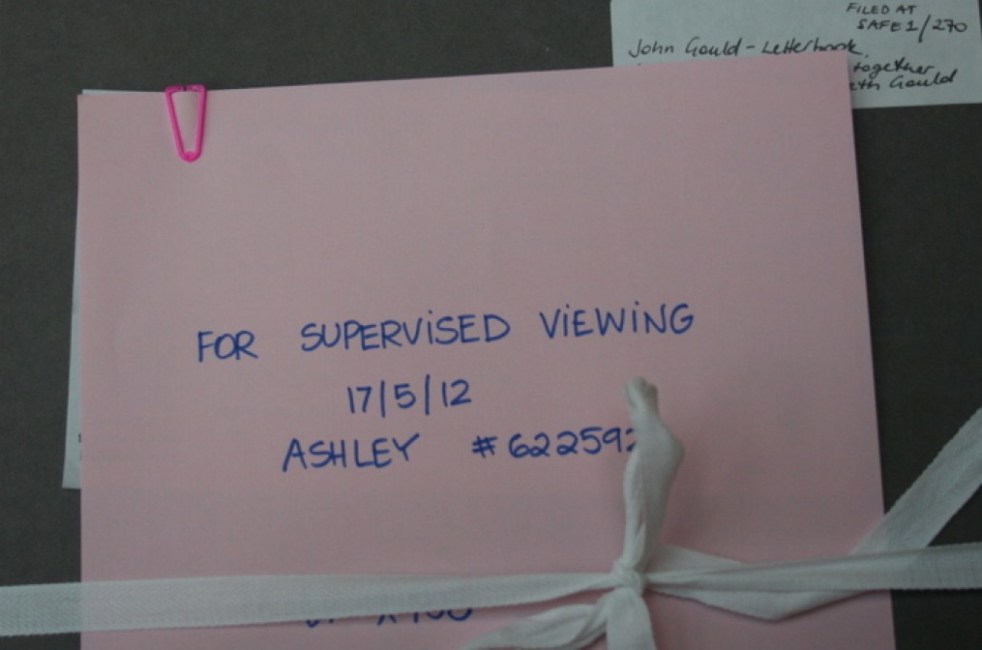
On day three of my trip I was given permission to view and photograph the short diary Elizabeth Gould wrote while travelling in the Hunter Valley in 1839. I picked up the cardboard box from the special collections desk. It was tied with thick ribbon, inside which notes had been tucked. I untied the ribbon and lifted the lid off the box to find a large object wrapped in acid-free tissue paper. It also had a ribbon attached. A note in the corner of the record read ‘do not issue.’ I undid the string and unfolded the layers of paper, revealing a leather-bound ‘letterbook’ belonging to John Gould. In the middle of the book, amongst copies of the ornithologist’s correspondence made by his secretary, Edwin Prince, was tucked a small booklet, about the size of a CD case. This was the travel diary Elizabeth kept while journeying by coach, ferry and steamer from Sydney to Maitland. The words, scrawled in ink and later pencil, were few, totalling some six double-sided leaves. The pages had been salvaged, hidden like a pressed flower inside her husband’s abandoned letterbook, and in this manner preserved for me to read almost two centuries later. The effort it had taken me to be granted permission to view the record, along with the process of physically unwrapping the layers of protective covering, the diary itself tucked inside an artefact filed under John Gould’s name, struck me as a metaphor for my search for Elizabeth Gould, the historical subject and the fictional creation.

Writing the first draft of Elizabeth Gould: A Natural History, I was overwhelmed by the circumstances of my point-of-view narrator’s wilful separation from her children. I felt both drawn to this historical character and befuddled by her enigmatic life choices. As a consequence, I over-wrote her sense of frustration, anxiety and guilt at the regretful abandonment of her children in order to travel to Australia. My empathic identification with my subject created a barrier to imagining Elizabeth Gould’s aesthetic and scientific discoveries while in Australia.  It may seem obvious, but the insight I had during my research trip, that one’s relationship with one’s children passes through periods and stages, allowed me to relax into a deeper and more nuanced exploration of my character’s experiences as an artist, traveller and adventurer.

It was in viewing Elizabeth Gould’s colouring precision–how carefully she built up tone, her attention to a body part as tiny as a pardalote’s ankle, a kingfisher’s eye-ring–that I began to really gather gems for characterising her as a point of view narrator. It was in photographing detail of mandible bristles and feather barbs that I came to appreciate her personal investment in continually honing and developing her ability to depict Australian species with scientific accuracy and aesthetic grace. If a few of Elizabeth’s earliest efforts at lithography, like any beginner, were a little stiff and flat (McEvey 1973: 16), ten years later, in  December1840, when the first plates for The Birds of Australia were released, she had made extraordinary progress as a zoological artist. This, to me, speaks directly, where Elizabeth’s correspondence and diary failed, of her passion, commitment and determination to succeed aesthetically. Collaborating with John Gould by accompanying him to Australia to draw the continent’s animals and plants was so much more than a curious pastime for Elizabeth Gould. She was as dedicated as her more talked-about husband to their artistic and scientific collaboration, evident in the extraordinary hand-coloured lithographs she designed to showcase the early nineteenth century’s most compelling Australian birdlife.

Notes


[1] See McEvey, Chisholm and Jackson

[2] See Chisholm and McEvey


Works cited


2011 (July) ‘Collector Chat: The Official Monthly Newsletter for Antiques and Collectables for Pleasure & Profit’, Speedie Graphics

Bowdler Sharpe, R 1893 An Analytical index to the works of the late John Gould, Sotheran, London

Chisholm, A.H. 1944 The Story of Elizabeth Gould, Hawthorne Press, Melbourne

Datta, Ann 1997 John Gould in Australia: letters and drawings: with a catalogue of manuscripts, correspondence, and drawings relating to the birds and mammals of Australia held in the Natural History Museum, London, Miegunyah Press, Carlton

Eakin, Paul John 1992 ‘Writing Biography: A Perspective from Autobiography’, in Ian Donaldson, Peter Read and James Walter (eds) Shaping Lives: Reflections on Biography, Australian National U, Canberra

Farber, Paul 1982 Discovering Birds: The Emergence of Ornithology as a Scientific Discipline, 1760-1850, Johns Hopkins UP, Baltimore

Jackson, Christine L 1975 Bird Illustrators: Some Artists in Early Lithography, H. F. & G. Witherby, London

Larson, Thomas 2007 The Memoir and the Memoirist: Reading and Writing Personal Narrative, Swallow P/Ohio UP

McEvey, Allan 1973 John Gould’s Contribution to British Art: A Note on Its Authenticity, Sydney University Press for the Australian Academy of the Humanities, Art Monograph 2, Sydney

McEvey, Allan 1967-68 ‘John Gould’s Ability in Drawing Birds’, in Ursula Hoff (ed) Art Bulletin of Victoria, The National Gallery of Victoria

Russell, Roselyn 2009 ‘Elizabeth Gould: The Mother of Australian Bird Study’, National Library of Australia, Canberra: http://www.nla.gov.au/pub/nlanews/2009/jun09/elizabeth-gould-mother-of-australian-bird-study.pdf

Russell, Roselyn 2011 The Business of Nature: John Gould and Australia, National Library of Australia, Canberra

Sauer, Gordon 1998 John Gould the Bird Man: Correspondence Volume 2, 1839-1941,

Maruizo Martino, Mansfield Centre, CT

Tree, Isabella The Bird Man: The Extraordinary Story of John Gould, Ebury P, London


First published in Text Journal
http://www.textjournal.com.au/oct13/ashley.htm

Essay · Fiction

Dollarbirds

1

24 March

Early Wednesday morning my sister drives me to the private hos20160610_152137pital. My name’s called in the waiting room and I’m led through double doors, shown into a small office. A vivacious nurse questions me about fasting, allergies, former operations. I’m weighed, ‘so they give you the right amount of anaesthetic,’ and handed blue-green scrubs for my hair and feet. I remove all clothing except my underpants and am tied into a gown. The nurse clips a nametag around my wrist, joking about not getting me muddled up with somebody else.

‘It happens, you know.’

I nod, recalling a news item about a hand transplant in which the patient’s left hand was joined onto his right arm and vice versa.

She leans forward, intimate. ‘I worked in Saudi Arabia. The female patients can’t be seen by the male surgeons. They wait on the stretchers like dead bodies, completely covered. Once, we performed neurosurgery on a cardiac patient.’

‘How terrible,’ I offer. How feeble I sound.

She squeezes my hand. ‘You’ve made the right choice with Dr K. He’s very good. The best. Like an artist.’

I’m moved to a curtained room with Vikki to wait. Dr K breezes in. That’s his air. I’m told to take off my gown (my sister steps outside) to pose for several ‘before’ photographs, shot with a digital camera, which I’m shown immediately on the LCD. With a felt pen, Dr K draws crude lines, circles, and dots on my breasts and nipples. Nervous, I’m prone to gush nonsensically, but I recognise this part of the procedure as crucial. I keep still and steady my breathing. Picture what my artist-surgeon sees. Make myself stop.

I’m helped to ease the gown back on. The rest of the team arrives; pressure stockings are rolled onto my feet and legs, my bag put in a locker, my sister sent home with a kiss. The anaesthetist introduces himself and asks about allergies and surgical history. He’s tricked me, painlessly sliding a cannula into the back of my hand and organising the tubing, lining up a syringe.

I wake up near the nurses’ station. They’re talking loudly and taking food from the fridge, spooning coffee. There’s a commercial radio station on—the offending machine sits above the microwave—playing easy tunes interspersed with talkback. Shush, I want to say. Can’t you see I’m trying to sleep? A hair-netted nurse checks how I’m doing. I tell her there’s a magazine in my bag, would she mind getting it out for me to read? I’m terribly bored. ‘You have to rest,’ she says. I’ve no idea of the time. After an age she returns, says my sister’s on her way. I’m supported to hobble into another recovery area, TV blaring, and supplied with a plastic triangle of ham sandwiches, asked how I like my tea.

3

25 March

20160610_153333

For Vikki’s house-warming present, I had a print of George Raper’s ‘Dollarbird’ professionally framed. I bought it at the National Library of Australia’s gift shop, while in Canberra to attend a symposium on Angela Carter and fairy tales. She’s hung it above the light switch in the guest bedroom, on the piece of wall jutting from the built-in wardrobe. I’m surprised. I really thought she liked it. She certainly behaved as if she did when she unwrapped the paper. She’s my sister; I know her expressions. Maybe she re-evaluated her enthusiasm when she got it home and found it didn’t quite match her city apartment’s wheat and linen colour scheme. The turquoise of the bird’s breast feathers and the indigo of its wing tips, I’d thought the perfect accent, given her rhapsodies on interior design’s reclamation of teal. Maybe the orange–red beak put her off. I’m confused. Aren’t birds all the rage in Better Homes and Gardens, Old World watercolours with that stiff, flat quality? Is the frame too ostentatious? Whatever it is, I’ve got something wrong. In my drugged-out state, disappointment transforms into rejection: I’ve failed her.

5

I stand at the half-length mirror in the bathroom. I’m general-anaesthetic yellow, like they’ve overloaded my liver. Powered me down and booted me back up. So sedated that if I sign something legal in the next twenty-four hours, I can’t be bound to it. I undo my pyjama shirt and unclip the hook and eye fastenings on the surgical bra. It slips off. Underneath, I’m wound with a thick bandage, over the top of gauze and surgical strips. I’m definitely smaller. The elasterplast bandage is like the ruched bodice of a sundress, a signature item of femininity I’ve never been able to pull off. Strapless, I square my shoulders. I can’t quite express how minus one kilogram of breast matter feels—the tissue is mostly fat and glands and has always just been there, dragging at me, a saddle of flesh. I put the bra and my top back on, wincing at the tenderness in my lower right breast. I check the time in the kitchen but it’s another hour until I can take more pain killers.

I walk dazedly to the guest room and climb in bed. I rest and sleep propped on a pile of body contour cushions. On the bedside table are fibre supplements, zinc for the scarring, anica drops—I’m fiercely against homeopathy but bought it on the plastic surgeon’s advice—Di-Gesic, Tamazapan, Panadeine, cold Lady Gray tea, tissues, Anna Karenina, Vanity Fair.

6

Raper’s dollarbird perches on a stub of branch that’s been stuck into a round of bare grass. The bird’s orange-red beak is parted, its short, thick neck inclined towards a large mosquito, which it’s about to pluck from the air, a style of representation common to the era. Apart from the open mouth, there’s little movement in the body, most likely painted from a stuffed skin. The library dates composition at 1788, but with a tentative, bracketed question mark. I forgive the image its flatness. These are early days in the field of ornithology, before Audubon’s wild arrangements of stuffed birds made to strike life-like poses using wire, branches, fruits and moss. Before the great British taxidermist John Gould, who classified camphor-preserved hummingbirds for twenty years prior to crossing the Atlantic to observe a living one. Not that you could tell from the lithographs he produced. The eyes of Raper’s dollarbird are large and deep brown, almost black, with a gold-brown ring. The feathers under its neck are royal blue, as are its wings, except for the splash of white in the centre, from where it derives its name; apparently the spot’s the same size as an American silver dollar. The bird’s body is turquoise, in shades that encompass the stone’s pale milky teal as well as the Aztec blue more commonly associated with the colour. Here Raper’s brushstrokes are made with a single bristle. It reminds me of a schoolchild’s felt-tip colouring, where, instead of rubbing the pen backwards and forwards, the child creates a series of closely crabbed lines. The flat, stout tail is lifelike, but the orange claws and feet are too small for a creature that only expends itself at roost or on the wing.

7

26 March

There’s a Shiraz stain on my lower right breast. The skin surrounding the nipple tape is the liver yellow of a week old shiner. The palette shifts and changes and I wonder about the chemicals that cause the discolouration. How the spilled haemoglobin transforms from purple-black through to blue, mellowing into green and then lingering, stubbornly, at jaundice. It’s a complex yellow, the excess pigment fading and fading until a mere residual. I try and picture what’s going on inside the cells—repair, regrowth and readjustment, obviously—but beyond these generalities I possess no real knowledge. Just information—physiology from my psych training, access to Google Images and Wrong Diagnosis, an avid capacity for fantasy—all of which combine into a recipe for the perfect freak out.

8

I collect birds’ nests. Not intentionally. I’ve only ever found three and two of those were with my husband and he spotted them before me. So, technically, only one. I’ve amassed around fifteen. Some are sewn onto card and framed in shadow boxes. I have a currawong’s nest from friends in Greenbank, inside a case that once held a bottle of tawny port. There are spares in a couple of shoeboxes under the bed. My husband keeps one padded with tennis ball fluff on his writing desk; I have a matching twin, the insulation a similar cushiony fibre, but white. My favourite’s a pear-shaped nest, with a small twig woven into the top, like a stem, where it attached to a branch. It fits into my palm, a bisected breast or womb. I like it more than my most sophisticated nest, donated by my father-in-law, which I store in a lockable cabinet. It’s still connected to the supporting branch, the exterior strips of paperbark, the rim made of ballerina tulle and birthday present ribbon. Brown rush softens the base. I’ve lost count how many people have questioned its authenticity.

In front of the currawong’s nest are two toffee tins from the fifties, robins painted on one, parrots on the other. I run my finger over them, and the deck of playing cards, each with a different European bird on its face, sent by my sister as a gift when she lived in England.

9

31 March

A week after the operation I travel to hospital to have the dressings removed. I lie with my top off on a disposable sheet on a narrow cot. My husband sits in the chair beside the sink. The nurse, Suzy, is firm and kind. She rubs solution on the tape to dissolve the adhesive, gently peeling away the dressing. She trims the end of a suture that’s pushed through the skin. ‘They do that,’ she shrugs. She instructs my husband on how to remove and reapply the dressings, in two weeks, and in another two weeks, and in another two weeks again. She’s not sure about a nylon stitch in my nipple and calls Dr K. He’ll want to have a look anyway.

‘You all right?’ I ask my husband. ‘Not put off me?’

‘I can deal with it,’ he replies, bemused.

We’re practically smug.

Dr K beams over his handiwork. ‘You’re doing great. They’re healing well.’

I grin like a creature without language, having achieved with just my body.

13

1 April

I snap two lilies off the West German vase of get well flowers, dying and already dead, the remainder okay. I arrange them on my desk and hunt for the camera. One is brownish-plum, the other brownish-white, the former coming apart as I adjust it, the filaments and petals scattering. The petal-tissue is so weakened the touch of my finger damages it. Up close like this it’s a skin, registering a colour spectrum that includes lavender, lilac, plum, and vein blue. On the surface are bumps—to guide insect feet, I believe—but they remind me of imperfections on human skin. If I run my finger down to the centre of the intact flower, the bumps change into aggressive little nodules, hairy outcrops; I feel the roughened ends pull into the folded creases of the receptacle. Though dead, the stigma and style retain their chloroform green. The stigma’s shaped like the head of a praying mantis, something of the insect’s poise in the style also. There’s no trace of the anthers. But I must’ve grazed them, walking away with three scratches on my elbow, the pollen so richly coloured my husband thinks it’s dried blood and asks if I’m okay. Later in the bath I spy a large mustard stain, which exactly mimics the bruise on my breast. Have my skin cells teleported, I fleetingly wonder? Soap’s not strong enough to get it off.

14

I paid attention to George Raper during research into literary fraud because the narrative that catapulted him to fame sounded too incredible to be true: the discovery of an unsigned, undated cache of priceless watercolours from the First Fleet, gathering dust for a hundred years in a warehouse in the Cotswolds? It’s a bit like attempting to flog a long lost Shakespearean play.

Turns out they’re the real thing.

I caught a TV program about the Dulcie Collection, a recent acquisition of First Fleet material by the National Library of Australia. In 2004, the seventh Earl of Dulcie inventoried his English family estate. A folio of watercolours was opened, the striking quality of the kookaburra on the front page causing its examiner to make a connection with Australia. Experts were consulted and the fifty-six paintings of Australian birds and plants identified as the work of little-known navigator and map-maker, George Raper. Bequeathed to Raper’s mother, upon her death the collection became associated with the estate of Joseph Banks, before passing into the care of the Dulcie family. Denied a public viewing and therefore cultural currency, until 2004 when the Laughing Kookaburra’s blue-flecked wings caught that canny inspector’s eye, it was as if Raper’s paintings had ceased to exist.

16

It’s Good Friday and I notice a foul smell. The dressings are weeping. I put on a movie and put my feet up; cross my fingers it’ll go away. On Saturday nothing’s changed. I check my sheet of aftercare information, what’s okay and what’s not. The occasional bleeding, the whiffy smell, and the mustard stuff leaking through the surgical bra aren’t normal. But it’s Easter weekend. I decide not to call Dr K, changing the bra and blow-drying the damp spare, cleaning the tape with soap and warm water. On Sunday we drive an hour to visit my parents for Easter lunch. My mother’s prepared pork roast, spiced red cabbage and apple sauce. She’s bought a blowtorch from Aldi for $14.00 and makes my dad crackle the brown sugar topping on her homemade crème brulee. In the guest bathroom later I lift the surgical bra so Mum can smell. A recipient and therefore expert on numerous surgeries, she doesn’t like it.             ‘You need to contact your doctor.’

17

I’m not a bird-watcher, a twitter or a tweeter in the old fashioned sense. A lifetime ago I connected with a poem written by my husband that featured a cuckoo-shrike. It was really a reflection on a relationship breaking down, but it provided the context for me to more closely engage with birds.

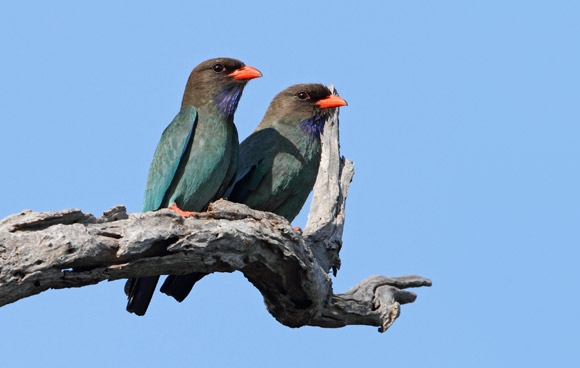
Dollarbirds are members of the roller family, so named because during breeding season they put on a show to impress their mates, spinning and flipping in the air like trapeze artists and acrobats. They belong to the same order as bee-eaters and kingfishers. I have a soft spot for rainbow bee-eaters; they rub the bees they’ve caught along fence palings to take out the sting before consuming them. Like bee-eaters, dollarbirds catch their prey mid-flight. They’re efficient, have sharp eyes and are well camouflaged, their peacock colours cleverly downplayed. They have no use for grass and flowers, which makes it challenging to view them in good light. Cast mostly in shadow, identification is often determined by their red beak and distinctive silhouette.

I’m almost forty and only six months ago sighted my first dollarbird, despite sharing its half-yearly habitat for most of my life. When I pointed it out, sitting on a telegraph wire on a quiet road in Beaudesert, My husband admitted that it was his first encounter, too.

‘Quite big, isn’t it?’ he remarked, flipping the sun visor for a better view. (They grow to about thirty centimetres.)

Just after that I noticed a mated pair perched on the powerlines behind our house. It seemed apt, somehow, that they’d been roosting there on and off for two years and I’d kept wandering by, oblivious.

I imagine Raper making his preliminary sketches. He was such a fan of colour variegation, of the taffeta iridescence of certain feathers under certain light, I’ve no doubt he would have fully enjoyed the dollarbird.

In 1787, before joining the crew of the Sirius, he shopped in London for art supplies, purchasing watermarked paper and a box of the latest in watercolour pigments, which cost him two months’ wages. He was an untrained artist, acquiring much of his technique via the gentleman sailor skills of navigation and map-making. Somewhere in the troubled new settlement he found a place with adequate light where he could sit and concentrate, drawing tools handy. At his feet I picture three, maybe four specimens of dollarbird, freshly shot—male, female, juvenile. He picks up the male, assessing its weight in his hands. Exchanging it for the female, he hangs her claws over his index finger to get the feel of her scaly legs. He flips her over, fanning her wing out to inspect the infamous dollar mark. With a thumbnail he pries her beak apart, making a mental note of the tropical yellow of her mouth. He inks his quill.

18

6 April

Easter Monday. I call a friend to discuss dinner arrangements. After showering, I put on a fresh surgical bra; half an hour later, the discharge that’s seeped through the tape, has seeped through the bra’s thick band. It pongs and I don’t know if it’s a good idea to drive halfway across town to a restaurant. All weekend I’ve resisted disturbing Dr K, but his phone manner is calm and thorough. He works through a list of questions, followed by a set of instructions, which I scribble across the bottom of a scene map I’ve been writing, the only paper handy. Treating an infection is a process.

‘I need you to take a break,’ I announce to my husband, seated at the kitchen table with a pile of English essays. ‘We’ve got to get the tape off.’

I lie on a towel on the guest bed. My husband dabs oil-soaked cotton balls over the tape to soften the adhesive. I peel one off and then can’t do any more and he takes over. The pus is brown and gross and makes my husband clutch his stomach. Dr K calls with a request that we take photos of the cleaned-up incisions and forward them to his gmail account. I wonder what he’ll charge for the telephone consultation. The infection’s undeniable; a small part of the wound on my right breast has separated. I have to take three showers a day with antibacterial soap and wear sanitary pads to protect the scars. My husband can’t figure out how to attach the Picasa images to an email so I do it while he drives to the seven day chemist to pick up the script Dr K phones through. My hands shake as I close the lid of my laptop. The image repeats on me like a heavy lunch all afternoon and I feel a fool posing in the mirror, thinking everything’s already better.

19

As far as folk bird superstitions go, the dollarbird hasn’t garnered much attention. It’s not renowned like the owl for possessing (hidden) teats that emit poison milk strong enough to choke sleeping infants. It can’t sing. It has no association with tragedy: Roman and German poets haven’t dedicated laments to transgressions committed during its formerly human state. It doesn’t have a thing for goat’s or cow’s milk, swooping down for a suck of udder, leaving tell-tale dripping dugs. If you nail a dead dollarbird to your barn door, it’s entirely useless as a prophylactic against lightning strikes and house fires. Children don’t sing rhymes about it, like the magpie for instance: ‘One for sorrow / two for mirth / three for a wedding’ all the way up to seven, which foresees a meeting with ‘the ‘de’il / himself’, and instigates anxious breast-crossing, complicated counter spells. Affixing a cross to the tree in which the dollarbird raises its young won’t drive the ‘evil’ family out. It can’t screech, nor does it bark at the moon; stirring it into soup won’t cure your child of whooping cough. Placing the heart of a dollarbird on the breast of a virgin won’t make her startle and confess the truth of her larger (and still beating) heart. Eating its eggs, soft boiled or hard, won’t help your fading sight, unravel the future’s web, nor improve your cognition.

21

There’s a report on the seven o’clock news about trends in plastic surgery. Procedures are on the rise and many women elect to have treatment in private, in secret. They aren’t talking about their experiences with friends, family and peers, and because of this, they’re failing to exchange information about potential pitfalls. The report’s author, who interviewed her sample post surgery, recommends that when women shop for cosmetic surgery, they should canvas at least three potential candidates. And they shouldn’t feel shy asking how many times a year the practitioner performs the procedure they desire.

23

7 April

Dr K and his staff, Louise and Suzy, the accountant and nurse who also answer the phones, are on leave. In their place sit Kate and Jeanine. Kate has just had Botox; her left eye is droopy and won’t blink, the right one’s fine. She has large breasts—they seem natural—and ample gold jewellery; bangles and bracelets and chain necklaces. Her attitude is take-charge, like the principal of my daughter’s school.

In the consultation room I take my top off—Jeanine doesn’t even have to ask—and get up on the bed.

‘They don’t look too bad, actually,’ she says. ‘In forty-eight hours, you’ll be feeling much better.’

‘That’s a relief.’ I give a smile that means phew.

‘At six weeks, we can do something about the scars.’

‘Are the scars okay?’

She hesitates. Smiles. ‘They’re fine. Fine,’ she frown-smiles, turning away to wash her hands.

‘Will they be all right in the long run, I mean? Will this—infection—make them worse?’

She hesitates. ‘Not necessarily. No. No, of course not.’ She talks collagen. How, immediately after an operation the body begins producing bucket-loads of the stuff, in excess of what’s actually needed, which makes the scars so raised and red. ‘They’ll simmer down.’

‘In six weeks,’ I say. ‘Got it.’

She discusses a skin product and I sniff a sales pitch, like a new hairdresser trying to slip you some straightening gel at the counter. I don’t know why she keeps banging on about it, when what I’m worried about is the wound breaking down, as I’ve read on the internet, or a dirty big spot expanding the scar. Mid product endorsement, she shakes her thin hands as if flicking soap suds—she’s thin all over—and closes her eyes. ‘What was I saying? Where was I?’

She’s flustered, I realise. She’s finding this harder than me. She mentions twins in day care. I get the picture; try and act more upbeat.

‘Pop in whenever you like,’ she says, ‘if you’re worried at all.’

‘I’ll probably call first.’

‘Oh, no, come in! You don’t need an appointment.’

I don’t feel like telling her that’s not how the clinic operates. Anyway, the place is a two hour round trip from our house.

26

12 April

I move between several mirrors, naked, eyes on my new breasts. I like my shape. I don’t care about the scars. Underneath the perforated tape, my areolas have been cut and re-stitched. They’ll heal up slightly unnatural-looking, but I’ve prepared myself. The operation can’t be performed without their alteration. The surgeon takes the skin from above the nipple and stretches it around and below the nipple, to basically reconstruct a new breast. The excess tissue is removed through a combination of liposuction and simple excision. The mammary ducts are reinserted and the nerves behind the nipples checked for blood flow. A strip of skin between the old breast and the new one is cut out, and the skin stitched together in an anchor-shaped formation. It’s known as the inferior pedicle. There are other methods, the Lejour, for example, which leaves a vertical scar, and plain old liposuction.

‘You’re always looking at yourself,’ says Brett. ‘All you do is look at yourself in the mirror.’

I’m not sure if it’s an observation or a complaint.

Twice a day he bathes my scars with antibacterial cleanser. Winter’s coming and I enjoy sliding into the warm bath. He washes his hands, fills a Tupperware bowl with clean water and dabs at me with baby wipes. Since I can’t raise my arms, he also has to wash my hair. I tell him he needs to rinse off the conditioner more or it’ll be greasy. The water spills over my eyes and I recall a friend’s poem about a woman having her hair washed by her lover in the backyard.

The poem’s about tenderness.

The way he cleans my wounds, I think, how he stayed put when we removed the dressings (I could tell he wanted to leave), how he’s supported me completely in this.

The funding he put in.

Brett helps me to stand, drying me with tissues and clipping on the bra while I hold the sanitary pads in place. I toss back antibiotics, zinc, panadine, fibre supplements. I write in my study. I still can’t move much and cancel lunch with a friend as I can’t manage the walk into town to meet her. My right breast is still tender.

I try clothes on from my wardrobe until my arms ache.

28

13 April

I need to remove the tape around my nipples. I’m propped on pillows watching a BBC miniseries of Tess of the D’Ubervilles. Bra off, I apply cotton balls soaked in olive oil to the area and wait twenty minutes. After peeling off the covers I shower, soaping the wounds with an antibacterial wash that’s white as snake venom, poison sap. The adhesive gum has formed into tiny balls, like the dust-attracting glue when you remove the price or prize sticker on a new book. It’s healed a lot, though parts are still red, the skin puckered.

I cry through Tess’s rape and the death of her infant, the green-blue lump on my right breast aching so much I swallow two panadeines and remove the surgical bra again. The British actress wears a fetching red jacket to milk the cows, which reminds me of Polanski’s Tess. I’m sure Nastassja Kinski wore a cropped red coat in his version, too. I read Hardy at sixteen, the year I discovered Lily Bart. Neither heroine was the blowsy, bosomy sort.

29

14 April

Brett’s returned to work. The infection’s under control but I feel vulnerable today, emotions I’ve put on hold rushing in to overwhelm. I can’t work in this state.

I sip tea on the veranda in my pyjamas and search for the dollarbirds. I think they’ve gone for the year—in April they head for the New Guinea highlands to breed—I haven’t noticed them in over a month.

I go inside and call Vikki, tell her I don’t mind that she didn’t like her house-warming present. I can take it off her hands, if she wants, find her something else.

She’s silent a moment. ‘What makes you think I don’t like it?’

‘It’s pretty obvious.’

She laughs into the receiver. ‘I moved it into the guest room to keep you company, silly. Didn’t you notice the blank wall above the dining room table?’

What makes me push people like this? I’ve embarrassed us both and have to apologise.

The story of George Raper involves an intrigue with Captain John Hunter, the second governor of New South Wales. An avid diarist and amateur painter, Hunter’s ‘Dollarbird’ was shipped back to England in the early 1790s and published in 1793 along with his journal and other paintings in the bestselling, ‘Birds and Flowers of New South Wales Drawn on the Spot in 1788, 89, and 90’. Copies of Hunter’s naive Nankeen Kestrel, his cheeky King Parrot and poorly silhouetted Dollarbird have been in public circulation for two hundred and twenty years.

Hunter’s paints and brushes were of lesser quality than Raper’s. His palette seems to have been limited to an earthy mushroom, some red, yellow and a bit of royal blue. His dollarbird more resembles a pigeon; its tail is too long, its neck too scrawny, the curve of its beak overshot. Like Raper’s, its mouth has been depicted slightly ajar, snapping at a fly.

The 2004 re-discovery of the Dulcie Collection revealed the interesting fact that many of Hunter’s paintings and sketches were direct copies of his protégée Raper’s originals.

30

24 September

A cardboard advertisement in reception features a set of eyes squinting to show stress and crows’ feet. Underneath, a tube of silicone enhanced skin cream, the label trademarked. The stuff must be good, you’re supposed to think, being endorsed by a plastic surgeon. On the table sits a stack of Who and New Idea, a small, compact book titled Breasts: A Celebration. Like the Little Blue Book of Hugs. I flip through pre-pubescent breasts, wet-nurse breasts, tribal breasts, cross-cultural breasts, postcolonial breasts, Oriental breasts, celebrity breasts (Jane Mansfield’s, Twiggy’s and Madonna’s), Impressionist breasts, Renaissance breasts, Virgin Mary breasts, Art Deco breasts. And, lastly, a curious construction of what might be described as freak show breasts. The model, in time-vague black and white, has been shot with her head thrown back in idiot abandon. She wears a bathing cap and is missing a front tooth; her breasts—only partially covered by her meaty forearms—are, of course, supersized.

It’s my six month check-up, the one where I’ll pose for the ‘after’ photographs. In a Woman’s Day—the wait is over twenty minutes—I read an article about a fifteen year old girl’s G-Cup breasts. She wants a reduction but her mother and father won’t grant permission; by law, she has to wait until she’s eighteen. At the age of seven, she was fitted for her first bra. The article lists the myriad ways the girl’s been singled out: teased at school, failed in PE, cat-called from car windows, stared at and leered at in the supermarket; in general at every turn made to feel less than fully human. Her mother says: ‘We don’t know where she got them from. Everyone in my family’s flat as a pancake. Though her Great Aunt Sally on her dad’s side was GYNORMOUS!’ There are two mother-daughter photos. The girl is dressed in a fitted, scoop-necked t-shirt and denim mini skirt. She wears makeup and her blonde hair’s been straightened. In both images, she glares at the camera, the defended sadness of a survivor in her eyes. In the second photo, her mum’s been caught mid-smirk, lapping up the spotlight.

My name’s called. I walk to the consultation room pondering the article’s mixed messages, unable to figure out why the girl spoke to the tabloid. She wasn’t fundraising for the operation’s $10,000 fee, she wasn’t trying to change the laws on the age of consent, or seeking a judge’s intervention to overrule her parents’ decision. She didn’t seem to want to emancipate herself from her uncomprehending mother, nor particularly to raise public awareness about the health and psychological issues associated with large breasts. Not to mention that persons with boob fetishes might very well get off on her photograph.

I must’ve missed something. All I can think is that three years is a long time for a fifteen year old girl.

First published at Bareknuckle Poet

Essay

Biographical Sketch of Elizabeth Gould

eg

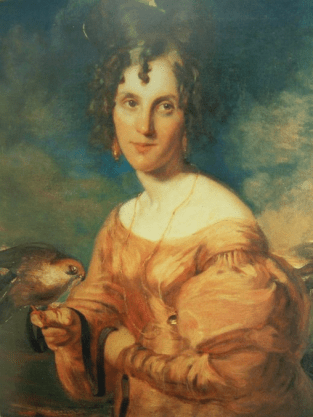
Elizabeth Gould, 1830s, unknown artist

Elizabeth Gould (nee Coxen) was born in 1804, in Ramsgate, Kent, to a military family. While little is known of her early life, at twenty-two, Elizabeth was employed as a governess, residing in James Street, London. Her young charge, Harriet Rothery, was the nine year old daughter of the chief of the office of the King’s proctor, William Rothery (Datta 1997, 65) [i]. From the single letter that survives from the period, we know that Elizabeth taught Harriet French, Latin and music (Chisholm 1964, 10)[ii]. Writes Elizabeth to her mother:

[Harriet] is a perfect child in mind and manners so that I cannot communicate a single thought or feeling in which she could share and then for a little while I feel it miserably-wretched dull. I feel I shall get very melancholy here (Chisholm 1964, 10).[iii]

Elizabeth, it seems, wasn’t convinced of the merits of working as a governess. According to Bruce Crawford, a descendant of Elizabeth Gould’s nephew, William Henry Coxen, Elizabeth Coxen and John Gould met by way of Charles Coxen, Elizabeth’s younger brother (Greenslope 2012) [iv]. Charles Coxen, like John Gould, was a taxidermist and as early as 1829, Gould’s correspondence records a reference to their relationship:

With Coxen is connected the Birdstuffer of the Zoological Society, Mr Gould, who resides at the Society’s house in Bruton Street (Sauer 1998a, 15)[v].

While nothing is known of their courtship, John Gould and Elizabeth Coxen were married on January 5, 1829, at St James Church, Piccadilly (Sauer 1998z, 13)[vi]. They were both 24 years of age.

Although no records survive of Elizabeth’s artistic training, she was obviously a skilled draughtswoman. She was likely taught drawing and watercolour painting as part of the set of accomplishments expected of middle and upper class women in Regency and Victorian Britain (Russell 2011, 10) [vii]. Shortly after their marriage, Elizabeth began to make scientifically accurate representations of the novelty bird specimens John prepared for his customers. Gould’s clientele ranged from the leading ornithologists of the day, for example, Sir William Jardine and Prideaux Selby to historically important collectors like the thirteenth Earl of Derby, whose natural history collection formed the basis of the Liverpool Museum. In a letter from John Gould to Sir William Jardine, dated 1 September 1830, Gould wrote that Elizabeth was preparing three drawings and that the cost would be 1.16.0 (Sauer 1998a, 22) [viii]. Thus, from the early days of their married partnership, Elizabeth earned money for her family.

IMG_2819

Hand-colored lithograph
A Century of Birds from the Himalaya Mountains
Pattern Plate No. 10

In 1830, when John Gould made the decision to produce and publish a subscriber-paid volume of hand-painted lithographs of rare Indian birds, Elizabeth Gould served as principal artist. Biographical legend has it that when John shared the inspiration for his publishing adventure with Elizabeth, she was incredulous, asking who would do the work of transferring the drawings onto stone (Bowdler Sharpe 1893, xii) [ix]. John, who was not artistic, responded: “Why you, of course” (Bowdler Sharpe 1893, xii) [x].

Before the age of thirty, Elizabeth had designed and illustrated eighty hand-coloured lithographs, representing one hundred species of Indian birds, the majority of which were not previously known to science. In 1832, the plates were bound together under the Goulds’ first title, A Century of Birds from the Himalaya Mountains. To acknowledge Elizabeth’s achievement designing the lithographed plates, the systematist, N.A. Vigors, who had assisted John Gould with the collection’s taxonomy, named a species of sunbird after her, Mrs Gould’s Sunbird (Aethopyga gouldiae).

The image of the Himalayan Shrike-babbler (Lanius erythropterus) is from the complete volume of pattern plates for A Century of Birds from the Himalaya Mountains, part of the Ralph Ellis Collection. The preparation of the patterns plates, or ‘patterns’, was undertaken by Elizabeth Gould, who selected the pigments and brush sizes the colourists would employ to create hundreds of hand-painted copies. The Himalayan Shrike-babbler template displays Elizabeth’s attention to the smallest details; she worked with a single-haired brush to paint mandible bristles and individual feather barbs. To the left of the leafy foliage in the background, John Gould has written instructions to the colourists: “These leaves not quite as bright or thorny as those at the bottom.” Such notes were common. The lithograph patterns were printed on hard paper, and are soiled and scuffed by paintbrush marks from repeated consultation and referencing.

A Century of Birds from the Himalaya Mountains was enormously successful and Elizabeth continued to collaborate with her husband, starting work on The Birds of Europe in 1832. Gould claimed to have undertaken the publication at the request of his subscribers, who wanted to own luxury prints of local and familiar birds (Sauer 1982, 22-3) [xi]. The Birds of Europe was produced in a similar fashion to A Century of Birds from the Himalaya Mountains, taking a total of five years (1832-1837) to complete, and comprising some 448 plates. Sixty-eight of these plates were designed by Edward Lear, whose imagination revealed hand-coloured lithography’s remarkable possibilities for zoological illustration (Lambourne 1987, 38) [xii]. Elizabeth drew the smaller passerines, while Lear’s plates featured larger species such as owls, raptors and waterfowl. As early as 1830, the eighteen year old self-taught artist had impressed John Gould with his Illustrations of the Family of the Psittacidae, or Parrots (1830-1832).

Edward Lear’s style of drawing from life was cannily adopted by the Goulds (Levi 1995, 39) [xiii]. Writes John Gould in the prospectus to The Birds of Europe:

Assisted by experienced collectors at all the most favourable localities, it is intended that the artists employed on this Work shall have, as far as possible, a constant supply of living or very recently killed birds, thus ensuring a degree of truth both of character and colouring, which museum specimens, however well preserved, can never supply (Gould 1831, 22-3)[xiv].

Where Elizabeth had to copy taxidermied specimens for A Century of Birds from the Himalaya Mountains, it was possible to study Britain’s living (if caged) birds. Given the best taxidermy practices, birds have ‘soft parts’ in their anatomy–eyes, eye-rings, neck wattles, the skin of their feet and lower legs–the colours of which fade quickly after death. It’s likely that the falcon in the uncoloured lithograph of the Red-footed Falcon, the species Elizabeth holds with a falconer’s ribbon in her portrait, was sketched from life.

Elizabeth Gould’s illustrations underwent remarkable development in this collection, as she learned tips about composition and design from Edward Lear. Gould’s bibliographer, Gordon Sauer, argued that the format for Gould’s folios was established as early as A Century of Birds from the Himalaya Mountains . Elaborate, naturalistic backgrounds were introduced in The Birds of Europe, a hallmark of the Gouldian hand-coloured lithograph.  Before training in the print-making technique of lithography, Elizabeth and Edward made drawings for British ornithologists Selby and Jardine, which were transferred by specialist engravers onto metal plates for reproduction. The engraver’s pointed metal burin produces hard lines, whereas lithographic crayon, drawn on limestone blocks prepared by graining, a process which gives a velvety texture or “tooth” to the stone surface, can create the softest tonal shading. It wasn’t until The Birds of Europe that the Goulds’ designs moved from the rather stiff, eighteenth-century style poses favoured by eighteenth century zoological engravers, to exploiting lithography’s revolutionary potential to suggest the downy, fluffy textures like feathers.

cropped-img_2349.jpg
Preparatory study of Superb Fairy Wren by Elizabeth Gould, 1839-1841

Detail: Superb Fairy Wren (Blue Warbler)
Malurus cyaneus
“Orginal Designs”
The Birds of Australia
Ralph Ellis Collection

cropped-superb.png

Detail: Superb Fairy Wren (Blue Warbler)
Malurus cyaneus
Hand-coloured lithograph
The Birds of Australia
Vol. 3, Plate 18

Sometime in 1837, the Goulds’ conceived of their most ambitious publishing project, The Birds of Australia. To produce the highest quality and most up to date specimens, they would need to travel to Australia to personally oversee the collecting process. The Goulds’ Australian expedition was partly inspired by Elizabeth’s brothers, Charles and Stephen Coxen, who operated farms in New South Wales. During the mid-1830s Charles and Stephen provided John and Elizabeth with hundreds of Australian bird specimens, which were illustrated and described in the two volume publication, Synopsis of the Birds of Australia (1837-38).

The Goulds planned to bring their eldest son, John Henry, aged seven, with them to Australia but leave their three youngest children, Charles, Eliza and Louisa, back in England, in the care of Elizabeth’s mother. For Elizabeth, parting with her three youngest–Louisa was only six months–was a major sacrifice. She almost didn’t make embarkation:

It was Mr Gould’s intention to have written to you again before leaving England but unhappily he was prevented from so doing by the sudden and severe indisposition of Mrs Gould which including the utmost fears for her safety, rendered it very doubtful up to the last moment whether they would be able to go or not and incapacitated him from attending to any but the most urgent matters of business (Sauer 1998a, page?) [xv].

In her letters home and diary Elizabeth presents as a good Christian woman, a pious Victorian mother concerned with the welfare of her family and friends in England. She laments the small irritations of colonial life, the poor quality goods and the difficulties householders experienced with their convict ‘help’. Elizabeth frequently expressed sadness and frustration at being separated from her children, although she had few idle moments in which to fret, kept busy preparing hundreds of sketches, drawings and paintings of the colony’s flora and fauna. She made notes on acacia, casuarina and eucalypt species as well as native grasses, collecting specimens to press in paper during her walks in Hobart and the Hunter Valley.

Elizabeth expressed concern about the large number of specimens collected by John Gould to produce The Birds of Australia, noting that ‘he has already shown himself a great enemy to the feathered tribe,’ but stayed silent about her own position (Chisholm 1944, 33) [xvi].Only occasionally did she allow a kind of tremulous excitement–her responses to Hobart’s landmarks, the climate and plant life–to creep in. As for Elizabeth’s personal investment in her painting and drawing, apart from depicting herself as diligent and hard-working, she divulged little of her artistic concerns. Her struggles and sufferings, her satisfaction at a technical or aesthetic breakthrough, were not recorded in her correspondence.

Elizabeth passed her time in Australia, studying commonly encountered bird species, which she sketched from life. She drew species captured in remote areas and kept in cages, as well as prepared specimens. One of the treasures of The Ralph Ellis Collection is a two volume folio of original designs for The Birds of Australia, many of which were made by Elizabeth during her stay in Australia. Original designs attributed to Elizabeth Gould include the Eastern Whipbird, known then as the Coachwhip Bird, the Chirruping Wedgebill, several species of Treecreeper, and compositions for the endemic Fairy Wren genera.

Ten lithographs of Fairy Wrens are collected in The Birds of Australia, Elizabeth Gould’s name acknowledged in the design of nine hand-coloured plates. One of her most well-recognised original compositions is the hand-coloured lithograph of the Superb Fairy Wren, a popular species, called the Blue Warbler in Victorian times. The preparatory drawing of the Superb Fairy Wren is signed ‘Mrs Gould’ and features the soft, deft pencil strokes of her signature technique. The original pencil design for the lithographed plate shows three birds: a male displaying full colour plumage and a female attending a juvenile in its nest. Elizabeth’s interest in the species building nests and tending young shows in her keenly observed design. She paid attention to small features, such as the depiction of eye rings and wing coverts. When colouring a template lithograph, Elizabeth took care to select a watercolour pallet appropriate to Australian colours. She deployed an array of tools and brushes to render minute morphological detail, for example, scalloped-edged breast feathers and her subject’s scaled legs and feet. Another effect of Elizabeth’s meticulous technique was the light-reflecting finish she applied to suggest the eye’s rounded orb, made from whipped egg-white.

The Goulds spent just over two years in Australia, (including travelling time) returning to London in 1840. Back home, Elizabeth began the intensive work of transferring her designs and sketches onto lithographic stones. Throughout her eleven year career working as principal artist for John Gould, she continued to develop her style and techniques. In The Birds of Australia, Elizabeth’s illustrative talents reached their zenith, shown in such magnificent plates as the Satin Bowerbird, the Mallee Fowl, the Brush Turkey, as well as her wrens, rosellas and grass parrots, or, as the latter were named in the nineteenth century, splendid, beautiful and elegant grass parakeets.

An excerpt from a letter written by Edward Lear expresses the risks women faced in delivering children:

Mrs Gould — for no reason at all apparent — either to herself or her medical advisers — was taken with a premature labour (her 4th child in 3 years) (at 4 months,) — in so dangerous a manner as to give no hope of her life; — she continued actually — being confined, till the day before yesterday — but she is of course though alive — still in imminent danger…(Sauer 1998a, 310-11) [xvii]

Tragically, Elizabeth Gould died on 15 August, 1841, at Egham, from puerperal fever, following the birth of her third daughter, Sarah, “Sai” (Sauer 1998b, 327) [xviii]. The Goulds were three years into the enormous work of design, classification and description needed to produce The Birds of Australia. They had released just three parts of the new publication. Crates, chests and boxes of the thousands of nests, eggs and study skins they had collected, Elizabeth’s preliminary studies and drawings, and John Gould’s field notes and behavioural and habitat observations, were all yet to be organised. At the time of her death Elizabeth had composed, lithographed and painted designs for 84 of the collection’s plates.

John Gould was devastated by his wife’s unexpected and untimely death. He writes in the Preface to The Birds of Australia:

At the conclusion of my “Birds of Europe,” I had the pleasing duty of stating that nearly the whole of the plates had been lithographed by my amiable wife. Would that I had the happiness of recording a similar statement with regard to the previous work; but such, alas! It is not the case, it having pleased he All-wise Disposer of Events to remove her from the sublunary world within one short year after our return from Australia, during her sojourn in which country an immense mass of drawings, both ornithological and botanical, were made by her inimitable hand and pencil…(Gould 1840-1848, 25) [xix]

Not only was Gould emotionally impacted by the loss of Elizabeth, he was in strife, with regard to the immense amount of work he had slated for her to complete for The Birds of Australia. Although he had found a new artist in eighteen year old Henry Constantine Richter, their working relationship had yet to evolve. That first year of working with Richter must have been a sharp contrast to the efficient creative partnership John Gould had developed with his wife during their eleven year collaboration. Gould wrote to his friend and colleague William Jardine on October 1, 1841:

The loss of my very efficient helpmate will necessarily involve me in considerable trouble with respect to the drawings and although I am happy to say I have artists in training who are fully competent for every thing that can be wished they require from me more perfect sketches[,] constant supervision while each drawing is in progress(Sauer 1998b, 346) [xx].

spectacled petresGould Drawing Number: 2285
Original subject: Daption capensis
Ralph Ellis Collection

fffCape Petrel
Daption capensis
Hand-colored lithograph
The Birds of Australia
Vol. 7, Plate 53

The Ralph Ellis Collection contains drawings and paintings that document the complex processes of preparing hand-coloured lithographic plates in the Gouldian atelier. As indicated by John Gould, Elizabeth left behind an unknown number of drawings, sketches and paintings of birds and plants from their Australian expedition. John Gould used these studies as the basis for designs for some of the remaining 597 hand-coloured lithographs featured in the seven volume The Birds of Australia (1840-1848). However, due to practices in the workshop in which a number of artists, including John Gould, worked on a design, altering and adding to its original features but without leaving a signature, it is often difficult to attribute authorship.

A fascinating example is a series of watercolour and pencil studies that were used as original designs for the hand-coloured lithographs of several oceanic species in Volume 7 of The Birds of Australia. One of the original catalogues for the sale of John Gould’s estate by the auction house Sotheran, Piccadilly Notes #9, lists a handful of watercolours of pelagic species. The paintings are attributed to ‘Mrs Gould’ by a faint pencilled note in John Gould’s hand. Species include the Cape Petrel, Silver-grey Petrel, Spectacled Petrel, and Dove-like Prion. The Ralph Ellis Collection’s holding of the Silver-grey Petrel original design (Priocella Antarctica) includes the marginalia: ‘South Pacific Ocean, May, 1840, J & E Gould’. Writes John Gould:

One of the finest examples I possess was captured with a hook and line, and thus afforded Mrs. Gould an opportunity of making a beautiful drawing from life. This drawing, with slight modifications, is the basis of Richter’s lithograph appearing in the Birds of Australia (Hindwood 1938, 137-8)[xxi].

However, of the 84 hand-coloured lithographs Elizabeth Gould is acknowledged as delineating and lithographing for The Birds of Australia, none represent oceanic species. The design and lithography of the finished hand-coloured plates of pelagic species are instead formally attributed to John Gould and his new artist, H.C. Richter.

The original design of the Cape Petrel (Daption capensis) hand-coloured lithograph was made using the combined media of pencil and watercolour. The design, drawn on thick paper, is soiled, suggesting that it was used repeatedly as a reference. The composition of the subjects’ heads, bills and feathers is identical through all stages of the design process. In Elizabeth’s watercolour study, she has drawn individual feather groupings, each feather on the wing of the foregrounded specimen carefully outlined. The position of the two birds, including the blood on their bills and feathers, must have been inspired by her ship-bound observation of a living pair feasting on a meal of fish.

The second image, of H. C. Richter’s pencil drawing, prepared for copy onto tracing paper and then transfer onto the lithographic stone, was directly lifted from Elizabeth’s original design. Richter’s pencil outlines are heavier than Elizabeth’s originals. In the third sketch, held in the National Library of Australia and attributed to H.C. Richter, but likely the work of John Gould, attention has been paid to the morphological detail, coloured chalk and light washes capturing diagnostic markings on the species’ plumage. With the aid of a taxidermied study specimen, this would have been carefully painted by Richter onto a lithograph to create the template or ‘pattern’ for Gould’s army of colourists to copy.

Elizabeth Gould is acknowledged as the sole author of the hand-coloured lithographs in the Goulds’ first collection, A Century of Birds from the Himalaya Mountains. From her next publication, The Birds of Europe, all the way through to the final collection she produced with her husband, The Birds of Australia, Elizabeth was compelled to share authorship credit for the design and lithography of the plates she designed with John Gould. In his correspondence and in print, John Gould made repeated claims to have formulated the original designs for the plates that bear his name. However, in the case of Elizabeth Gould, documentary evidence from sketches held in the Ralph Ellis Collection seems to favour the case that she created many original designs which were then approved or slightly altered by John Gould. It is difficult to fathom the processes that in correspondence and in print, had John Gould proclaiming enthusiastically over his wife’s sketches and studies of pelagic species, yet in the formal record of author attribution made on the finalised plate, saw substitute his own name for hers.

IMG_2384.JPG

Huia
Preparatory Sketch by J & E Gould
The Birds of Australia
Vol. 4, Plate 19

If a few of Elizabeth Gould’s first efforts at drawing, like any beginning artist in any field, were a little stiff and flat, eleven years later, in 1841, when the first plates for The Birds of Australia were released, she had made immense progress as a zoological artist. That she was as committed as her more talked-about husband to their artistic and scientific collaboration is evident in the depictions she created of some of the world’s most compelling birdlife. She made significant natural history artworks, regarded by critics as John Gould’s most mature and sophisticated works. Examples are the hand-coloured lithographs of the Norfolk Island Kaka (Nestor productus) and New Zealand’s native Huia (Heteralocha acutirostris). These prints have taken on poignant cultural status, their exquisite artistry entering the realm of the iconic upon the extinction of each species.

Elizabeth Gould’s legacy as a nineteenth century zoological illustrator is impressive. During an eleven year career, she designed, lithographed and painted more than 650 plates. She made 80 plates for Century of Birds from the Himalaya Mountains (1830-32), 380 plates for The Birds of Europe (1832-36), most of the 36 plates for Monograph of the Trogons (1834-36), 24 plates for Monograph of the Ramphastidae (1834), 50 plates for Voyage of HMS Beagle (1838), 20 plates for Icones Avium (1838),120 plates for Synopsis of the Birds of Australia (1837-38), 18 plates for the Birds of Australia and the Adjacent Islands (‘cancelled plates’) (1838), and 84 plates for Birds of Australia (1840-1848), as well as an unspecified number of original designs and unacknowledged fine drawings for the Birds of Australia.

For his achievements in Australia, John Gould is regarded as the ‘father’ of the continent’s ornithology. However, the substantial contributions made by Elizabeth Gould are less well remembered and documented. Without Elizabeth’s artistic skills and involvement in her husband’s labour-intensive projects, the expensive and perilous voyage and overland journey to gather material for The Birds of Australia would not have been possible. From the very beginning, Elizabeth formed an essential component in the Gouldian enterprise. In remembrance of her efforts, at her death, John Gould named one of the most beautiful Australian species of finch after her, the Gouldian Finch (Poephila gouldiae):

It was with feelings of the purest affection that I ventured, in the folio edition [Birds of Australia], to dedicate this lovely bird to the memory of my late wife, who for many years laboriously assisted me with her pencil, accompanied me to Australia, and cheerfully interested herself in all my pursuits (Hindwood 1938, 134) [xxii].

How ironic that the name commonly associated with this pretty bird is that of John Gould, ornithologist and fine print producer, rather than its intended honouree, the talented but obscured zoological artist, Elizabeth Gould.

References

Bowdler Sharpe, R. 1893. An analytical index to the works of the late John Gould. London: Sotheran.[ix], [x]

Chisholm, A.H. 1944. The Story of Elizabeth Gould. Melbourne: Hawthorne Press.[xvi]

Chisholm, Alec. 1964. Elizabeth Gould: Some “New” Letters. Journal of the Royal Australian Historical Society 49(5): 10.[ii],[iii]

Datta, Ann. 1997. John Gould in Australia: Letters and Drawings: With a catalogue of manuscripts, correspondence, and drawings relating to the birds and mammals of Australia held in the Natural History Museum, London. Carlton: Miegunyah P.[i]

Gould, John. 1831. Prospectus. In The Birds of Europe.[xiv]

Gould, John. 1840-1848. Preface. In Vol. 1 of The Birds of Australia. London.[xix]

Greenslope. June 2012. Private conversation.[iv]

Hindwood, Keith. 1938. Mrs John Gould. Emu 38(2): 137-8.[xxi], [xxii]

Lambourne, Maureen. 1987. John Gould the Bird Man. Milton Keynes: Osberton.[xii]

Levi, Peter. 1995. Edward Lear: A Biography. New York: Macmillan.[xiii]

Russell, Roslyn. 2011. The Business of Nature: John Gould and Australia. Canberra: National Library of Australia.[vii]

Sauer, Gordon. 1982. Chronology of John Gould. In John Gould the Bird Man: A Chronology and Bibliography. Michigan: H. Sotheran.[xi]

Sauer, Gordon. 1998a. John Gould the Bird Man: Correspondence: With a Chronology of his Life and Works, Volume 1, Through 1838. Mansfield Centre and London: Maurizio Martino and the Natural History Museum.[v], [vi], [viii], [xv], [xvii]

Sauer, Gordon. 1998b. John Gould the Bird Man: Correspondence: With a Chronology of his Life and Works, Volume 2, Through 1839-40. Mansfield Centre and London: Maurizio Martino and the Natural History Museum.[xviii], [xx]

http://exhibits.lib.ku.edu/exhibits/show/gould/about/elizabeth_gould

Essay

Elizabeth Gould: A Natural History

 IMG_2950

On the morning of May 16, 1838, the hazy London skyline in darkness, Elizabeth Gould went into the bedroom of her daughters, Louisa, six months, and Eliza, a toddler, and kissed them in their sleep. She crept into the adjacent room to farewell her son, Charles, aged four, who in the following week would be sent to boarding school. Downstairs, drinking tea at the kitchen table and waiting to wish Elizabeth well, chatted her mother and a cousin. During the next couple of years, these women would be entrusted with the care of Elizabeth’s children while she studied the birdlife of Australia with her husband, John Gould.

The Goulds were motivated to voyage to the colonies by the prospect of making ornithological history. John resigned his position as Keeper and Stuffer of Birds with the Zoological Society to become a Corresponding Member, the coveted title given to explorers like Alfred Russell Wallace, William Swainson, Johann Natterer and other far-flung adventurers. Despite more than 50 years of settlement, a comprehensive inventory of Australia’s birdlife had not been attempted. For almost a decade Elizabeth and John had worked as a publishing team, producing 7 collections of superbly illustrated hand-coloured lithographs of birds from India, South America, Europe and the South Pacific. Elizabeth depicted the famous Galapagos finches Charles Darwin collected during his voyage on H.M.S. Beagle and ‘curious’ novelty species like the toucan and trogon.

Two thousand pounds, the equivalent 40 years of a naturalist’s annual salary, and all of the Goulds’ savings, were funnelled into the expedition. A cabinet maker fitted the two cabins they booked with customised shelving and writing desks. Rifles and ammunition were purchased and oiled, taxidermy tools selected, a camp stove bought to make hot chocolate, along with hogs hair and sable paint brushes, watermarked paper, quills with nibs of lark, goose and swan, pencils and crayons, expensive glass bottles to store wet specimens and tins of many sizes to pack the dried skins. Personal effects and luxuries like chocolate and novels were organised. And wages set aside for the three assistants the Goulds’ hired: John Gilbert, an experienced naturalist; James Benstead, a manservant, and Mary Watson, a ladies’ maid with experience working in India. Elizabeth and John also brought along their eldest son, John Henry, aged seven.

Despite Elizabeth’s composure in farewelling her children, at the commencement of the carefully prepared venture, her thoughts were troubled. A letter to one of John’s correspondents reveals her state:

It was Mr Goulds intention to have written to you again before leaving England but unhappily he was prevented from so doing by the sudden and severe indisposition of Mrs Gould which inducing the utmost fears for her safety, rendered it very doubtful up to the last moment whether they would be able to go or not and incapacitated him from attending to any but the most urgent matters of business. I accompanied them as far as the Downs by which time Mrs Gould was very much better[1].

The author was Edwin Prince, the couple’s secretary, who stayed behind in England to oversee the Goulds’ business affairs. Elizabeth was not being squeamish in her fears, there were endless risks in voyaging: mast-splitting storms; collisions and hull breaches; encounters with buccaneers; mortal fevers caught in foreign ports; and deteriorating health from limited exercise and a diet of fish, pork jerky and hard biscuit. Reached their Australian destination the party could hardly relax, as countless opportunities for misadventure awaited–bushfire, snakebite, dehydration, fever, losing one’s bearings, falling off a mountain, drowning, to name just a few. Elizabeth, who had survived several advanced term miscarriages and buried her first and third sons, knew there was a very real possibility she might not see her children again.

Their vessel, the Parsee, a triple-masted 350 tonne barque, was held up by extreme winds for 11 days in the Bay of Biscay, forty miles out of British waters, forcing the party to find their sea legs. And:

Our Doctor’s lady added a fine young Neptune to the ship’s company during some heavy weather while in the bay (Gould correspondence vol. 1 Sauer)

The Parsee dropped anchor on the island of Teneriffe for a night. John and his men disembarked to explore the hot interior of Santa Cruz, leaving Elizabeth and Mary to the cooler conditions of their berth. Sails unfurled, the barque skirted France and Spain, tacking the east coast of Africa where hundreds of medusas, or Portuguese man-o-wars, were seen floating in the waves, incandescent in the ship’s evening lights. The adventurers marvelled at flying fish, which moved across the ocean’s surface in a series of long leaps, like locusts. John wrote home that they were entertained by schools of porpoise and a pod of whales, mostly the Black species, but a single sperm whale was discovered amongst the group, scars on its side from battling a giant squid. They observed the crew fish, hauling up nets full of shark and turtles and enormous, exquisitely patterned molluscs and bi-valves. The sharks were hung upside down on the foredeck and drained of their fat, which was used as lamp fuel. After doubling the Horn of Africa the trade winds died back and the party lounged on deck, slapping at mosquitos and making fans of their novels, while above the sailors crawled about the rigging like crabs taking their afternoon exercise.

flying fishFigure 2. Study of flying fish, said to move like locusts, by Elizabeth Gould
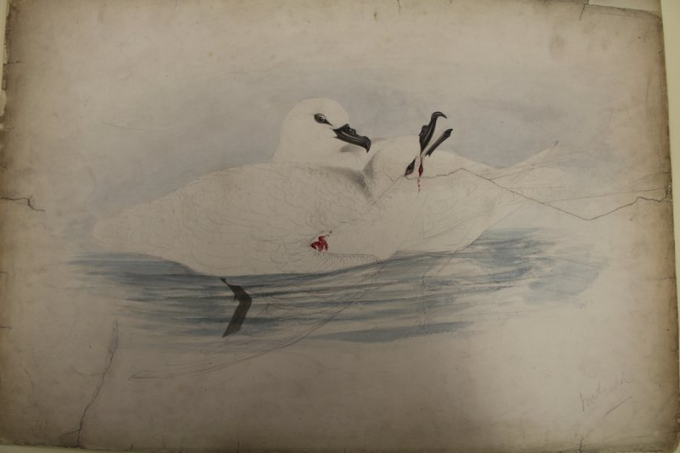
Near the islands of Amsterdam and St Paul John convinced Captain McKellar to allow him to lower a rowboat into the becalmed sea. Gilbert and Benstead climbed aboard, raising their firearms to the flocks of frigatebirds, fulmars, albatross, storm petrels, petrels and shearwaters that drew near the ship, attracted by a tasty burley of offal and fat. On the foredeck, John utilised a system of knotted hooks and fishing line to capture the more inquisitive species. At that first musket crack Elizabeth lowered her book of verse and gathered up her drawing materials.  She tied on her painting apron and selected pencils and brushes, venturing above-deck for the opportunity to draw from life.

A series of watercolour paintings held in the Ralph Ellis Collection, at the University of Kansas, document preparatory studies Elizabeth undertook during the Goulds’ voyages two and from Australia. On-board the Parsee and Kinnear, Elizabeth drew and painted scores of pelagic species, many of which were new to ornithology. The drawings have been ripped and repaired; they’re grimed with use, and authenticated by a cursive ‘Mrs Gould’ scrawled in pencil, in the bottom right corner of the page. Most of the paintings include pencilled details of the ship’s precise latitude and longitude, important information for ornithologists, who as far back as the 1830s, were concerned with questions of range and distribution.

Picture Elizabeth, her bonnet tied on, paper clamped to her easel. Her skirt reaches to her ankles, the sleeves of her blouse cover her wrists. With one hand she mops at her sweating brow, with the other she sketches the outline of a pair of cape petrels, floating near the rowboat. Blood drips from the foregrounded bird’s partially open bill. Pelagic species such as petrels spend most of their lives on the wing, excreting salt from a tube above their bills. They can smell blood from great distances. The cape petrels were a gregarious tribe, venturing within several yards of the ship’s deck to take pork fat, their cries like the bleating of new lambs as they fought for morsels to eat. As a defence mechanism, their young squirted ‘foul-smelling oil’ from their beaks. For the first time in her artistic career, Elizabeth had the chance to make studies of living birds in their natural environments. According to an American botanist who visited Elizabeth while she stayed at her brother’s farm ‘Yarrundi,’ near Scone, she worked quickly at her sketches:

Mr. Coxen received us very politely and introduced us to his sister Mrs. G., to whose talent and industry the world is indebted for the celebrated Ornithological Illustrations. I had the pleasure of seeing the lady at her pencil, and was surprised at the rapidity of her execution[2].

spectacled petresFigure 3 Cape Petrel with blood from feeding Watercolour and pencil study by Elizabeth Gould
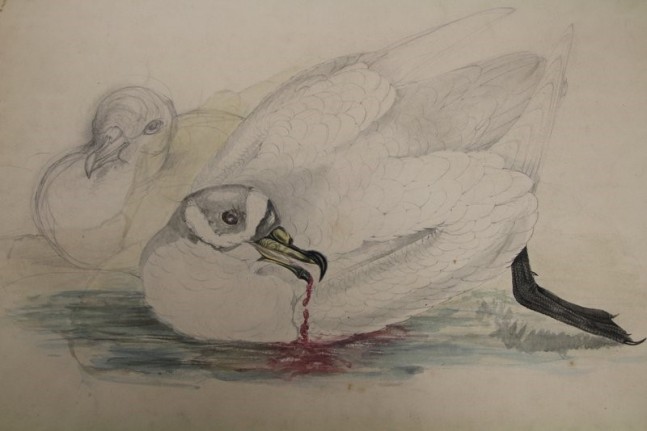
specuFigure 4. Spectacled Petrel study by Elizabeth Gould 1837
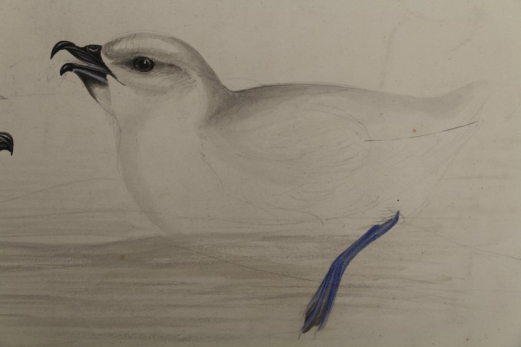
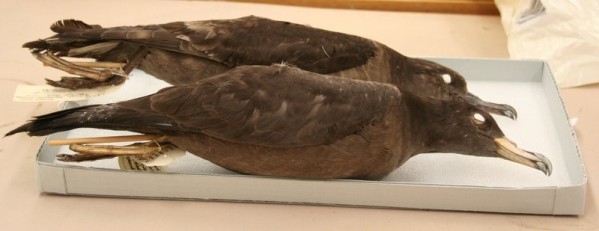
Elizabeth illustrated the spectacled petrel with blood pouring from the lower mandible of the foregrounded subject, its mantle and wings positioned to highlight the shape of its feathers, which are drawn in fine detail. Studies survive of Elizabeth’s sketches of the dove-like prion, the silver-grey petrel, the diving petrel, the short-tailed petrel, the blue petrel and others. Viewing the paintings, it’s apparent that certain features have been coloured, for instance, the specimens’ bills, eyes, facial markings and webbed feet. The correct shades of these ‘soft parts’ needed to be recorded immediately, because the colours of a bird’s eyes, feet, neck wattles and eye skin quickly fade after death. Hence, Elizabeth’s drawing of the dove-like prion indicates its sooty black bill and royal blue feet.

bluefoot

Figure 5. Dove-like Prion by Elizabeth Gould note the blue feet

On the other hand, the bird’s plumage, morphologically detailed on the sketches to show their outline and feather groupings, is uncoloured. It’s possible to add colour detail later; the plumage on a taxidermied specimen does not fade as dramatically as the ‘soft parts’, as long as it’s protected from sunlight. Note the sooty shearwater’s chocolate plumage in the photographs, and the flesh-coloured feet of the fresh specimen, which have faded to yellow in the preserved example.

Figure 6. Sooty Shearwater courtesy of Queensland Museum note the pink feet
akins

Figure 7. Sooty Shearwater of Queensland Museum note the dried yellow feet

John wrote to the zoological society that Elizabeth enjoyed drawing and sketching on the Parsee.

One of the finest examples I possess [of the silver-grey petrel] was captured with a hook and line and thus afforded Mrs Gould an opportunity of making a beautiful drawing from life. (Handbook, 467-468)

He told of his discovery, using what can only be described as an early tagging method, of winding a band around certain species feet and releasing them back to sea, stunned when day after day, the tagged birds flew alongside the ship, travelling many hundreds of miles. He described an albino giant petrel that followed the Parsee for three weeks. Sadly, many of the pleagics John captured were not released back to the skies–particularly ‘novel’ or ‘curious’ species that hadn’t been encountered by science. Rather, they were bagged or netted by John and his team to be transformed into study specimens. Due to the mosquitos and flies brought by the humidity of the tropics, the bodies had to be converted into skins as quickly as possible.

James and John Gilbert transferred the bagged specimens to the makeshift stuffing room below-decks. The specimen, say a sooty shearwater, was placed on its back on a cloth, its wings tucked back. The downy belly feathers were parted to reveal the skin so than an incision could be made, from the middle of the breast all the way down to the cloaca, located at the beginning of the tail. Before removing the bones and ‘meat’, as John referred to the tissue in his letters, measurements were made of the specimen’s bill, wing and tail length, as well as its girth, so that when the body cavity was filled with flax and hemp and sewn shut, the proportions were correct. Otherwise the study skin might seem overly plump, or conversely, emaciated. The skin of seabirds is thick, making the process of removing the tissue easier than with other orders. Incisions were made between the shoulder and tibia joints and the top of the tail so the bone and flesh from the shoulder and pelvis area could be removed. In the field, nineteenth century ornithologists usually ate the muscle they scraped from the skins, though I have not found records of John Gould’s team eating the flesh of seabirds, which were said to have an unpleasant fishy taste. After most of the body had been lifted out, one of the wings was opened, and an incision made along the humerus and radius and ulna. The tissue surrounding these bones was cut away, the inside of the skin and bones scraped clean. An arsenical powder was then sprinkled on the skin, to protect it from infestations of lice and moths. Flax, called ‘tow’, was wrapped around the bones and the incision sewn up. Until the early 19th century, collections of skins in museums were unstable, moths and lice frequently destroying the feathers. A French apothecary discovered that using arsenic deterred insect infestation, although if the taxidermist had a cut or wound, the poison could enter his body, causing great discomfort. One of the trickiest steps in making a study skin is excising the tissue from the skull. The skin was turned inside out, and the flesh around the base of the skull scraped away. Although most of the skeleton was removed from a study skin, the skull was kept, as were the bones of the legs, tail, and wings. With great care the eyes were pulled from their sockets, so as not to damage the delicate eye rings, and a tool like a tiny ice cream scoop inserted into the hole to scrape out the brain. The eyes were replaced with glass eyes or wads of cottonwool. The tongue, important for classification, was cut out and steeped in alcohol for later study. When the entire skin was freed of flesh and cleaned, it was again sprinkled with arsenic powder, filled with hemp and flax and stitched up. The wings were folded behind the body, the legs crossed and tied with string and a tag that included field information and the species’ binominal name was added. The taxidermied skin was then set by a fire to dry and harden.

spFigure 8. Wilson’s Storm Petrel study skins courtesy of the Queensland Museum

Having made a study from life, Elizabeth was provided with a taxidermied specimen to aid her in accurately representing the species’ diagnostic features. With the skin at hand, she could examine in detail the feather groupings, and any special markings, adding these to her sketch. The preparatory drawings in the Ralph Ellis Collection show that several studies of each specimen were needed to create enough information to make a hand-coloured lithograph. Along with the composition of the foregrounded subject and background, the lithographic plate required detailed tonal shading of the species’ plumage. The finalised composition was then traced onto the lithographic stone, a limestone block dug from the Austrian quarry where the archaeopteryx was discovered. The slab was so porous that a fingerprint or droplet of water could mar the printed pull. However, this absorbent, organic quality rendered it the perfect medium to represent the delicate detail of feathers and skin. Once the design had been transferred onto the stone, it was washed in a weak acid mix and then coated with a greasy ink. Thick GSM paper, driven through a press, absorbed the impression. The studies that Elizabeth made on the Parsee show this initial step in the preparatory process of producing a hand-coloured plate. Since the plumage did not fade, separate studies were undertaken to detail the colours of the specimen’s feathers. Which is why in the drawing of the cape petrel, the chocolate and spotted cream of its coat is not indicated; nor the rich coffee plumage of the spectacled petrel. The final stage in the preparation of a hand-coloured lithographic plate was to make up a coloured ‘pattern’, where watercolour paints were added to the lithographic print. The ‘patterns’ were sent to the colouring firm the Goulds’ outsourced, the ‘hand-coloured’ features added to the black and white print.

The Goulds arrived in Hobart in September, 1838. They spent eighteen months in Australia, living with Sir John and Lady Franklin at Government House in Tasmania and with Elizabeth’s brothers, Stephen and Charles Coxen, in the upper hunter region in New South Wales. Gould made expeditions to procure specimens in Tasmania, New South Wales and South Australia while Gilbert headed to the settlement at Swan River, in Western Australia. At the conclusion of the venture, the collecting party had amassed thousands of specimens of Australian birds, their eggs and nests, and an impressive hoard of marsupial skins. Indeed, the Goulds attempted to import live birds and mammals to England, but with ill luck. Holed up in the Kinnear, the kangaroos, wallabies, wombats and koalas succumbed to the rough conditions of Cape Horn and the stultifying equatorial tropics. The buck kangaroo caught cold, the cockatoos fought through the bars of their cages, the koalas and wombats were soaked in sea water until their coats clumped stiff with salt. Elizabeth’s brother had gifted her 6 budgerigars, of which a pair survived, and, as history has it, the budgie was introduced to the English as a suitable bird to cage.

eg.png

Figure 9. Elizabeth Gould with Red-footed Falcon. 1830s artist unknown

Elizabeth had farewelled her brothers, Charles and Stephen, and collected John Henry from boarding school. Voyaging on the Kinnear, still nursing a new-born son, Franklin Tasman, she continued to make sketches of pelagic species. The anticipation Elizabeth must have felt at being reunited with her children in London can only be imagined. In August 1840, the Goulds returned to their Broad Street terrace. Home, Elizabeth and John set to work, releasing the first part of The Birds of Australia, containing seventeen hand-coloured lithographs, just three short months after disembarking the Kinnear. Elizabeth’s fame as a pioneer ornithological illustrator spread, her artwork discussed in journal articles and newspapers. Ornithologists complimented her skills in their correspondence. Her portrait was taken in oils. Before John and Elizabeth Goulds’ luxury folios, few had used the technology of lithography to represent birds. William Swainson, a pioneer in the technique, failed to exploit its potential, his specimens represented in stiff, unimaginative poses. In The Birds of Australia Elizabeth illustrated species that unsettled the classification systems of the day; the newly-described mallee fowl, the intriguing brush turkey, the cryptic plains wander, an ancient species related to waders that has a family all of its own. She painted gorgeous parrots and honeyeaters, as well as shyer species such as the chirruping wedgebill. She depicted three species of the unique and ancient tree creeper, according to Tim Low’s Where Song Began, the closest living relative of the lyrebird, which Elizabeth also painted, the first artist to depict a female of this species, the world’s largest passerine.

Unfortunately, a year and a day after the Goulds’ return to England, nine months into The Birds of Australia’s eight year production run, Elizabeth Gould died suddenly of puerperal fever following the birth of her eighth (surviving) child. She was just 37. Bereaved, but needing to fulfil the promises made to his subscribers, John hired 18 year-old H. C. Richter to transform the 1000s of drawings, paintings and sketches Elizabeth had made in Australia, into lithographic plates, completing the work of The Birds of Australia in 1848.

The pelagic sketches Elizabeth created aboard the Parsee and the Kinnear were not released as lithographic plates until 1846, five years after their designer’s death. If it was not for the survival of the preparatory drawings in the Ralph Ellis Collection, the contributions Elizabeth made to this series would be forever lost. Of the 84 hand-coloured lithographic plates that Elizabeth Gould is authenticated as designing for The Birds of Australia[3]–her signature appears in the bottom left-hand corner of the lithographs–none are seabirds. It would be excusable if the sketches Elizabeth made were merely studies, reinterpreted into the final design of a lithograph, but instead these paintings and drawings have been copied directly onto the completed plate. John Gould and H. C. Richter elaborated the plumage colours at a later date, but, rather than acknowledge Elizabeth as the designer of the original compositions, the signatures at the bottom of the entire series acknowledge John Gould and H. C. Richter as the artists.

Mention ‘John Gould’, and most people recognise his connection to Australian zoology; in birding quarters he’s regarded as the ‘father’ of Australian ornithology. The contributions to the discipline of his wife, Elizabeth Gould, who worked as principal artist during the family firm’s first eleven years of operation, are less well-known. Had Elizabeth survived the birth of her daughter Sarah, her illustrations for the first comprehensive taxonomy of Australian birds to be published might have wider contemporary recognition. In the last several years, four books have been published which discuss John Gould’s contributions to Australia’s zoology[4], but not one of these titles attempts to overturn Elizabeth Gould’s neglected reputation. Rather, the myth of John Gould, the ‘savant’ birdman, endures.

This persona can be traced to John Gould’s tendency to draw attention to his activities and abilities at the expense of his highly skilled co-collaborators. With respect to Elizabeth Gould, there are numerous examples of John Gould’s self-promoting behaviour. Throughout their partnership, John signed his name to the artwork his wife produced, even though his roles–as taxonomist, taxidermist, publisher and writer–had little to do with the composition and design of lithographic plates. It is well-documented that John Gould’s artistic abilities were limited. His difficulties in drawing the basic outline of a bird is one of the reasons Elizabeth Gould came to his attention. Perhaps John thought he was protecting Elizabeth’s social status as a Victorian matron by signing his name to her works. Maybe he reasoned that his signature added prestige to his wife’s illustrations. Whatever John Gould’s motives, it’s clear that in collaborating with her husband in his publishing venture, Elizabeth Gould accessed a world of science and adventure denied the vast majority of the women of her class and time, despite their considerable training in drawing and painting.

[1] And a little later: “Mrs Goulds health is so much improved that he believes the Voyage will be the means of completely re-establishing it.” (267 Sauer Chronology Vol 1)

[2] Dr Pickering’s diary (kept during The United States Exploring Expedition under the command of Charles Wilkes 1839 5 December) 18. In Albrecht, Glenn and Jillian “The Goulds in the Hunter Region of N.S.W. 1839-1840 Naturae 2 (1992) 1-34

[3] The Birds of Australia (1840-1848) volumes 1 through 7 featured 600 hand-coloured lithographs of Australian bird species.

[4] Roslyn Russell, The Business of Nature: John Gould and the Birds of Australia (2011); Sean Dawes, John Gould: An Australian Perspective (2011); Sue Taylor, John Gould’s Extinct and Endangered Birds of Australia (2012); Fred Ford, John Gould’s Extinct and Endangered Mammals of Australia (2014).

First published in The Lifted Brow, republished in The Catamaran Literary Reader