Fiction · Short Fiction

“Marilyn’s Feast”: Review of Australian Fiction

RAF_VOL19_ISS_4It’s lovely to have a new piece of fiction published. It’s been a long time. Check out the latest issue of Review of Australian Fiction, Volume 19, Issue 4, for my short story: “Marilyn’s Feast.”

Thanks to Inga Simpson for partnering with me.

Subscribe now to support Australian fiction, only $2.99 per issue:

roafMarilyn’s Feast (preview)

Marilyn scanned the labels for additives and chemicals but the ingredients lists were equally full of rubbish. How about a visual test? No such luck: the two vacuum-packed slices of prosciutto seemed identical. There was always the supermarket’s deli, though the thought of all that raw pink chicken and soft white fish jumbled amongst the cold cuts had her picturing salmonella cultures, listeria. She supposed she could drive to The Stuffed Truffle, get some freshly sliced. Was that going overboard?

A yellow tag beneath Coles’ gourmet range caught her attention. They were on special—still expensive. Bugger it. She grabbed three packages and crossed prosciutto off her list. In the meat aisle she chose the bulk pack of rump steak. Her recipe called for gravy beef, but the last time she used gravy beef she’d spent ages chopping out the gristly bits, dumping them in a plastic bag which she shoved into the bowels of the freezer. An attempt at environmental awareness had her boil it down for stock—waste not want not—but a foamy-scunge floated to the top of the saucepan and it smelt repulsive and she’d ended up flushing it down the toilet.

The bill amounted to a small fortune, the clerk passing her the long, carefully folded docket, which she screwed into a ball and threw under the cigarette counter.

John need never know.

She ordered lilies from the florists and at the liquor barn a mixed dozen of red, white and bubbly, plus a carton of discounted Mexican beer. In the car park she had trouble closing the boot and had to rearrange several of the environmental bags.

Her phone buzzed and she jerked to a stop at an orange traffic light, the driver in the car behind beeping his horn. She flipped open the casing but it was too late; the call had gone to voice mail. In the darkness of the garage she retrieved the text: Buster head cold. Have 2 cancel L. Nerves soured her stomach. What was she to do with all the alcohol? The extra food? She was ridiculous, out of control. The engine ticked like a timer about to go off but she stayed clipped into her seat, wondering if John would take the initiative and come out and help her unload.

Outside the study she smoothed her cords and shirt, jiggled the doorknob.

John was on Facebook. ‘There’s beers in the car,’ she began. ‘Not to mention a shit-load of heavy groceries.’

A tiny muscle in his cheek popped.

‘Sorry,’ she said. ‘I didn’t mean to be rude. I’m just stressed about tonight.’

John stretched, his blue t-shirt revealing his navel hair. He shut the laptop.

‘You know I hate having to ask.’ She tasted sweat above her lips.

He came at the doorway side-on, all hip and shoulder and defence; she flattened herself against the frame, stomach pulled in tight, to let him through.

She shambled after him, a flightless bird, aware of her thighs rubbing, the elastic of her underpants slicing into her hips, feeling like her flesh had no borders. ‘I’ll get lunch ready, okay? Would you like a cup of tea?’

She was yet to print the online olive tapenade recipe. She dashed back to the computer, patting the mouse and making the screen flick to life. John had forgotten to log himself out of Facebook. Curious, but unaware of making any decision, she found herself – hand on mouse, eyes on screen – scrolling John’s friends. His writer buddies posted an awful lot—links to publishing news items, word counts, up and coming events, milestones. Below a video, loaded by a television producer mate, was a series of comments by a ‘friend’ called Meggie. Marilyn tried to put a face to the name but couldn’t remember John ever talking about her. Something in the postings’ gushy tone made her uneasy.

She listened down the hallway—John was still bringing in groceries—and with her left foot shut the door. Clicking onto the tab for ‘Messages,’ she worked her way down the screen until she came to Meggie’s thumbnail. Most of the thread’s commentary was inane. The girl was a student of some kind. She paged back to the original email:

Hi John, it was great to see you the other day. Thanks for making the effort to come over, I appreciated it. Thanks, also, for talking shop. It’s good to get some expert opinion. And support.

A few entries later, she discovered another post. For five minutes she read and calculated and tallied, piecing together scraps of detail until she had the meeting narrowed down to a particular afternoon last May. It was the first day of John’s week off and he’d mentioned several times that he wanted to go shopping for his friend Clayton’s fortieth birthday. It was so out of character she’d wondered if he wasn’t organising a surprise for her. But when he got back and she asked what he’d bought, the expression on his face was vague. He said he hadn’t found anything yet, that he’d have to have another look. She’d given the incident no further thought.


Essay · Fiction

Dollarbirds

1

24 March

Early Wednesday morning my sister drives me to the private hos20160610_152137pital. My name’s called in the waiting room and I’m led through double doors, shown into a small office. A vivacious nurse questions me about fasting, allergies, former operations. I’m weighed, ‘so they give you the right amount of anaesthetic,’ and handed blue-green scrubs for my hair and feet. I remove all clothing except my underpants and am tied into a gown. The nurse clips a nametag around my wrist, joking about not getting me muddled up with somebody else.

‘It happens, you know.’

I nod, recalling a news item about a hand transplant in which the patient’s left hand was joined onto his right arm and vice versa.

She leans forward, intimate. ‘I worked in Saudi Arabia. The female patients can’t be seen by the male surgeons. They wait on the stretchers like dead bodies, completely covered. Once, we performed neurosurgery on a cardiac patient.’

‘How terrible,’ I offer. How feeble I sound.

She squeezes my hand. ‘You’ve made the right choice with Dr K. He’s very good. The best. Like an artist.’

I’m moved to a curtained room with Vikki to wait. Dr K breezes in. That’s his air. I’m told to take off my gown (my sister steps outside) to pose for several ‘before’ photographs, shot with a digital camera, which I’m shown immediately on the LCD. With a felt pen, Dr K draws crude lines, circles, and dots on my breasts and nipples. Nervous, I’m prone to gush nonsensically, but I recognise this part of the procedure as crucial. I keep still and steady my breathing. Picture what my artist-surgeon sees. Make myself stop.

I’m helped to ease the gown back on. The rest of the team arrives; pressure stockings are rolled onto my feet and legs, my bag put in a locker, my sister sent home with a kiss. The anaesthetist introduces himself and asks about allergies and surgical history. He’s tricked me, painlessly sliding a cannula into the back of my hand and organising the tubing, lining up a syringe.

I wake up near the nurses’ station. They’re talking loudly and taking food from the fridge, spooning coffee. There’s a commercial radio station on—the offending machine sits above the microwave—playing easy tunes interspersed with talkback. Shush, I want to say. Can’t you see I’m trying to sleep? A hair-netted nurse checks how I’m doing. I tell her there’s a magazine in my bag, would she mind getting it out for me to read? I’m terribly bored. ‘You have to rest,’ she says. I’ve no idea of the time. After an age she returns, says my sister’s on her way. I’m supported to hobble into another recovery area, TV blaring, and supplied with a plastic triangle of ham sandwiches, asked how I like my tea.

3

25 March

20160610_153333

For Vikki’s house-warming present, I had a print of George Raper’s ‘Dollarbird’ professionally framed. I bought it at the National Library of Australia’s gift shop, while in Canberra to attend a symposium on Angela Carter and fairy tales. She’s hung it above the light switch in the guest bedroom, on the piece of wall jutting from the built-in wardrobe. I’m surprised. I really thought she liked it. She certainly behaved as if she did when she unwrapped the paper. She’s my sister; I know her expressions. Maybe she re-evaluated her enthusiasm when she got it home and found it didn’t quite match her city apartment’s wheat and linen colour scheme. The turquoise of the bird’s breast feathers and the indigo of its wing tips, I’d thought the perfect accent, given her rhapsodies on interior design’s reclamation of teal. Maybe the orange–red beak put her off. I’m confused. Aren’t birds all the rage in Better Homes and Gardens, Old World watercolours with that stiff, flat quality? Is the frame too ostentatious? Whatever it is, I’ve got something wrong. In my drugged-out state, disappointment transforms into rejection: I’ve failed her.

5

I stand at the half-length mirror in the bathroom. I’m general-anaesthetic yellow, like they’ve overloaded my liver. Powered me down and booted me back up. So sedated that if I sign something legal in the next twenty-four hours, I can’t be bound to it. I undo my pyjama shirt and unclip the hook and eye fastenings on the surgical bra. It slips off. Underneath, I’m wound with a thick bandage, over the top of gauze and surgical strips. I’m definitely smaller. The elasterplast bandage is like the ruched bodice of a sundress, a signature item of femininity I’ve never been able to pull off. Strapless, I square my shoulders. I can’t quite express how minus one kilogram of breast matter feels—the tissue is mostly fat and glands and has always just been there, dragging at me, a saddle of flesh. I put the bra and my top back on, wincing at the tenderness in my lower right breast. I check the time in the kitchen but it’s another hour until I can take more pain killers.

I walk dazedly to the guest room and climb in bed. I rest and sleep propped on a pile of body contour cushions. On the bedside table are fibre supplements, zinc for the scarring, anica drops—I’m fiercely against homeopathy but bought it on the plastic surgeon’s advice—Di-Gesic, Tamazapan, Panadeine, cold Lady Gray tea, tissues, Anna Karenina, Vanity Fair.

6

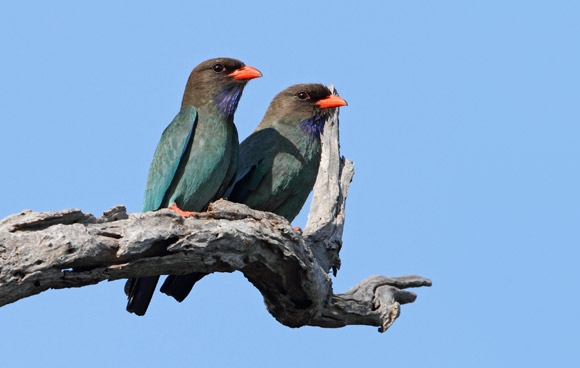
Raper’s dollarbird perches on a stub of branch that’s been stuck into a round of bare grass. The bird’s orange-red beak is parted, its short, thick neck inclined towards a large mosquito, which it’s about to pluck from the air, a style of representation common to the era. Apart from the open mouth, there’s little movement in the body, most likely painted from a stuffed skin. The library dates composition at 1788, but with a tentative, bracketed question mark. I forgive the image its flatness. These are early days in the field of ornithology, before Audubon’s wild arrangements of stuffed birds made to strike life-like poses using wire, branches, fruits and moss. Before the great British taxidermist John Gould, who classified camphor-preserved hummingbirds for twenty years prior to crossing the Atlantic to observe a living one. Not that you could tell from the lithographs he produced. The eyes of Raper’s dollarbird are large and deep brown, almost black, with a gold-brown ring. The feathers under its neck are royal blue, as are its wings, except for the splash of white in the centre, from where it derives its name; apparently the spot’s the same size as an American silver dollar. The bird’s body is turquoise, in shades that encompass the stone’s pale milky teal as well as the Aztec blue more commonly associated with the colour. Here Raper’s brushstrokes are made with a single bristle. It reminds me of a schoolchild’s felt-tip colouring, where, instead of rubbing the pen backwards and forwards, the child creates a series of closely crabbed lines. The flat, stout tail is lifelike, but the orange claws and feet are too small for a creature that only expends itself at roost or on the wing.

7

26 March

There’s a Shiraz stain on my lower right breast. The skin surrounding the nipple tape is the liver yellow of a week old shiner. The palette shifts and changes and I wonder about the chemicals that cause the discolouration. How the spilled haemoglobin transforms from purple-black through to blue, mellowing into green and then lingering, stubbornly, at jaundice. It’s a complex yellow, the excess pigment fading and fading until a mere residual. I try and picture what’s going on inside the cells—repair, regrowth and readjustment, obviously—but beyond these generalities I possess no real knowledge. Just information—physiology from my psych training, access to Google Images and Wrong Diagnosis, an avid capacity for fantasy—all of which combine into a recipe for the perfect freak out.

8

I collect birds’ nests. Not intentionally. I’ve only ever found three and two of those were with my husband and he spotted them before me. So, technically, only one. I’ve amassed around fifteen. Some are sewn onto card and framed in shadow boxes. I have a currawong’s nest from friends in Greenbank, inside a case that once held a bottle of tawny port. There are spares in a couple of shoeboxes under the bed. My husband keeps one padded with tennis ball fluff on his writing desk; I have a matching twin, the insulation a similar cushiony fibre, but white. My favourite’s a pear-shaped nest, with a small twig woven into the top, like a stem, where it attached to a branch. It fits into my palm, a bisected breast or womb. I like it more than my most sophisticated nest, donated by my father-in-law, which I store in a lockable cabinet. It’s still connected to the supporting branch, the exterior strips of paperbark, the rim made of ballerina tulle and birthday present ribbon. Brown rush softens the base. I’ve lost count how many people have questioned its authenticity.

In front of the currawong’s nest are two toffee tins from the fifties, robins painted on one, parrots on the other. I run my finger over them, and the deck of playing cards, each with a different European bird on its face, sent by my sister as a gift when she lived in England.

9

31 March

A week after the operation I travel to hospital to have the dressings removed. I lie with my top off on a disposable sheet on a narrow cot. My husband sits in the chair beside the sink. The nurse, Suzy, is firm and kind. She rubs solution on the tape to dissolve the adhesive, gently peeling away the dressing. She trims the end of a suture that’s pushed through the skin. ‘They do that,’ she shrugs. She instructs my husband on how to remove and reapply the dressings, in two weeks, and in another two weeks, and in another two weeks again. She’s not sure about a nylon stitch in my nipple and calls Dr K. He’ll want to have a look anyway.

‘You all right?’ I ask my husband. ‘Not put off me?’

‘I can deal with it,’ he replies, bemused.

We’re practically smug.

Dr K beams over his handiwork. ‘You’re doing great. They’re healing well.’

I grin like a creature without language, having achieved with just my body.

13

1 April

I snap two lilies off the West German vase of get well flowers, dying and already dead, the remainder okay. I arrange them on my desk and hunt for the camera. One is brownish-plum, the other brownish-white, the former coming apart as I adjust it, the filaments and petals scattering. The petal-tissue is so weakened the touch of my finger damages it. Up close like this it’s a skin, registering a colour spectrum that includes lavender, lilac, plum, and vein blue. On the surface are bumps—to guide insect feet, I believe—but they remind me of imperfections on human skin. If I run my finger down to the centre of the intact flower, the bumps change into aggressive little nodules, hairy outcrops; I feel the roughened ends pull into the folded creases of the receptacle. Though dead, the stigma and style retain their chloroform green. The stigma’s shaped like the head of a praying mantis, something of the insect’s poise in the style also. There’s no trace of the anthers. But I must’ve grazed them, walking away with three scratches on my elbow, the pollen so richly coloured my husband thinks it’s dried blood and asks if I’m okay. Later in the bath I spy a large mustard stain, which exactly mimics the bruise on my breast. Have my skin cells teleported, I fleetingly wonder? Soap’s not strong enough to get it off.

14

I paid attention to George Raper during research into literary fraud because the narrative that catapulted him to fame sounded too incredible to be true: the discovery of an unsigned, undated cache of priceless watercolours from the First Fleet, gathering dust for a hundred years in a warehouse in the Cotswolds? It’s a bit like attempting to flog a long lost Shakespearean play.

Turns out they’re the real thing.

I caught a TV program about the Dulcie Collection, a recent acquisition of First Fleet material by the National Library of Australia. In 2004, the seventh Earl of Dulcie inventoried his English family estate. A folio of watercolours was opened, the striking quality of the kookaburra on the front page causing its examiner to make a connection with Australia. Experts were consulted and the fifty-six paintings of Australian birds and plants identified as the work of little-known navigator and map-maker, George Raper. Bequeathed to Raper’s mother, upon her death the collection became associated with the estate of Joseph Banks, before passing into the care of the Dulcie family. Denied a public viewing and therefore cultural currency, until 2004 when the Laughing Kookaburra’s blue-flecked wings caught that canny inspector’s eye, it was as if Raper’s paintings had ceased to exist.

16

It’s Good Friday and I notice a foul smell. The dressings are weeping. I put on a movie and put my feet up; cross my fingers it’ll go away. On Saturday nothing’s changed. I check my sheet of aftercare information, what’s okay and what’s not. The occasional bleeding, the whiffy smell, and the mustard stuff leaking through the surgical bra aren’t normal. But it’s Easter weekend. I decide not to call Dr K, changing the bra and blow-drying the damp spare, cleaning the tape with soap and warm water. On Sunday we drive an hour to visit my parents for Easter lunch. My mother’s prepared pork roast, spiced red cabbage and apple sauce. She’s bought a blowtorch from Aldi for $14.00 and makes my dad crackle the brown sugar topping on her homemade crème brulee. In the guest bathroom later I lift the surgical bra so Mum can smell. A recipient and therefore expert on numerous surgeries, she doesn’t like it.             ‘You need to contact your doctor.’

17

I’m not a bird-watcher, a twitter or a tweeter in the old fashioned sense. A lifetime ago I connected with a poem written by my husband that featured a cuckoo-shrike. It was really a reflection on a relationship breaking down, but it provided the context for me to more closely engage with birds.

Dollarbirds are members of the roller family, so named because during breeding season they put on a show to impress their mates, spinning and flipping in the air like trapeze artists and acrobats. They belong to the same order as bee-eaters and kingfishers. I have a soft spot for rainbow bee-eaters; they rub the bees they’ve caught along fence palings to take out the sting before consuming them. Like bee-eaters, dollarbirds catch their prey mid-flight. They’re efficient, have sharp eyes and are well camouflaged, their peacock colours cleverly downplayed. They have no use for grass and flowers, which makes it challenging to view them in good light. Cast mostly in shadow, identification is often determined by their red beak and distinctive silhouette.

I’m almost forty and only six months ago sighted my first dollarbird, despite sharing its half-yearly habitat for most of my life. When I pointed it out, sitting on a telegraph wire on a quiet road in Beaudesert, My husband admitted that it was his first encounter, too.

‘Quite big, isn’t it?’ he remarked, flipping the sun visor for a better view. (They grow to about thirty centimetres.)

Just after that I noticed a mated pair perched on the powerlines behind our house. It seemed apt, somehow, that they’d been roosting there on and off for two years and I’d kept wandering by, oblivious.

I imagine Raper making his preliminary sketches. He was such a fan of colour variegation, of the taffeta iridescence of certain feathers under certain light, I’ve no doubt he would have fully enjoyed the dollarbird.

In 1787, before joining the crew of the Sirius, he shopped in London for art supplies, purchasing watermarked paper and a box of the latest in watercolour pigments, which cost him two months’ wages. He was an untrained artist, acquiring much of his technique via the gentleman sailor skills of navigation and map-making. Somewhere in the troubled new settlement he found a place with adequate light where he could sit and concentrate, drawing tools handy. At his feet I picture three, maybe four specimens of dollarbird, freshly shot—male, female, juvenile. He picks up the male, assessing its weight in his hands. Exchanging it for the female, he hangs her claws over his index finger to get the feel of her scaly legs. He flips her over, fanning her wing out to inspect the infamous dollar mark. With a thumbnail he pries her beak apart, making a mental note of the tropical yellow of her mouth. He inks his quill.

18

6 April

Easter Monday. I call a friend to discuss dinner arrangements. After showering, I put on a fresh surgical bra; half an hour later, the discharge that’s seeped through the tape, has seeped through the bra’s thick band. It pongs and I don’t know if it’s a good idea to drive halfway across town to a restaurant. All weekend I’ve resisted disturbing Dr K, but his phone manner is calm and thorough. He works through a list of questions, followed by a set of instructions, which I scribble across the bottom of a scene map I’ve been writing, the only paper handy. Treating an infection is a process.

‘I need you to take a break,’ I announce to my husband, seated at the kitchen table with a pile of English essays. ‘We’ve got to get the tape off.’

I lie on a towel on the guest bed. My husband dabs oil-soaked cotton balls over the tape to soften the adhesive. I peel one off and then can’t do any more and he takes over. The pus is brown and gross and makes my husband clutch his stomach. Dr K calls with a request that we take photos of the cleaned-up incisions and forward them to his gmail account. I wonder what he’ll charge for the telephone consultation. The infection’s undeniable; a small part of the wound on my right breast has separated. I have to take three showers a day with antibacterial soap and wear sanitary pads to protect the scars. My husband can’t figure out how to attach the Picasa images to an email so I do it while he drives to the seven day chemist to pick up the script Dr K phones through. My hands shake as I close the lid of my laptop. The image repeats on me like a heavy lunch all afternoon and I feel a fool posing in the mirror, thinking everything’s already better.

19

As far as folk bird superstitions go, the dollarbird hasn’t garnered much attention. It’s not renowned like the owl for possessing (hidden) teats that emit poison milk strong enough to choke sleeping infants. It can’t sing. It has no association with tragedy: Roman and German poets haven’t dedicated laments to transgressions committed during its formerly human state. It doesn’t have a thing for goat’s or cow’s milk, swooping down for a suck of udder, leaving tell-tale dripping dugs. If you nail a dead dollarbird to your barn door, it’s entirely useless as a prophylactic against lightning strikes and house fires. Children don’t sing rhymes about it, like the magpie for instance: ‘One for sorrow / two for mirth / three for a wedding’ all the way up to seven, which foresees a meeting with ‘the ‘de’il / himself’, and instigates anxious breast-crossing, complicated counter spells. Affixing a cross to the tree in which the dollarbird raises its young won’t drive the ‘evil’ family out. It can’t screech, nor does it bark at the moon; stirring it into soup won’t cure your child of whooping cough. Placing the heart of a dollarbird on the breast of a virgin won’t make her startle and confess the truth of her larger (and still beating) heart. Eating its eggs, soft boiled or hard, won’t help your fading sight, unravel the future’s web, nor improve your cognition.

21

There’s a report on the seven o’clock news about trends in plastic surgery. Procedures are on the rise and many women elect to have treatment in private, in secret. They aren’t talking about their experiences with friends, family and peers, and because of this, they’re failing to exchange information about potential pitfalls. The report’s author, who interviewed her sample post surgery, recommends that when women shop for cosmetic surgery, they should canvas at least three potential candidates. And they shouldn’t feel shy asking how many times a year the practitioner performs the procedure they desire.

23

7 April

Dr K and his staff, Louise and Suzy, the accountant and nurse who also answer the phones, are on leave. In their place sit Kate and Jeanine. Kate has just had Botox; her left eye is droopy and won’t blink, the right one’s fine. She has large breasts—they seem natural—and ample gold jewellery; bangles and bracelets and chain necklaces. Her attitude is take-charge, like the principal of my daughter’s school.

In the consultation room I take my top off—Jeanine doesn’t even have to ask—and get up on the bed.

‘They don’t look too bad, actually,’ she says. ‘In forty-eight hours, you’ll be feeling much better.’

‘That’s a relief.’ I give a smile that means phew.

‘At six weeks, we can do something about the scars.’

‘Are the scars okay?’

She hesitates. Smiles. ‘They’re fine. Fine,’ she frown-smiles, turning away to wash her hands.

‘Will they be all right in the long run, I mean? Will this—infection—make them worse?’

She hesitates. ‘Not necessarily. No. No, of course not.’ She talks collagen. How, immediately after an operation the body begins producing bucket-loads of the stuff, in excess of what’s actually needed, which makes the scars so raised and red. ‘They’ll simmer down.’

‘In six weeks,’ I say. ‘Got it.’

She discusses a skin product and I sniff a sales pitch, like a new hairdresser trying to slip you some straightening gel at the counter. I don’t know why she keeps banging on about it, when what I’m worried about is the wound breaking down, as I’ve read on the internet, or a dirty big spot expanding the scar. Mid product endorsement, she shakes her thin hands as if flicking soap suds—she’s thin all over—and closes her eyes. ‘What was I saying? Where was I?’

She’s flustered, I realise. She’s finding this harder than me. She mentions twins in day care. I get the picture; try and act more upbeat.

‘Pop in whenever you like,’ she says, ‘if you’re worried at all.’

‘I’ll probably call first.’

‘Oh, no, come in! You don’t need an appointment.’

I don’t feel like telling her that’s not how the clinic operates. Anyway, the place is a two hour round trip from our house.

26

12 April

I move between several mirrors, naked, eyes on my new breasts. I like my shape. I don’t care about the scars. Underneath the perforated tape, my areolas have been cut and re-stitched. They’ll heal up slightly unnatural-looking, but I’ve prepared myself. The operation can’t be performed without their alteration. The surgeon takes the skin from above the nipple and stretches it around and below the nipple, to basically reconstruct a new breast. The excess tissue is removed through a combination of liposuction and simple excision. The mammary ducts are reinserted and the nerves behind the nipples checked for blood flow. A strip of skin between the old breast and the new one is cut out, and the skin stitched together in an anchor-shaped formation. It’s known as the inferior pedicle. There are other methods, the Lejour, for example, which leaves a vertical scar, and plain old liposuction.

‘You’re always looking at yourself,’ says Brett. ‘All you do is look at yourself in the mirror.’

I’m not sure if it’s an observation or a complaint.

Twice a day he bathes my scars with antibacterial cleanser. Winter’s coming and I enjoy sliding into the warm bath. He washes his hands, fills a Tupperware bowl with clean water and dabs at me with baby wipes. Since I can’t raise my arms, he also has to wash my hair. I tell him he needs to rinse off the conditioner more or it’ll be greasy. The water spills over my eyes and I recall a friend’s poem about a woman having her hair washed by her lover in the backyard.

The poem’s about tenderness.

The way he cleans my wounds, I think, how he stayed put when we removed the dressings (I could tell he wanted to leave), how he’s supported me completely in this.

The funding he put in.

Brett helps me to stand, drying me with tissues and clipping on the bra while I hold the sanitary pads in place. I toss back antibiotics, zinc, panadine, fibre supplements. I write in my study. I still can’t move much and cancel lunch with a friend as I can’t manage the walk into town to meet her. My right breast is still tender.

I try clothes on from my wardrobe until my arms ache.

28

13 April

I need to remove the tape around my nipples. I’m propped on pillows watching a BBC miniseries of Tess of the D’Ubervilles. Bra off, I apply cotton balls soaked in olive oil to the area and wait twenty minutes. After peeling off the covers I shower, soaping the wounds with an antibacterial wash that’s white as snake venom, poison sap. The adhesive gum has formed into tiny balls, like the dust-attracting glue when you remove the price or prize sticker on a new book. It’s healed a lot, though parts are still red, the skin puckered.

I cry through Tess’s rape and the death of her infant, the green-blue lump on my right breast aching so much I swallow two panadeines and remove the surgical bra again. The British actress wears a fetching red jacket to milk the cows, which reminds me of Polanski’s Tess. I’m sure Nastassja Kinski wore a cropped red coat in his version, too. I read Hardy at sixteen, the year I discovered Lily Bart. Neither heroine was the blowsy, bosomy sort.

29

14 April

Brett’s returned to work. The infection’s under control but I feel vulnerable today, emotions I’ve put on hold rushing in to overwhelm. I can’t work in this state.

I sip tea on the veranda in my pyjamas and search for the dollarbirds. I think they’ve gone for the year—in April they head for the New Guinea highlands to breed—I haven’t noticed them in over a month.

I go inside and call Vikki, tell her I don’t mind that she didn’t like her house-warming present. I can take it off her hands, if she wants, find her something else.

She’s silent a moment. ‘What makes you think I don’t like it?’

‘It’s pretty obvious.’

She laughs into the receiver. ‘I moved it into the guest room to keep you company, silly. Didn’t you notice the blank wall above the dining room table?’

What makes me push people like this? I’ve embarrassed us both and have to apologise.

The story of George Raper involves an intrigue with Captain John Hunter, the second governor of New South Wales. An avid diarist and amateur painter, Hunter’s ‘Dollarbird’ was shipped back to England in the early 1790s and published in 1793 along with his journal and other paintings in the bestselling, ‘Birds and Flowers of New South Wales Drawn on the Spot in 1788, 89, and 90’. Copies of Hunter’s naive Nankeen Kestrel, his cheeky King Parrot and poorly silhouetted Dollarbird have been in public circulation for two hundred and twenty years.

Hunter’s paints and brushes were of lesser quality than Raper’s. His palette seems to have been limited to an earthy mushroom, some red, yellow and a bit of royal blue. His dollarbird more resembles a pigeon; its tail is too long, its neck too scrawny, the curve of its beak overshot. Like Raper’s, its mouth has been depicted slightly ajar, snapping at a fly.

The 2004 re-discovery of the Dulcie Collection revealed the interesting fact that many of Hunter’s paintings and sketches were direct copies of his protégée Raper’s originals.

30

24 September

A cardboard advertisement in reception features a set of eyes squinting to show stress and crows’ feet. Underneath, a tube of silicone enhanced skin cream, the label trademarked. The stuff must be good, you’re supposed to think, being endorsed by a plastic surgeon. On the table sits a stack of Who and New Idea, a small, compact book titled Breasts: A Celebration. Like the Little Blue Book of Hugs. I flip through pre-pubescent breasts, wet-nurse breasts, tribal breasts, cross-cultural breasts, postcolonial breasts, Oriental breasts, celebrity breasts (Jane Mansfield’s, Twiggy’s and Madonna’s), Impressionist breasts, Renaissance breasts, Virgin Mary breasts, Art Deco breasts. And, lastly, a curious construction of what might be described as freak show breasts. The model, in time-vague black and white, has been shot with her head thrown back in idiot abandon. She wears a bathing cap and is missing a front tooth; her breasts—only partially covered by her meaty forearms—are, of course, supersized.

It’s my six month check-up, the one where I’ll pose for the ‘after’ photographs. In a Woman’s Day—the wait is over twenty minutes—I read an article about a fifteen year old girl’s G-Cup breasts. She wants a reduction but her mother and father won’t grant permission; by law, she has to wait until she’s eighteen. At the age of seven, she was fitted for her first bra. The article lists the myriad ways the girl’s been singled out: teased at school, failed in PE, cat-called from car windows, stared at and leered at in the supermarket; in general at every turn made to feel less than fully human. Her mother says: ‘We don’t know where she got them from. Everyone in my family’s flat as a pancake. Though her Great Aunt Sally on her dad’s side was GYNORMOUS!’ There are two mother-daughter photos. The girl is dressed in a fitted, scoop-necked t-shirt and denim mini skirt. She wears makeup and her blonde hair’s been straightened. In both images, she glares at the camera, the defended sadness of a survivor in her eyes. In the second photo, her mum’s been caught mid-smirk, lapping up the spotlight.

My name’s called. I walk to the consultation room pondering the article’s mixed messages, unable to figure out why the girl spoke to the tabloid. She wasn’t fundraising for the operation’s $10,000 fee, she wasn’t trying to change the laws on the age of consent, or seeking a judge’s intervention to overrule her parents’ decision. She didn’t seem to want to emancipate herself from her uncomprehending mother, nor particularly to raise public awareness about the health and psychological issues associated with large breasts. Not to mention that persons with boob fetishes might very well get off on her photograph.

I must’ve missed something. All I can think is that three years is a long time for a fifteen year old girl.

First published at Bareknuckle Poet

Fiction · Short Fiction

The Zoological Vertebrate Laboratory

The Zoological Vertebrate Laboratory

img_1179

Jan listens patiently as I explain the difficulty I’m having trying to turn the body of the black-shouldered kite inside out. She digs her scalpel into a square of foam and places her large, knowing hands over the head of the juvenile bird, smoothing the russet-tipped crown feathers.

‘You’ve done a good job,’ she reassures.

I gesture at the bird’s shoulder. Her words encourage me through the glistening fresh guts and putrefaction, and, as I’m soon to discover, an immense welling of blood. The bird has a fractured skull, killed by vehicle impact, the force producing a trauma that bleeds profusely as we undertake the delicate work of turning the bird inside out to peel the skin of the neck from the red rope of its trachea and vertebrae.

Jan moves her fingers inside the shoulder joint where I’ve been digging and picking with my scalpel–gingerly, carefully, not at all like the high-school student seated to my left, who handles her female Regent’s bowerbird with an unsettling firmness and confidence. I sort of jab and nick, pushing the large tweezers against the skin to separate it from the membranous layers, amazed that no matter how deep behind the shoulder muscle I seem to get, there’s always more skin to divide from tissue.

Now retired, Jan was one of the first female science degree graduates from the University of Queensland. She worked for forty years as a researcher and lecturer in the zoology department. Frail but spry, Jan moves with a sort of shuffle. She’s in her mid-eighties and has trouble with her left shoulder and hip. Recently acknowledged as the longest-serving volunteer at the Queensland Museum, she selects her outfit for each Wednesday’s work in the Avian and Mammalia prep room with care: loose cotton pants over a cotton shirt, comfortable shoes.

It takes me three Wednesdays to complete my black-shouldered kite, including a full day of dousing it in Pantene. I work my fingers in around the feather tracts either side of the slit I’ve made along its abdomen, to try and break up the oily residue that’s leaked onto the belly down. In taxidermy, it’s important not to damage the feathers by over-handling, causing clumps of plumage to drop out, leaving bare patches of leathery skin. Due to lack of experience, I’ve managed to damage the skin in another way. I’ve not cut a hole in it–though I did sever the legs at the wrong joints, the knee rather than the hip; the mistake, I’ve been told, can be repaired with a short length of dowel. I’ve stained the feathers by not using enough paper towel and cotton, to absorb the fluids released by the opened body. The bath in Pantene is to remove the ropy, gluggy residue. Once I’m done washing the feathery skin, I’m instructed to plug in the hair-dryer. All afternoon I switch between blow-waving and fluffing the feathers out with a toothbrush, to rubbing potato flour onto the still-greasy belly to absorb the oil.

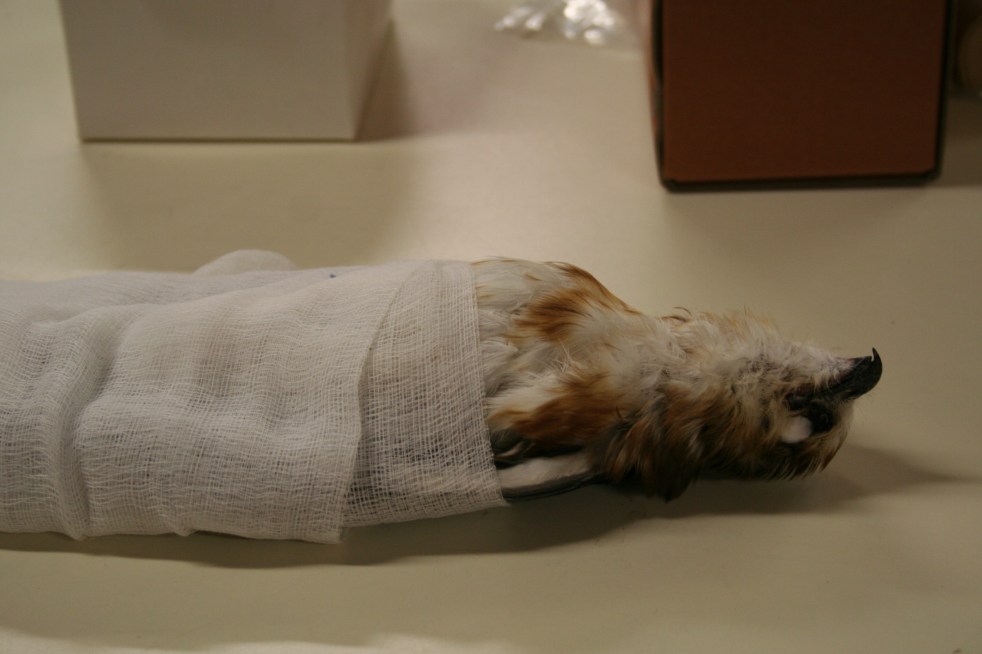
TaxidermyFinished grooming the outer skin, I insert a measured length of dowel up through the neck and into the cervical cavity at the base of the skull, around which I wind cotton wool and then Dacron, or mattress-stuffing, which puffs out under the skin, plumping like tissue and giving a lifelike appearance. I then thread a needle and begin to stitch the incision running from clavicle to cloaca–the dual purpose opening through which the bird passes reproductive material and waste. I cross its feet at the ankles and use string to tie them around the dowel rod. A label is attached to the string, identifying the bird by scientific name, location, date, and specimen number, all corresponding to details recorded in the zoological register. Fine surgical gauze is then mummy-wrapped around the bird, beginning at the shoulders and moving down to the tail, to enable it to ‘set’ and dry, a process which takes about three weeks. After this, the specimen will keep its shape and can be stored flat in a collection drawer.

The next bird I’m given to taxidermy is a sooty shearwater. The specimen is near-perfect, picked up by its collector after a squall on North Stradbroke Island. Its plumage is a uniform grey-brown; it has a grey bill and pink feet, not unlike the webbed feet of its close relative, the endangered flesh-footed shearwater. Its feet are a kind of icing pink, a little metallic and frosty, a colour that slowly fades as I spend the next three Wednesdays working to replace its body with cotton and Dacron. Its claws are tiny, as if added as an after-thought. If you open the bird’s bill, it has a serrated tongue, so the fish it catches adhere, the scales sticking to the rough sandpaper-surface, like animal Velcro. Shearwaters are members of the tube-nose family, so named for the straw-like protuberance on their bills, which are connected to a gland that removes salt, the briny liquid siphoned along the downward pointing beak in drips. I’ve brought my camera today, with an aim to document my taxidermic progress, although right now the bird looks bedraggled rather than impressive, lying on its newspaper lined mat, its head damp from spending the night defrosting inside a freezer bag. My tools rest in a Chinese takeaway container: new scalpel blade, three different tweezers, including the popular ‘rats’ teeth’, and a toothbrush (for later grooming). Also on the workbench are ice-cream containers of Dacron, cotton and the preservative Borax, trays of needles and twine and string, and rolls of paper towels and bulldog clips.

Moments before I make the first incision, Tony Rice, a Sunshine Coast based sculptor, is introduced to the volunteers by Heather, the head curator. He’s been in contact with the museum about viewing specimens of shearwaters and storm-petrels for an artwork exploring oceanic pollution. Tony’s website, explains Heather, features photographs of huge, lantern like sculptures, constructed out of balsa and wire frames. Trailing through each species intestinal tract is a kind of coil, made from plastic shopping bags dyed fluorescent yellow, symbolic of the impact of human pollution on the everyday lives of seabirds. Tony’s excited by my shearwater specimen. He, too, thinks it looks like a flesh-footed shearwater, one of the species he’s chosen to represent in his artwork, on account of its conservation status.

I tell Tony that I understand his reasoning. For me, this is a convergence of thinking. When I first outlined my research project, I had intended that the birds chosen to narratively frame each chapter capture my readers’ attention. I, too, instinctively understood the appeal of species labelled ‘endangered’ or ‘threatened’. Just like Tony, I knew that my work needed to resonate with contemporary readers and audiences, using birds with charismatic qualities, such as rarity, elusiveness or some other iconic cultural status. My potential readership would, I assumed, possess different degrees of expertise, experience and interest in Australian birds, my narrative specialty.

I initially decided to frame the chapters by selecting species that had been scientifically described by John Gould, another resonant parameter. However, I’ve since changed this idea to include birds that were painted, drawn or lithographed by Elizabeth Gould, my point of view narrator and the focus of my research and writing. The last eighteen months’ of reading have raised important questions about the authorship of several pelagic plates in the Birds of Australia, including species represented in the genii of shearwaters and storm-petrels. John Gould captured and preserved some thirty pelagic bird species during his voyage to Australia, an unknown number of which Elizabeth sketched and painted. During Gould’s period in Hobart, he sailed around North Bruny Island and D’Entrecasteaux Channel, where he obtained such magnificent species as giant northern petrel and the Tasmanian endemic, shy albatross.

Elizabeth’s pelagic bird paintings have become an essential area of enquiry in my studies, because they present a mystery of scholarship and documentation. John Gould refers to Elizabeth’s completion of such drawings in the Handbook to the Birds of Australia (1859). Evidence also exists to support Elizabeth having made fine watercolours of at least twelve pelagic species, all represented in hand-coloured lithographic plates in the Birds of Australia (Ralph Ellis Collection, Piccadilly Notes). However, in the legend at the bottom of each plate, John Gould and the artist, HC Richter (employed to complete Elizabeth’s work after her sudden death), are recorded as the designers and lithographers of the plates. Gould was never an expert on pelagic species. In fact, he was so uninterested in the orders of seabirds that he didn’t begin to publish prints of these birds until 1846, five years after Elizabeth’s death. Her paintings and sketches were filed until Gould was ready to give them attention, his energy focused on specimens that he found more interesting, charismatic, and scientifically pressing. Genii about which he had collected impressive field observations and knowledge: for example, the megapodes, honeyeaters, parrots, fairy wrens, pardalotes and raptors. Nevertheless, in true Gouldian style, John negotiated heartily with the pelagic ornithologist he employed to classify the cache of thirty or so seabirds, convincing him to append the name ‘Gould’, rather than his own, to a significant number of the newly described species.

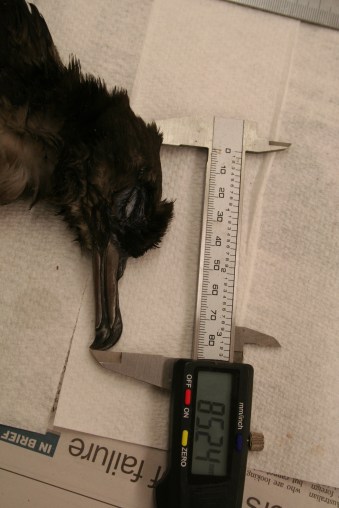
By now I’ve explained my project to Tony and he says he doesn’t mind I if watch him make studies and sketches of the Storm-petrels. I help to hold my sooty shearwater, while he takes measurements of its bill length, wingspan and body thickness. These are similar recordings to the ones taxidermists make when first investigating a specimen. Colours of soft parts–cere, feet, and facial wattles are noted–as well as the field details accompanying the specimen, GPS readings, weather conditions and cause of death. A few weeks later, when the painter Emma Lindsay sits beside me to taxidermy her first wing, detached from the body of a tawny frogmouth, she peppers Heather with questions about the species’ vulnerability to pesticides, its mottled plumage, the reticules or bristles, around its beak, the yellow colour of its gape, its eye-colour and mating call.

‘I’m an artist,’ Emma apologises with a shrug, ‘I have to have all that detail.’ Emma paints in a realistic style and her subjects are dead birds. They’re shown flat on their backs, heads thrown back, feet curled, wings tucked in, alone on in organised rows, with no foreground or background decoration, just their diagnostic features and plumage. She represents the birds as you would find them catalogued and stored, say you were to open one of the museum’s humidified drawers to inspect a hundred-year old collection of Gouldian finches. Emma’s works of art provoke reflection and discussion about ornithology’s treatment of living and dead specimens, about historical and ongoing practices of institutional collecting.

I couldn’t help wonder, thinking about my own flurried processes of gathering information, of attempting to increase my limited knowledge base–to the extent that I was prepared to be taught taxidermy–that people working in the creative arts, be them artists or writers, share more with scientists than is commonly given credit. We, too, wish to be precise, to make faithful representations. I didn’t seek out training in taxidermy. Just as I didn’t intend to join Margaret Cameron’s band of first-pop Saturday-morning bird atlassers, who gather behind telescopes and binoculars at the edges of Bundamba Lake, to make a monthly survey of local adult and juvenile waterfowl. Although my project had aesthetic considerations, its content needed to be verifiable, an accurate depiction of the concerns and practices of nineteenth century ornithology and print-making. Was it any coincidence, with regard to my decision to volunteer, that on my first day, a simple tour of the collection rooms of the Queensland Museum, renowned Australian artist Fiona Hall was sitting at the taxidermy table, manipulating long coils of wire, twisting them into magnified frames to represent the exoskeletons of endangered Mexican tarantulas? Her workspace was surrounded by field books, photographs, notes, a box of pliers, clippers and other hardy tools, which she applied to the wire with the dexterity of an electrician. One of my favourite Fiona Hall installations is Tender, a series of birds’ nests, constructed from American dollar bills, which accurately reflect the homes of their avian subjects. The nests of weaverbirds, sparrows, magpies, flowerpeckers, wrens, pardalotes and robins all hanging by the most delicate of frames. Just as Hall was on that day inspecting the museum’s collection of tarantulas, to compose Tender, she had interacted with actual birds’ nests resulting in the creation of an arresting and iconic work of art. Just like Tony and Emma, Fiona depicts birds to invite us to reflect upon our treatment of the environment, drawing attention to the achievements, beauty and vulnerability of these wild creatures.

And so what was supposed to be a tour, became my first day on the job. Like the gallows humour of students in practical anatomy, the taxidermy room is no place for the weak-minded. While intrigued about the procedure–I’d been reading accounts of nineteenth century preserving methods–I had reservations as to the strength of my gag reflex. Miraculously, I survived the first morning with just one rush outside for fresh air–there was a whiffy, sand-encased gannet to my right–only to have to deal with the bizarre ritual of morning tea.

Many people are involved in the volunteer program that helps maintain and preserve Queensland Museum’s vertebrae collections: former curators of collections who continue to oversee and check their particular speciality, PhD students, visual artists, and community volunteers. Jobs range from making stands, cabinets, cases and housing for the mounted specimens, to cutting up great swathes of Styrofoam bedding, in which eggs, nests, wings and beaks are displayed and stored. Inventories are updated, ageing specimens repaired, wings and tails are donated to the discovery centre for visitors from all walks of life to feel and touch–of course they’re destroyed in no time.

You’d think we’d leave the room to eat morning tea. Instead, our blue gloves are removed and we all troop to the tap and wash our hands. Coffee and tea are handed out in mugs, and we stand around trays of homemade cakes and biscuits, chatting and swapping stories, while a few metres away, under paper towelling and plastic, lie the opened bodies of tree kangaroos, torresian crows and ring-tailed possums. Despite some wicked-looking cake, I passed eating on that first day. When I returned home to make dinner, I found I was unable to deal with the chicken fillets my husband had taken from the freezer and had to ask that he cook dinner. I’m better now, I’ve learned not to bring meat for lunch when I work at the museum, and to pay no attention to the fact that my food feels a little lumpy going down.

Anyhow, there’s always a great story being told that makes me forget the strangeness of my surroundings. If a particularly putrid specimen arrives, the rounds of friendly one-upmanship begin–the adult humpback whale washed up on North Stradbroke Island, curing in a field while the museum figures out if it wants to make a skeleton of its body or not, the reticulated Burmese python from Australia Zoo, its rolled skin, looking just like a hallway carpet, in the downstairs freezer, again, waiting if the Zoo is prepared to spring funds to have it pickled and preserved. The roadkill fox, in three pieces, that Shirley scooped up from the Warrego Highway and put into the boot of her car, to make into a puppet that her children’s book illustrator friend could take with her on trips to help tell and sell her Australian animal stories to school children. Tyrone, a PhD researcher, tells of his field trips in the Solomon Islands to gather species of native bat. On one of the islands the staple diet is a type of green banana, fried up in pig fat, which gave him extraordinary stomach cramps. Last time he flew into Brisbane, he spent the night in the RBH, afflicted with an unidentified tropical virus. Lisa, the retired head of a medically-focused family, pipes up with a tale of the rat she’s taxidermied for her med-student daughter as a Christmas gift. She prepared it at home, dressed it in a little white coat, put a scalpel made out of a bobby pin in its hand, and wound a tiny stethoscope around its neck. She couldn’t understand why her daughter didn’t want to display her mother’s home-craft in her Hobart share-house, leaving it in the Brisbane bedroom of her girlhood, still bedded in its shoebox wrapping.

Since then I’ve become fairly immune, like anyone who works with death, to bodily stenches. The other morning I was enjoying a piece of Black Forest cake, when Jan wandered over. She laid an inside-out fairy penguin over the tap at one of the sinks. It looked just like a rubber cleaning glove. I didn’t blink, thirsty for coffee, hungry after the physical effort involved in stuffing. Anyhow, Emma was telling a great story about sketching and photographing puffins in Iceland. At my worktable, several metres to my left, was an alcohol-filled tube that contained the tongue of the barn owl I was working on, another with a liver sample, and a third, a piece of breast tissue, all ready for DNA testing. I was making great progress. The legs and wings were off, and my next job was to put the body under the microscope for sexing. Most birds’ testes and ovaries are contained inside their bodies, and unless their plumage is dimorphic, sexing is an expert process.

‘Melissa,’ whispered Jan, patting the fairy penguin skin with a paper towel.

I wandered towards the sink.

‘I was at my book club the other night, and you’ll never guess, but a member of our group, Jenny Crawford, is married to a descendant of Elizabeth Gould.’

‘You’re joking,’ I said, in disbelief.

Elizabeth Gould’s brother, Charles Coxen, was a founding member of the Queensland Museum and I was aware that he was buried in the Bulimba cemetery. However, he’d married late and left no descendants. Maybe the connection was through William Coxen, the fourteen year old nephew Elizabeth brought with her to Australia on the Parsee. He’d moved to the Darling Downs in midlife, becoming a successful pastoralist. I couldn’t recall the ancestry of Elizabeth’s other Australian link, her elder brother Stephen Coxen, who’d taken poison at forty-four and died. I remembered he’d had two sons, but I hadn’t taken in their history, be it achievements or demise.

‘He’d like to meet you,’ said Jan, hands washed, penguin for now on hold.

‘When?’ I asked, not thinking through my reply.

‘Whenever you like,’ said Jan, popping a piece of Black Forest cake into her mouth and giving a delighted grin.


Fiction · Short Fiction

Golden Bowerbird

Golden Bowerbird

An adult male ring-tailed possum lay across the footpath, a knot of hair protruding from its anus, tail stiff with rigor mortis. Its eyes were glossy, its tongue fat and pink, fresh blood glistening along the top edge. Ingrid checked her watch. There was still time.

She’d just set out and was cold, but her body warmed as she doubled around and turned back into her street. Rushing the front steps, she unlocked the door and jogged into the kitchen, pulled open a drawer and rummaged for the garbage bags. She sprinted back to the site. Carefully, wary of time, she wrapped the opaque bag around her hands and then levered them, like a scoop, under the possum. She covered the body, careful to seal the edges to prevent bloody spillage, and pressed out the extra air. She ran home clutching the swaddled animal, like it was precious, to her chest. In the kitchen she pulled out two loaves of bread from the freezer and wedged the possum between a lamb roast and container of left-over pasta. Because she’d be away for two weeks, she scribbled ‘work’ on a post-it note and stuck it on the plastic bag. In case there was any confusion. She’d deal with everything when she got back.

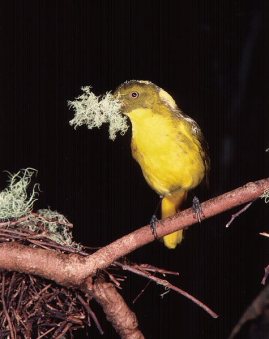
Ingrid remembered because of Rooster’s story. They were on morning tea, driving up Mt Lewis to twitch the Golden Bowerbird. Ingrid and a retired couple from Tassie, Brian and Trish, had forked out 300 dollars apiece for the privilege of viewing the creature in its natural habitat. When it came to species that raised the pulses of bird-watchers, the golden bowerbird held the trifecta. It was endemic to the far north, its range restricted to elevations above 1200 metres. It was highly intelligent, the male building a maypole bower from twigs, lichen and flowers, which it used as a displaying platform to entice females. And, finally, the Golden Bowerbird was exquisitely beautiful.

‘The artist who first painted the species took weeks to mix a colour that reflected the golden sheen of its crown. If we’re lucky,’ said Rooster, eyeing the unusually blue Daintree sky, ‘when the sunlight filters through gaps in the canopy, you might catch a glimpse.’

The painter had mixed egg white, gum Arabic and powdered gold dust to create the effect of the sun shining on its tail. To colour the bright yellow of the belly and wings, she used an old pigment found in her paint box, made from the urine of Brahmin cows reared on a diet of mango leaves.

GoldenBowerbirdgorgeous

Rooster, mid-fifties, clad in pocket-dense khaki, had a kind of ruggedness. The flare in his crisp blue eyes hadn’t gone out. Despite the wedding-ring. Must have been the trips he brought birders on, driving to Iron Range in Cape York, to find the continent’s most elusive and spectacular birdlife. While she scanned for lifers with Brian and Trish, Rooster crouched in the path made by his Pajero’s tyres, discreetly smoking roll-your-own’s. He had a speaker and mp3 player clipped to his belt, as if he were about to perform to a gathered audience. But the technology was a last resort. After he’d run through a vocal repertoire of clicks, buzzes, whistles and calls, raised palm splayed for his paying guests to shush.

He’d completed his story and put out his calls, but not enticed the male fern wren into the cleared bush for Ingrid, Trish and Brian to twitch. The species was another North Queensland endemic, cryptic, which none of them had ticked during their holidays. As with the blue-faced parrot finch. Ingrid frowned and adjusted her binoculars, moving the lenses away from the white casing, the tiny empty bag that enclosed the writhing clutch of spider’s babies. It lay discarded in the dirt, puckered and dried, a metaphor for her reproductive misery. The faulty fertility that shamed her. The casing embodied the state of being spent and she wanted nothing more than to turn her face from it.

She’d booked the holiday the day she realised she couldn’t go through with another IVF treatment. Dr L reeled off her choices and for a split second she saw judgement creep in, as if he and his wife, in the same position, would stop here. Revealing that the hope she carried was false. She glanced at Nathan, and he seemed to back up Dr L. It was at her urging that the three of them had become involved in such an expensive, nerve-racking and tearful collaboration. Fuck it. She was done. Driving home in the car, Nate reckoned she’d imagined the flicker cross the specialist’s face. But he didn’t try and talk her out of the decision.

During the wait at work for her leave to come up, she began living differently. In the present rather than the perpetual future. It wasn’t the Buddhist, acceptance and commitment therapy mode she’d practised to survive the havoc of fertility hormones on her moods, but a mindset altogether more urgent and raw. Her focus tuned to a shimmering clarity. She had tolerance for completing each task that befell her desk. It was the fault of her emotional incapacity. She waited too long to make decisions, lingering beyond boredom and tiredness, until she became paralysed and had to drink, eat too much, explode in some other grotesque bodily manner. She had stopped paying attention, unaware that she’d used up all her emotional reserves pushing her body to conceive a child.

The day before flying to Cairns, she was made to draw on the final drops of her resolve. She was determined to not let the northern hairy-nosed wombat get to her. He was the second juvenile male they had through the lab in six weeks. Critically endangered, half of the tiny Epping Forest colony–representing the species’ entire population–had just been translocated to a nature reserve outside St George. Once inhabiting the St George region, the pre-translocation colony of northern hairy-noses totalled one hundred and eighteen individuals. Following devastating floods in 2008, a zoologist and two park rangers had flown by helicopter over the national park to check on the colony. The wombats’ habitat area was immersed and for several nail-biting weeks, no one knew if the colony had survived. The waters drained and investigations determined that the wombat’s burrows had resisted inundation. The unanticipated flood urged the department to relocate half of the colony, in the likelihood of a future catastrophe wiping out the species. Community funds were raised, the St George property prepared, including the erection of a twenty kilometre dog-proof fence, and a blog created to document progress. The three year old male which arrived at the lab that Friday morning–the autopsy, inconclusive–was to be made into a study specimen for the museum’s collection. It was the fourth translocated individual to succumb to death by unknown causes. Ingrid could tell, from the putrid condition of the corpse, that her colleague, Leesa, would have a significant challenge turning the specimen into a skin. Reopened the dissection incisions, Leesa spread the skin to begin taking out the body, but hanks of fur came away in her gloved hands. The wombat was too far gone to taxidermy. The museum would have to be content with collecting tissue samples and articulating its skeleton. Leesa’s revised task was to remove all of the tissue from the bones. She worked under an inadequate extraction chute, using a butcher knife, scalpel and forceps, to detach the tissue, which she deposited in colour-coded plastic bags for the incinerator. When she had removed as much flesh as possible, the bones were taken to another part of the museum and infested with Domestid beetles. This removed more tissue but it wasn’t the end of the process. Following exposure to the Domestid’s, the bones were boiled under pressure and then sent back to the lab in those plastic containers used to store kids’ toys. When Ingrid returned from her break, the sixty kilo specimen would be a yellow rubble of bones, which Leesa would have to scrub clean with a toothbrush. Only then would the Lasorhinus expert be brought in to wire up a skeleton.

Ingrid, working beside Leesa, did not envy her position. She’d been given the much easier job of preparing a study specimen of a black-shouldered kite. She collected tissue samples from the breast and liver and held the body cavity under an electronic microscope to examine the reproductive organs and determine the sex. She removed the tongue from the back of the mouth, and, as with the tissue samples, deposited it in a numbered vial filled with pure alcohol. Stuffing the specimen had been challenging. It had a head trauma, and bled profusely as she tried to clean the skull. Gobs of blood dripped onto the newspaper lining the workbench, and for a moment it seemed the animal would never stop bleeding.  But, as in all the tasks the museum had thrown at her these last weeks– inventorying a stack of birds’ nests, designing a digital key to help identify feathers, restoring a collection of early twentieth century duck specimens–she found her way to the end. Come late afternoon, she’d inserted a rod of dowel into the specimen’s neck cervix, wound hanks of Dacron around it, rubbed in borax, and stitched together the abdomen. She’d entered collection details in the museum’s register and then wrapped gauze around the tucked-in wings. She’d pinned the kite to a Styrofoam board and walked it out back to the storeroom. When she returned from her trip it would be dry and stiff, fixed into position for good.
IMG_20160117_193217

Green House was an improvement on the promo photographs she’d viewed online. Varieties of ginger and local succulents enlivened the courtyard of her Balinese-style villa. For breakfast she ordered muesli with grated apple, cinnamon and yogurt, so wholesome tasting it felt as if she were cleansing her insides. She zoned out on the cultivated trickle of a waterfall, recalling her old obsession with Hatha Yoga. Like so many of her twenty-something forays into new age spirituality, Yoga was going to be the answer for the empty panic that came when she couldn’t sleep. She stayed after class questioning the whippet-thin instructor about positions. She sent away to India for the classic manual on technique and had been amused and then disillusioned by the illustration of an advanced position. The line drawing showed a practitioner regurgitating a cloth, in order to purify the oesophagus in the manner of wiping a bench clean of crumbs. She no longer regarded yoga the practice of the exceedingly wise.

The shriek of paradise rifle birds, cavorting high in the forest canopy returned her to the present. She spooned clean her bowl, observing an orange-footed scrub fowl–prehensile crest tucked flat–scratch up the manicured garden of her neighbour’s villa. The holiday provided her an opportunity to take photography and bird-watching courses. Ingrid very much wanted to like Rob, the instructor of her photography intensive. He talked quickly, with digressions and asides, so much so that Ingrid became distracted adjusting the aperture, misunderstanding his tips on shutter speed. Rob ran his eyes over the female participants. Physically, he was average–tall and lean, unshaven, some grey in his otherwise black hair.  How come she was being hard on him? Because he showed signs of slowing, of not coping, like herself? He dressed the part. But a thin layer of perspiration dampened his neck, as if he were metabolising a late night. He was clinging on by the thinnest of wires. She sensed his effort in facilitating the group, knowing that on other days he would’ve impressed her with his knowledge and enthusiasm. But he was having a bad morning. There was something going on behind the scenes. He had to think, remember, summon his guide persona. Gird himself, for what had become an ordeal.

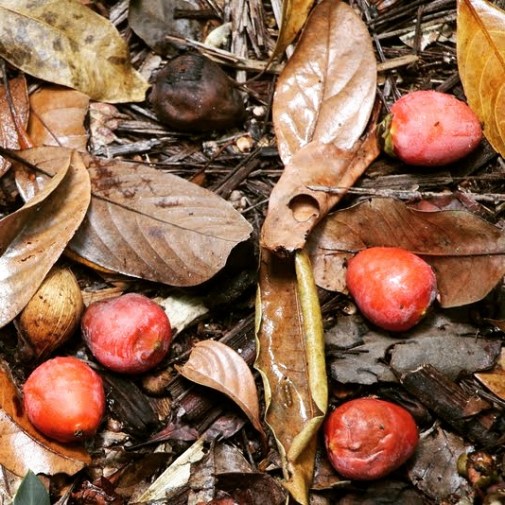
When she could no longer follow the technical side of the talk, she fell to the back of the group. Let them experiment while she reverted to familiar settings. She’d find suitable light and focus on texture and contrast–the bark of a tree, vines that twisted their limbs like plaited dough. Or she’d go for colour, shooting a clump of bush fruit, the tamarillo red of her second serious boyfriend’s bedsheets, fallen in the brown humus. The stems were dried, like tiny pumpkins ready to be picked. They were ridged with sharp notches, which she ran her fingers along. She used a macro lens to frame the yellow waves, contrasting the hard outer casing with the welt of fruit, the nuggets of seed, inside. Were these water-storing fruits edible? They grew near a creek. She recalled picnicking with Nate on the banks of the Brisbane River. They were out canoeing and had discovered bush melons. Nate tugged at the dried yellow vines. They were sepia in colour, deracinated, the essence of dehydration, giving off a tone that signalled to the brain the object had little appeal as food. He pulled them from the grassy banks like wrenching at a vacuum cleaner cord, tugging to get to the hard round orb of the melon. She’d cut it open with a pocket knife, the cut jagged rather than clean, the fruit inside the colour of mint ice cream. The flavour was disappointing, insipid, pallid, but the find was a gift, and made it palatable. After the bush fruits she become bold, lying on the ground to better capture the back-lit round-leafed palms, their fronds a radii of green, light-flecked pleats. When it rained they leaned under the weight of the water collected, stem sagging, almost toppling, until they unbalanced and the water dumped onto the ground after which they sprang back, upright and empty. Open for more.

Rain washed out the lesson and she returned to the cabin wet, mud on her shoes, in need of food and a shower. The sky cleared in the afternoon and she sat out on the villa’s porch, glazed in coconut tanning oil, reading Nicole Krause’s The History of Love. A frappe invigorated with white rum and accessorised with a paper umbrella, perspired on the side table. She folded the book across her saronged knee and gazed at the forest. Not thinking, not sad, her body warmed and rested from the trek back to the resort. A tall man in sports shorts and a polyester shirt grinned at her. She smiled back, a reflex response to his reef tan and straight teeth. Abruptly, he changed direction, hopping up the stairs to her villa. She bent down to the straw in her cocktail and sipped. She hadn’t noticed him in the photography class and he wasn’t part of her afternoon bird-watching club. As he came closer, she saw how young he was. Well, why not? Since giving up on IVF treatments she’d been looking after herself. Running, visiting the gym, eating well. She’d kicked the after work drinks. It was why she’d been out jogging on the morning of her flight.

He embodied health. Youth. But there was also something endearing about him. Smiling, he made eye contact, a hand over his brow to shield the sun. He commented on her drink and introduced himself. And as quickly as she could respond to his proposition–yes, yes, definitely–he was gone, ducked down the stairs in his trendy blue Nikes in pursuit of his next appointment.

What she’d agreed to: a discounted package of massages. Though she wasn’t one for tissue stimulation. She had sensitive spots that when pressed or prodded in the wrong way made her wince and giggle. Holidaying in Phuket, she’d paid for a deep tissue massage with Nate, hiring two Thai masseuses to stretch and pummel and pound their muscles into a jellied mass. Nate dissolved beneath his masseuse’s small hands, but she’d remained uptight and stiff-limbed, so that when the woman tried to balance her whole body on her raised feet, she almost crashed into the partitioning wall. The masseuse’s deep kneading of her thighs brought pain rather than relaxation. Her husband’s eyes glazed like he was stoned, like he’d just come or drunk one too many long island iced teas. Whereas all she’d felt was the flowering of bruises.

The massage table was a simple apparatus, like a portable card table. It had padded vinyl cushions and folded in half to enable transportation for home visits. The room had several large bay windows, the sills decorated with scented candles, vases of browning jasmine and honeysuckle, woven bowls of shells and tropical fruits. Meditation music hummed from hidden speakers, reminding her of the CDs played before lectures at the Theosophical Society, attended in what felt like another life.

He coaxed her onto the table. Using a combination of verbal instruction and eye contact, he had her lying flat on her stomach, eyes closed, towel lowered. Was she going out on the reef? Had she tried the Vietnamese salad? She found herself enjoying responding to his polite questions, allowing her gaze to rove his body. There was much to investigate. How his shorts moved above the mid-thigh when he reached for the Shea butter, the twitching of his quads as he walked around the side of the table, the way his polo shirt sleeves stretched over the curve of his upper arms as he shook out droplets of essential oil.

That first touch from his oiled hands she had to stop herself calling out. He knew his stuff. She felt mortified by the degree to which her body responded. Pleasure rippled over her skin, the sensation intoxicating, stimulated by the connection of fingers that belonged to a man whose body she did not know, had not slept beside for fifteen years, had not alternately loved and hated as its own mirrored reflection, like slippage and projection and cruelty and intolerance and unfairness and then forgiveness, the boundaries of where he ended and she began confused.

When her half hour was up, she didn’t know where to look. Were her cheeks flushed? Her pupils dilated? But she booked the discounted massage for the following day. Leaving the building was a blur. After so long subsisting on the stress of deadlines and a bulging schedule, files taken home on the weekends, insufficient sleep and excess caffeine, the massage brought her a comfort that made her want to weep. Under the influence of IVF hormones, she had to excavate parts of herself she had not known existed. She had to focus through the raw emotion, the chemical tricks of technology designed to make her body conceive. She would sweat, her hands shake. On the worst days she vomited. Applying makeup she found it difficult to love the image that peered back, the bloodshot eyes, the widened pores, the fine wrinkles developing around her lips and nose. She would finish her lipstick in the hallway, feeling her way around the edges of her mouth, unable to look a moment longer at the face of failure, disgust turning her against her own body. Its limp hair and chalky skin, the rashes that came and went in the regions of her shoulders and hips, like simulated storms on the news. Weren’t the hormones supposed to deliver her glowing skin? The patina of youth?

The sex was the worst. She remembered their first trial. She went to a boutique that sold French lingerie and bought a boned black bra and underwear set. That night she dressed up. She play-acted, made her lips red, did her hair, poured wine into goblets. She pranced in high heels and peeled off the layers. He complimented her. Told her she was beautiful. But there was no feeling behind the seduction. It was as erotic as porn, as watching an edgy HBO drama. Afterwards she questioned the sincerity of their bond, why she needed to draw upon it to steady her will. She recalled–consciously, wilfully–the life they had built. How good the two of them were supposed to be together, united against adversity.

She turned intimacy into a ceremony of practicalities; put a bracelet of ritual around it. But it did not involve pleasure. It was the best she could do to get through. When it was over she locked herself in the bathroom and cried. Cried at her stupidity; at her hope and excitement; cried at the cost it incurred, both financial and in terms of their relationship. Cried for the foetus they’d lost at twenty weeks, propelling her to think she could do this, follow this never-ending path of false starts, of stalling and dislodging. Two long years. Assuming they’d done everything when what they wanted was not to be commanded. Her pregnancies wouldn’t hold, wouldn’t fix, wouldn’t take.

Ascending the summit of the mountain, Rooster made a second stop, for them to observe a community of tooth-billed bowerbirds. The males maintained territorially guarded leks, or courting platforms, a cleared space on the floor of the forest which they decorated with the fresh, upturned leaves of the wild pepper tree. When a female fluttered down to investigate, the males sang to attract her attention.

She was surprised at how still the tooth-bills sat at their perches and regretted leaving her camera back at the villa. At the beginning of her trip, she’d entertained fantasies of photographing the region’s birds, posting her creations on Flickr and Facebook. But bird-photography would have to wait for another holiday, another course. Whenever she tried to train her equipment on a novelty bird, she missed the opportunity to study its features, the fiddling with lenses and settings absorbing all her attention. The images she came away with were blurred–a fan of feathers in the left hand corner of the frame, a moving bill, eyes glancing in the wrong direction. She realised she was better off not trying to record a sighting, but rather giving her attention to the animal’s behaviour in real time.

From excising birds’ eyes, she was aware of the large size of many species’ orbits relative to their brains. Many avian genera had superior vision to mammals–raptors and owls, for instance. But humans did alright when it came to detecting motion. We might not have the scoping apparatus of a condor, but we did possess enviable focalising skills. It was a talent she learned to hone during her bird-watching class, entering a zone of concentration, like hunting, she imagined, in which she became acutely aware of the tiniest action–a shiver of leaf, a fleck moving across the sun, a shape crawling along a branch. If she didn’t obtain this level of attentiveness, she had ill luck spotting new species. The class taught her to be still, to crouch and to listen and to wait.

Returned to her villa, she used her heightened awareness to locate her masseur. She wasn’t looking for him or thinking about him, but her vision would radio in, as if her optical intelligence had taken precise measurements–the breadth of his shoulders, the angle at which he held his head, the narrowness of his trunk–to create an interior model, like a digitised 3-D simulation. If he was somewhere in her vicinity she found him, no matter what, applying a scanning technique that hummed away below consciousness.

She went to the first appointment innocent. Four daily massages had her fantasising about slathering him in lime and neroli oil. One evening she had dinner with a fellow photography student, Natalie, a real estate agent from Sydney. Nat, in her mid-thirties, was finalising plans for her autumn wedding. Her eyeliner was thick, her lipstick pale. She was a honey-blonde, thin, and spoke in bursts, her fork airborne as she elaborated about the band she wanted to hire, sliver of steak precariously dangling. Ingrid chewed her Vietnamese salad, leaning deep into the white wicker back of her chair. She half-listened, bent on enjoying the bistro’s vibe: subdued jazz, pepper crab, laughter, linen, cosmopolitans, sunscreen, loafers and jewelled sandals. She had her attention on the guests entering through the restaurant’s glass doors. Between mains and dessert, her masseur appeared. He wore civvies–cut-off denim shorts, cotton shirt, sandals–meeting her eye as he passed the table and showing an easy grin. Which caused a delicious feeling of warmth to curl down her spine. She ordered her third B-52 and offered Nat feedback about the dishes she was considering for her drop-down menu. She watched him, sitting with the other masseurs, sipping pre-dinner drinks. What was to stop him picking up clients? she wondered.

‘Who’s that?’ asked Nat, eyes bulging over her tiramisu.

‘My masseur,’ she said, keeping it cool.

He walked towards her table. Just like that, as with his first proposition, he stood within touching distance. He glanced at her drink, the remains of lemon meringue pie crumbled on her plate, and then up at her face.

‘How’s your back?’ he asked.

Undergoing a massage, she was just a client. Left his room of warm hands and scented flowers, her mind used the memory of touch as the raw ingredient for a narrative of full blown intimacy. Throughout the day she would come to, emerging from a tender exchange–she was always telling him about her day, her problems and issues–in which he gave her every attention and acknowledgement. She even dreamed about him. But with only a few days left, she’d been obsessing over him in a way that was becoming intrusive.

Between sessions, the masseurs hung about the resort café. She’d find him seated, newspaper open, mobile in his hands, drinking coffee. The other masseurs occupied adjacent tables, making jokes, telling stories, shooting the breeze. When she returned from a bird-watching trek or her photography class, and he was there, waiting for a client, she felt herself realign. Filled with purpose. The surge of desire took her fumbling to her cabin door. She imagined him following her. Sailing over the threshold of her apartment, shoulders back, tote bag hoisted against her hips, enjoying the expensive cling of the resort clothes she’d splurged on with her Master Card.

Before leaving for her holiday Nate watched a documentary on polygamy with her. A Californian woman and her husband discussed the workshops they ran to open people to receive new sexual partners. Everything started with touch, gentle talk. There were intimate gestures, soft movements. The attractive, young journalist participated in a workshop, but came away weirded out by the attentions of horny ageing men and ugly women. The female facilitator, no more than thirty, had a strong serve of narcissism directing her personality. She rotated three sexual partners. The first was her husband, with whom she had a child. With her second partner she was writing a book. Her third partner was basically a less attractive version of her husband, the reasons for their relationship unclear, except that it was in the preliminary stages. The reporter shared a spa with the four sex partners. The matriarch lay naked across the bodies of her lovers. One played with her toes, one cupped her elbow, and the last cradled her buttocks. The expression on the woman’s face at this attention was one of extreme smugness. She enjoyed wielding her power. Cynical, Ingrid commented to Nate that a day of reckoning involving a gun was yet to arrive. She couldn’t recall if the men fucked one another, and if they screwed separately or in a group sex arrangement. The documentary switched focus to a free love community in the former East Germany, operating since the late sixties. Members shared every part of their lives, from maintaining cooperative veggie patches to repairing furniture to participating in excruciating meetings in which they discussed the details of their open sex lives in a round table. Ingrid could admire the lengths the members had gone to in maintaining their sexual freedom, if little else. Having an affair, she thought, seemed a much less complicated solution if you were that desperate for a new sex partner.

To reach the Golden Bowerbird’s lair, she had to put her trust in Rooster. He pulled the Pajero off the track, parking next to a bushy flowering tree she didn’t even know the genera of. There was no picnic table, composting toilet or lidded bin. There was no green and silver government funded sign detailing the bowerbird’s natural history. Instead they bent and crouched while Rooster pointed out stinging trees and wait-a-while bushes. They crept through the forest like thieves, binoculars fixed in their harnesses. She found out later that Rooster had marked certain trees, so as not to lose the trail. The damp red earth disoriented her, the intertwining networks of myriad plants an unnamed green blur. She felt an intense lack of knowledge.

Rooster stopped and turned, a finger to his lips. ‘That was the male calling.’

The promise of an encounter with a rarity of nature made her short of breath. Some researchers believed bowerbirds were the closest animal in existence to human beings. More so than primates. They were artists and architects, followers of a unique culture. Brian and Trish were visibly affected, Trish clinging to Brian’s hand. Ingrid peered through the low-hanging branches and boughs, cataloguing the forest smells of mushroom, humus, rot, but making nothing out.

‘There, see?’ said Rooster, indicating to her left.

Beyond the dangling fronds she glimpsed an olive flare of feathers.

‘Ouch!’ said Trish, stumbling.

The creature shrieked and took to the air, disappearing into the high canopy.

Rooster said it was the female, lured by the male’s song. It wouldn’t return for a few minutes, would they like to inspect the bower? The male bowerbird selected two saplings that grew close together, decorating them with sticks over several seasons. Jutting from the first pole was a horizontal branch. ‘Look here,’ said Rooster, drawing their eyes to the white jasmine flowers that had been collected and smeared into the assemblage. The placement of flowers directed the female’s eye. She glanced at the sweet-smelling buds and then at the horizontal bough, upon which the male performed his courting dance, a series of head-shaking, wing-flapping and whole-body jerking movements. He serenaded her, imitating the songs of more than twenty local species. He presented her with sprigs of pepper flower. All in the hope she would submit to copulation with him. When the female wasn’t in attendance, the male spent his time maintaining his bower. He replaced the browning flowers. He swept fallen leaves off the ground. He added new twigs to the maypoles and practiced his dance moves. He gathered bearded lichen to decorate the courting platform. The satin and great bowerbirds had even more tools in their repertoires of seduction, using their bills or a piece of bark to paint crushed berry juice or charcoal onto the bower, further enhancing its beauty in the female’s eye.

What sustained these animals in building their elaborate constructions, for the purpose of obtaining copulations with multiple females? The polygamous males expended their energy maintaining an artificial structure, all for the sexual status it afforded. Researchers had observed females selecting breeding partners on the basis of a bower’s aesthetic qualities. In a way bowerbirds were like brush turkeys. Brush turkeys constructed enormous incubation chambers so as to avoid the time-demands of sitting on a nest. However, they had become slaves, in a sense, to their technological expertise, like the bowerbird, expending the vast majority of their energy on keeping the heat-producing mound in top repair. Both species’ behaviour was so human it made Ingrid smile.

Golden Bowerbird

She’d told him her back was great. There’d been a gap, then, a sort of vortex, into which her mind tossed silent possibilities: Come dancing with me. What are you plans for the weekend? Are you going to catch the band? What are you doing later?

He rapped a knuckle on the table and moved on, headed for the line at the bar.

He’d given her a meaningful look, hadn’t he? She went through the exchange later, in her villa. He probably knew its interior better than she. Wasn’t that why he held the job? Wasn’t that why he kept in such great shape? Their fucking would’ve been rough and passionate–clothing caught on lampshades, underwear torn as it was impatiently stripped off. Afterwards they would chat for hours, sprawled on the king-size bed. He would stay the night, keeping watch over her as she slept, before slipping off in the early morning to tend an appointment. She’d check her phone and find a text suggesting they meet at the bar for lunch. She’d spend hours deciding upon her outfit. She’d shout him cocktails, champagne. Sometime in the afternoon she’d invite him back to her villa.

Her failure to act made for a disrupted night’s sleep. What was she waiting for? Why didn’t she go for it? Nate could barely stand the sight of her. There were no children to be scarred by divorce. Why wouldn’t she let go?

She couldn’t get over her disappointment at scaring off the female. But three hundred dollars and a four hour drive up a mountain meant they weren’t turning home just yet. The male returned following a quarter hour wait. She had a good look at him through her binoculars, his magnificent golden and yellow plumage, perched high in the canopy, eyes on his bower, waiting for the female to return. Dappled sunlight fell through a leafy gap, picking up the extraordinary iridescence of his crest. He had a long tail and pale eye, his bill and the shape of his head giving off a quality she recognised in the faces of Satin Bowerbirds.

For all her patience atop Mount Lewis, she dipped on the female bowerbird. Early the next morning, driving to the airport in her hire car, the highway became washed in gold light. Crows flew low over the lanes. The sun shone like a fantastic burning ball in her windscreen. Coming around a curving rise she was momentarily blinded, slowing her speed, looking away from the blazing spread to take in the misted-over swamps. The spilled gold light had an equalising effect. It made her reflect upon the river of her consciousness, arrested in the network of relationships that composed her life. She listened to a song on her MP3 player about a killer kiss and felt tenderness move through her. She wiped a tear from her cheek. Nate loved her. Everything came to an end. She loved him. But there were things about him that she disliked. A significant part of her–hungry, curious, alive–wanted to swim a different stream.

Driving down the mountain, Rooster tried to make light of their missing out on the bowerbird’s courtship dance. Most attempts at seduction, he explained, despite the male’s efforts at maintaining his bower, were unsuccessful. He was too aggressive and the female took flight. In Satin Bowerbirds, the female watched the male’s antics screened behind a wall of sticks. If he caught her observing, he was liable to subject her to a violent attack. Depending upon the age and experience of the female bowerbird, she selected for different qualities in a mate. Younger females were taken by glossy plumage and vigorous posturing, whereas the older, more experienced females made their choices according to the quality of bower-construction. How many fruits laid out on the courtship platform; how neatly-stacked the mound of sticks.

Ingrid’s novel reading gave her away. Geoffrey Eugenides’ The Marriage Plot, Nicole Krause’s History of Love, Yvette Walker’s Letters to the End of Love, Ford Maddox Ford’s Parade’s End. What a surprise to discover love returning as a subject. Would she do better, the second time around? Shouldn’t she dedicate her life to a nobler topic? She suffered from the ‘optimum biases’ discussed on Radio National and at festivals of ideas. It was up there with the 10 year / 1000 hour theory of mastery. Certainly, she’d applied that type of thinking to her will to maintain a pregnancy. Now she viewed it stripped of its accessories and frills, unmasked, a form of contemplation, the prayerful supplicant inviting a divine intervention. Her wretched self had given up. Her small fool of a mind willed that a great and grand force might reach down and bear her up — yes — that was how she felt. How, at age forty, could she experience the same desires and romantic thrills as she had in her early twenties? When her face was smooth, the skin of her thighs and stomach unbroken by scars? How had this side of her failed to evolve and change like the rest? Because her appetite was awakening, her desire for change still scraping the sleep from its eyes, she felt, paradoxically, an intuitive urge to keep her council, to wait and see. But for what? For whom? When?

Leesa once parted the wings of a female satin bowerbird, displaying the bars and speckles on its lemon-lime plumage. She’d called Ingrid over to glory in the banding under its tail. Ingrid would have to examine the museum’s golden bowerbird specimens when she returned to work, to view up close the plumage of that wild creature she’d only been able to glimpse through the lens of her binoculars.

The gold had begun to drain from the sky. For a few last moments she savoured its reach, feeling unbound, untethered, as if all judgements and consequences had dissolved. After all, she did still care for Nate. She couldn’t blame him for their failure to conceive a child. It was just that she no longer had a picture of her future. She was like an unsuccessfully attracted female bowerbird–taken flight rather than negotiate coupling with a showy male.