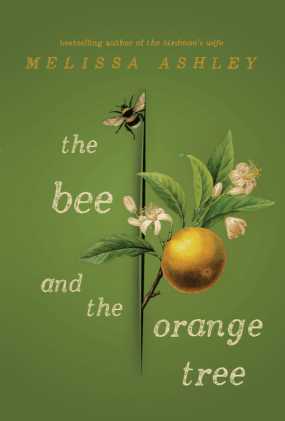
On Monday, 4th November, I had the extraordinary honour of being interviewed by Phillip Adams for Late Night Live, to discuss the heroine of my new novel, The Bee and the Orange Tree, Marie Catherine d’Aulnoy.
Marie Catherine D’Aulnoy was the first author to use the term ‘Fairy Tale” when she published her book “Contes des Fées” in the 1690s in France.
Although a celebrated author in her own time, the fairy tales penned by Marie Catherine D’Aulnoy are less well known than those of her male contemporaries and those that came after her like the Brothers Grimm.
Her fairy tales and novels reveal much about the life of women in the 17th century.
Australian author Melissa Ashley has written a fictionalised account of the scandalous life of Marie Catherine D’Aulnoy.
In late October I had the pleasure of dropping in to Booktopia’s Sydney offices to sign copies of The Bee and the Orange Tree and to record a podcast with Ben Hunter and Olivia Fricot on delving into the life of 17th century French writer Marie Catherine d’Aulnoy.
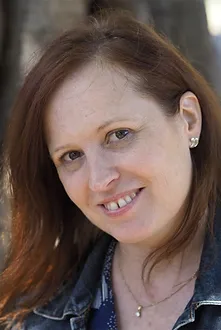
Melissa Ashley is a writer, poet, birder and academic who tutors in poetry and creative writing at the University of Queensland. She has published a collection of poems, The Hospital for Dolls, short stories, essays and articles. Author of The Birdman’s Wife, Melissa is now back with The Bee and the Orange Tree, a beautifully lyrical and deeply absorbing portrait of a time, a place, and the subversive power of the imagination.
Booktopia’s Ben and Olivia sat down with Melissa to discuss her new book and where she got her inspiration from, history, her research and so much more.
Books mentioned in this podcast:
The Bee and the Orange Tree by Melissa Ashley —> bit.ly/34e8ppc
Hosts: Ben Hunter and Olivia Fricot
Guest: Melissa Ashley
TM: Your second novel, ‘The Bee and the Orange Tree’, tells the tale of Marie Catherine and her battle for French women’s’ equality in 1699. How did you come across Marie Catherine and what inspired you to tell her story?
MA: I discovered Marie Catherine while researching another project, to write a contemporary fairy tale – but in a novel form – inspired by the Grimm Brothers’ fairy tale, The Girl Without Hands. I was studying at university, and I discovered the incredible field of fairy tale studies, and along with it, that there was a golden age of fairy tale writing in France, between 1690 and 1725, and that most of the fairy tales were written by women. Contrary to our beliefs that fairy tales originated in the 19th century by the Brothers Grimm, and were passed on by oral peasant storytellers, the genre was pretty much ‘invented’ in the 17th century, and the first fairy tales were written by individual authors. They are a literary genre, if you will.
I uncovered the extraordinary early life of Marie Catherine d’Aulnoy – she was married at just fifteen, to a man 30 years older than herself – and by 19 had given birth to 4 children, only 2 of whom survived. There is a gap in her historical record – following a scandal – but in 1690, at 40, she burst onto the Paris salon scene, a fully formed writer, and during the next ten years published thirteen books, including 26 original fairy tales. Marie Catherine published the very first fairy tale, in 1690, ‘The Isle of Happiness,’ within the pages of her first novel, and she also coined the term, ‘fairy tale.’
TM: When starting out, you would have had to decide whether to write a biography or a novelisation of Marie Catherine’s life. How do you choose between the two and what factors need to be taken into consideration?
MA: That is an easy question! Marie Catherine was a bestselling author during her life, she supported herself from her writing, and less than a year after being published in France, many of her works were translated into English (and other languages) and printed overseas. She was even pirated, and other authors tried to sign her name to their books! But, her reputation fell into oblivion about seventy years after her death. The growth of an industry of fairy tales for children in the 19th century contributed further to her being forgotten, with the Grimm Brothers discounting her fairy tales, and those of her female colleagues, believing them too embroidered, baroque and complex for the oral, peasant-delivered ‘folk tale’ they were interested in publishing. But the Grimms’ project was a bit of a myth, fairy tales were not directly traced from oral folklore, they were also written down, deliberately structured and constructed, they were original stories, authored by individual women.
Jump forward a few centuries and it was university academics, in France and the US in the late 20th century who began to publish and write about Marie Catherine, reviving her reputation, and creating great interest in her life and works. It is an easy question because I am a novelist at heart. While new details about Marie Catherine’s life might yet still be unearthed, as a writer of historical fiction, I’m interested in the imaginative, interior life she lived. I want to crawl inside the gaps and spaces and missing parts of her story, and imagine how she felt, what was it like to live that life, at this period in history, how did it feel, smell, look, taste and touch? I think the material details of place, texture, setting and so forth that are in a novel, are behind my impulse to share an individual like Marie Catherine’s story in this form, to bring to readers the exquisite and incredible details of what she had to do, the sacrifices she had to make, the alliances she needed to forge, how she survived, to become the incredible writer that she was. How was the great Marie Catherine d’Aulnoy created?
TM: The book is set more than 300 years ago and another hemisphere away. What were the greatest challenges in researching the time and place? What resources were most helpful to you?
MA: We live in a time of incredible digital egalitarianism. It’s possible, from one’s online study and laptop to travel into palaces, hotels, streets, museums, to discover, often in immense detail, information about places, people and times past. Many newspapers and magazines have been digitised and there is a lot of open access material available. Failing that, there are university and public library portals one can use. I think the online availability of digitised sources is the reason why I write historical fiction today, it would have been much more difficult twenty years ago, you needed expensive physical resources and institutions, behind you.
That said, travelling to Paris, and living in the Marais for three months on an Australia Council residency is the other significant reason that I was able to write this novel. Living in a very old and very well preserved part of Paris for an extended period enabled me to unconsciously absorb the city and its splendours – its history, its smells, the light, the colour of the sky, the trees, the river, its contemporary inhabitants and housing – into my mind and body. It gave me the confidence to write Paris as the setting of my novel. I could visit palaces that have interiors preserved from the time period I was researching, and map out the lay of the city, so to speak, travelling to the street where Marie Catherine used to live, and envisioning it several hundred years into the past.
It was very challenging writing that far back into the past. There were small details about the existence of various technologies that we take for granted today, that I had to continually check up. For instance, people didn’t have bathrooms, they bathed in the kitchen in a portable tub; literary salons were held in someone’s bedchamber, as they didn’t have the sort of living rooms we have in our homes today. But, to answer these queries, there are extraordinary historical books – Joan de Jean is one author – exploring the history of Paris in the 17th century – that I could consult for answers to any niggling questions about objects, habits and customs. A large part of my research involved looking into the history of what life was life for women at the time, and this was more challenging. But I eventually found an excellent resource in Wendy Gibson’s history of women’s lives in France in the 17th century. It can take a bit of ferreting and digging around, but there is much digital and print material available to help an author find the sort of information needed to write historical fiction, which in large part involves bringing a long-forgotten era back to life.
TM: Marie Catherine employs fairy tales as a weapon in the fight for equality. As children, we’re enthralled by fairy tales, but sadly as adults, we’re not encouraged as much to enjoy them. Can you tell a little about how Mary Catherine employed story to effect change?
MA: Marie Catherine’s fairy tales, and her novels and travel stories too, were concerned with questions of agency and freedom in women’s lives. The contuses or French female fairy tale writers invented fairy tales during this period, perhaps in order to very cunningly critique practices of the church, state and family unit that greatly restricted women’s lives. In France, it was not possible to be published without the support of the Royal Censor, who would not allow any critiquing of Louis XIV’s Ancien Regime. For that, writers needed to go to Amsterdam, which had a free press. But, the fairy tales of Marie Catherine, in their baroque detail, their hyperbole and pastoral, courtly and marvellous settings, circumvented such restraints, by disguising criticisms of a failing sovereign, of a corrupt church or the cruel, unfair practices of forcing women into arranged marriages by portraying these targets as animals, insects and magical creatures who resided in miniature, fantastical courts, basically a stand-in for the customs and conventions of the period.
Marie Catherine’s fairy tales were directed at adults, rather than children, and perhaps mostly they were written for fifteen-year-old girls, about to be married off. Time and again, they offered templates, if you will, archetypes of female heroines who were resourceful, crafty, cunning, kind, and intelligent, using all of their wiles and ways to adjust to and perhaps even subvert, a future in which at least materially, they had very little control. Marie Catherine’s heroines, through the arts of conversation and connection – very modern ideas I think – managed to find ways to cope with the constraints in their lives. They did this by forming meaningful relationships with significant people, kindred spirits perhaps. At heart, this is what Marie Catherine’s fairy tales were about, agency and being able to choose who you lived with and hung out with, who you loved, surely the most fundamental choice we ever make.
TM: As a professional researcher, what advice do you have for other authors looking to produce an authentic historical novel?
MA: I think number one is to be passionate about your topic, person, era, that is absolutely key. If you have a subject and time that you wish to research, there are so many wonderful online resources out there to explore. Make use of librarians, and other researchers or experts who might help you with difficult questions. If you can get away from your desk and into the ‘field’ or the setting of the place you wish to write about, do it as soon as you can in the writing process. Research on the page and in books is one side of the writing, but the emotional connection to the place and to the story or persons or event that you are hoping to write about, is by far the main energy or force to drive you through to produce a work. Don’t be afraid to ask the experts. Keep organised files! Good luck. Workshops are very helpful, and writers’ groups, too, for feedback and encouragement. Don’t be shy. Enjoy yourself, that’s so crucial. Follow the interest and sparks in your imagination as you go along, pay attention to what you find exciting; dive down in there and discover, invent and explore, as that’s where your reader will also be drawn.
About Melissa Ashley
Melissa Ashley is a writer, poet, birder and academic who tutors in poetry and creative writing at the University of Queensland. She has published a collection of poems, The Hospital for Dolls, short stories, essays and articles. What started out as research for a PhD dissertation on Elizabeth Gould became a labour of love and her first novel, The Birdman’s Wife, which has been printed in three formats and sold more than 30,000 copies since release. Melissa’s second novel, The Bee and the Orange Tree, will be published in November 2019 with Affirm Press.
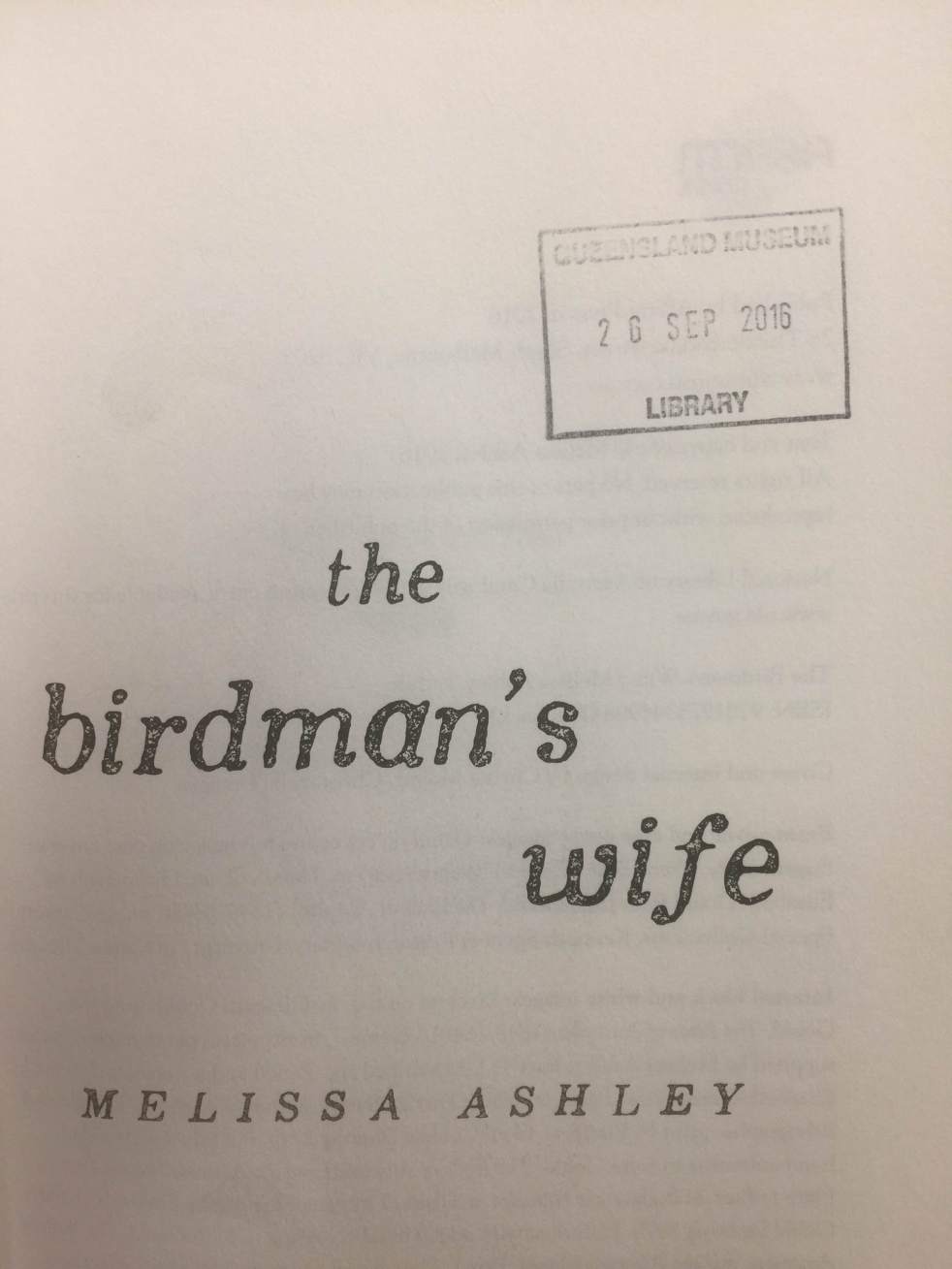
It’s a great pleasure to welcome to the blog Dr Melissa Ashley, a fiction writer, poet and academic who teaches creative writing workshops at the University of Queensland. Melissa is the author of the historical fiction, The Birdman’s Wife (Affirm Press, 2016), about the incredible life of the nineteenth-century illustrator, Elizabeth Gould, the wife of John Gould, the ‘father’ of Australian ornithology. Melissa has published papers and articles in Hecate, Text Journal of Creative Writing, Double Dialogues, The Age (Spectrum), The Lifted Brow and others. Her current project explores the life and writing of a seventeenth-century French author of fairy tales. You can connect with Melissa via her website, or through twitter,Facebook and Instagram.
Tell us about your book, what inspired you to write it.
It all started when I fell in love with a poet, and with his poem about a bird. We became avid birdwatchers together. Writers, too. When he rescued a ringneck parrot and we adopted it as a pet, a friend gave me a book about birds and a biography about John Gould, the famous ‘father’ of Australian ornithology. That was how I discovered that his wife, Elizabeth, created the beautiful images of birds he wrote about in his exquisitely illustrated folios. She was portrayed as such a shadowy figure yet her work as an artist was so key to his fame and the history of birds that I became enthralled with her. I began researching Elizabeth’s life in earnest and the more I learned about her, the more determined I became to uncover her story.
I’ve always loved stories about women who are overlooked by history, and I find creative artistic relationships fascinating – Frida Kahlo and Diego Rivera; Mary Shelley and Percy Bysshe Shelley; Robert and Elizabeth Barrett Browning – so Elizabeth and John Gould’s intimate creative relationship added an extra spark of interest. Elizabeth Gould was such an intriguing enigma that I became convinced that she would be the ideal protagonist for an historical novel so I made her the subject of my PhD. Her story became a labour of love and my first novel.
Booktopia: The Booktopian: Ten Terrifying Questions: The Birdman’s Wife is a Little Window into the Discovery of Australia’s Wonderful Birds by Anastasia Hadjidemariti
I had an in-depth interview with Kate Evans @ Books Plus and Books + Arts, Radio National about Elizabeth Gould and The Birdman’s Wife. The interview will be broadcast in the coming weeks on Books + Arts.
Click on the link below to download the podcast or listen online:
While most people were placing bets for the Melbourne Cup, I had great fun this afternoon talking about The Birdman’s Wife and the incredible life and artistry of Elizabeth Gould. Click on the link below to listen to the podcast. Thanks ABC 666 and Louise Maher and her great team.
Melissa Ashley’s meticulous attention to detail is on show in her first novel, The Birdman’s Wife, which explores the life and relationships of artist Elizabeth Gould. AWM intern TJ Wilkshire spent some time with Melissa to discuss birds, art, poetry, and secret women’s history.
Photo credit: Vicki Lambert
Your debut novel tells the story of Elizabeth Gould, wife of John Gould, the famous ornithologist. Can you tell us what inspired you and how that spark of inspiration drove you to write an entire novel?
It was a bit of a long and convoluted path, with a number of interests that pulled together, until the point of writing Elizabeth’s story became almost inevitable. Elizabeth and John Gould’s intense creative relationship intrigued me from the very beginning, not least because it reflected a similar relationship in my own life as a writer. My love of birds was first inspired by my love for a poet, and his poem about a black-faced cuckoo shrike. An aspiring writer myself, I had never heard of this common bird, and its enigmatic presence in the poem sparked in me a desire to learn all about the birds that sang and preened in my Brisbane backyard. Curiosity is a powerful motivator and, during the next decade and a half, my interest in Australia’s birds steadily increased until I began birdwatching in earnest.
Tied to my hobby was a fascination for antique etchings and prints of birds; I loved the illustrations’ awkward grace. In 2004, the discovery of a cache of 56 paintings of Australian birds and plants by George Raper, a midshipman and navigator on the First Fleet, seized my imagination. The watercolour paintings were uncovered in England during an inventory of the estate of Lord Moreton, the Earl of Ducie. Intrigued by the illustration of a laughing kookaburra, one of the evaluators brought the buried collection to light. Once part of Sir Joseph Banks’ First Fleet materials, the collection had passed into the Ducie family and lain untouched for two hundred years. This was a truly astounding find. Although Raper’s paintings were naïve, his attention to the details and colours of the birds’ wings and feathers was extraordinary. By this time my birdwatching had intensified into a near obsession, and I began to travel great distances to encounter new species, which I would excitedly add to my ‘life list’, a record of birds seen for the very first time. My fellow poet, now a birdwatcher too, and I drove to Queensland’s far western mulga region, explored the Mallee in South Australia, endured the rough currents of the Southern Ocean, peering through binoculars and camera lenses to chase the intense experience of sighting a new species. The excitement of this pursuit led to me wonder what it might have felt like for George Raper and his fellow First Fleet bird enthusiasts’ when they encountered Australia’s unique birds, so utterly different to the species of Britain and Europe, for the first time.
The appeal of delving into Elizabeth Gould’s forgotten history, for me, was intimately connected to the thrill of twitching never-before-seen birds, although it had a rather more prosaic beginning. One summer afternoon, my birding partner rescued an Indian ringneck parrot perched on the net of a tennis court. He phoned, full of excitement, asking me to find a book about caring for parrots and to buy a cage to house it. A friend loaned me a book about caring for parrots, along with a biography of John Gould by Isabella Tree. In Tree’s fascinating biography, I discovered Elizabeth Gould, who played a fundamental role in the creation of John Gould’s publishing empire.
In her decade-long career, Elizabeth designed and completed some 650 hand-coloured lithographs of the world’s most beautiful bird species. Her ability to manage a demanding artistic career capturing the sublime beauty of hundreds of exotic birds for her husband’s celebrated collections, including illustrating Charles Darwin’s Galapagos finches; to care for an ever-growing brood of children; and defy convention to join John on a two-year expedition to the Australian colonies, intrigued me enough to take up the thread of her thinly sketched character and follow wherever it led. I thought that readers might find her story as interesting as I did, and enrolled in a creative writing PhD in order to be given the financial support, time and guidance by the expert staff at the University of Queensland’s School of Communication and Arts, to hone and develop the project.
Can you tell us a little bit about your writing processes? How did you move from writing poetry to writing a full novel? Was it harder than you expected? Previously to this novel you wrote poetry. Has poetry informed the kind of language you have written in your novel?
My writing process is very slow. I hope it speeds up in my next novel, a work of historical fiction also. I would say getting started with the real narrative, the fictional voice, of Elizabeth Gould, as opposed to cataloguing and presenting the material in a more biographical way, was the most challenging aspect of writing the novel. I was very concerned about being faithful to the historical and archival record of Elizabeth’s life. I over-compensated, in a way, with my fear that I would not seem authentic in my knowledge about Australian birds, the places I set the novel in, the time and environment, the cultural setting. I’m a researcher by training and there is nothing more that I love than digging into files and archives. For Elizabeth’s story that meant 1830s London and Australia; ornithology, zoological illustration, voyages, childbearing and rearing practices. I’d outlined the plot but there comes a point when a writer begins to feel an itch to start the first scene of the first chapter. I came to a stage where I felt that I had spent enough time with printed books. I felt that I needed to get out into the field, to go birdwatching, to learn bird-stuffing, to handle archival materials that Elizabeth Gould made herself. These more tactile and adventurous experiences really helped me to make that jump from the biographical Elizabeth, to imagining her emotional journey, her personal experiences and challenges, as the narrator of The Birdman’s Wife.
Just to add to that, I’m a fiction writer, not a scientist or historian, so these evocative ‘field’ experiences really helped to unlock my imagination.
When you were writing about Elizabeth Gould, did you start to form a relationship with her? Did you get to know her like a friend during your research of her? When the novel was finally finished, how did you then separate yourself from Elizabeth to then begin the editing process?
I think I did. It might sound a little cliché, but, particularly towards the end of the book, I felt very sad about her early death. My publisher, on numerous occasions, accidentally calls me ‘Elizabeth’, which always makes me smile. I love writing about artists, it doesn’t matter what form of art, but visual art and writing has a particular appeal, and women’s hidden stories. I am also a mother, trying to juggle everyday life with kids, and keep my imagination flowing, trying to find time to write, so that was a big draw for me, in identifying with Elizabeth, who had eight children. (I only have two, and that is challenge enough!)
How did you build a novel around Elizabeth’s life? Were there certain points in her life you wanted to focus on more than others?
That’s a very pertinent question. I was really concerned about being faithful to the historical facts, the historical record of Elizabeth’s life. That said, I did not always agree with the biographical interpretation of the sort of person she was. She was often, or always, presented as John Gould’s subordinate, whether it was as his obedient and supportive wife, or as a mere ‘assistant’ to his publishing house and ornithological pursuits. The real situation was somewhat different. John and Elizabeth Gould had very separate talents and skills, and yet they came together in the wonderful hand-coloured folios they produced together. I like to think that they were more, as a couple of creatives and scientists, than they were individually. John Gould would never had embarked upon his ambitious project to illustrate the world’s most exotic and interesting birds without Elizabeth’s drawing and painting skills. He was a hopeless sketcher. So, he has a lot to thank her for.
I wanted to portray the interior, emotional aspects of Elizabeth’s life. So it was a matter of interpreting certain events and circumstances, for instance, leaving her three young children behind in order to travel to Australia to make artworks of our lovely birds, how courageous she was in doing this, but also, what a sacrifice it was for her. She really missed her children. And then there is the poignant or horrible irony even, of her unexpected death, a year and a day after her return to England to work on The Birds of Australia.
I also really wanted to focus on her development as an artist. How she grew from making almost awkward images – very meticulous but also rather stiff in composition – of birds in her first folio, A Century of Birds from the Himalaya Mountains, to become a fully-fledged artist, who produced iconic and extraordinary paintings and lithographs of the world’s most beautiful birds, including many wonderful images of Australia’s unique species. As science evolves, with DNA testing and research, more and more is learned about the Australian continent’s place in the evolution of the class of birds as a whole. Indeed, some of our birds exhibit behaviours, such as co-operative breeding, that are very ancient, and connected to our harsh, arid environment.
Were there any scenes of particular parts of the book that were challenging to write for any reason?
Getting started was the most difficult part of the novel. It was drafted about five times, and as it was revised for publication, what to include in the set-up of Elizabeth’s story involved much thought and experimentation. That said, the last third of the novel was relatively easy and fun to write. Once I reached a certain point, I followed where Elizabeth’s led me. In order to do this, I had to go to Hobart, where she stayed for nine months, to envision and become confident about that place to write about it with conviction. That research trip, about 18 months into the project, shifted a sort of hump, where the narrative took over the attention to biographical detail.
You can read more about Melissa Ashley and The Birdman’s Wifehere.
TJ Wilkshire is a twenty-something Brisbane based artist and writer. She graduated with a Bachelor of Arts in Writing and English Literature and is currently studying the WEP Masters at the University of Queensland. Her work focuses on birds and she hopes to one-day turn into one. Wilkshire’s poetry has been published in Peril and Uneven Floor, and won the NotJack Competition.





 ABC Radio National: Melissa Ashley’s Story of Elizabeth Gould, The Birdman’s Wife by Kate Evans


 Melissa Ashley