Review

Compulsive Reader: Review of The Birdman’s Wife by Sue Bond

img_0608

I drifted towards the back of the workshop, my attention caught by a menagerie of shorebirds – a godwit, several sandpipers, curlews, dotterels, herons and varities of plover. For a heart-stopping moment the display tricked my eyes. It seemed the birds had flown into the room via a secret passage and, like children, settled before the warmth of the flames in the hope of being treated to a story. But as I drew closer I could see that the birds were perched on wooden boards, each miming its own dramatic scene. The sandpiper probed for molluscs. One of the plovers preened his shoulder. The heron reared to strike. The curlew held a shell in the barber’s tongs of its beak. The darter had drawn his long neck into a loop. (4)


This passage, early in this first novel by Melissa Ashley, displays Elizabeth Coxen’s keen imagination, sensitivity, and observational skills. The reader quickly realises she is a singular figure, a woman of warmth, sympathy, artistic ambition, intelligence. Coxen goes on to become the previously little known wife of John Gould, the famous English ‘birdman’ and naturalist of the nineteenth century. Ashley, a published poet and scholar in creative writing, has given us a picture of what she imagines Elizabeth to be as a human being and a skilled and dedicated artist, and it is a magnificent achievement.

The author has researched her material thoroughly, even becoming a volunteer at the Queensland Museum and learning how to prepare ornithological specimens. This makes her descriptions of the preparations of the birds in her novel thoroughly convincing, as when Elizabeth is required to prepare the body of a brush turkey for its skeleton to be displayed. And the descriptions of her drawing and painting the prepared birds sometimes take the breath away, as with the quetzal, who ‘sported iridescent sheens in its plumage, like silk from China, gossamer and spider’s webs, droplets of water catching the light’ (94). The details of how the work was done, and the ingredients used, remind the reader of how difficult it was: ‘… my powders spilled across the table and I poured in the wrong amounts of water. …. For the yellow I used an Indian pigment made by feeding Brahmin cows the leaves of mango trees, then intensifying the colour of the animal’s urine by adding chemicals’ (96). The hours of work strained her eyesight, made her body ache; her husband drove himself from dawn to dusk as well, but she notes that he sometimes forgot that others did not have his stamina. These personal aspects of her characters are well described throughout.

The author explains at the back of her book why she became fascinated by the subject, which began with a poet and his poem about a particular bird, that eventually grew into an interest in Elizabeth Gould through being loaned Isabella Tree’s biography The Birdman: The Extraordinary Story of the Victorian Ornithologist John Gould (1991). Here she learned how important Elizabeth was to Gould’s ambitious goals: she ‘designed and completed some 650 hand-coloured lithographs of the world’s most beautiful bird species’ (378) while also raising a large family, and travelling to Australia for two years to work with her husband on compiling specimens and illustrating them for The Birds of Australia, that extraordinary multi-volumed work of scientific and artistic excellence. But her name and her work were not fully recognised, the lithographs usually being co-signed with her husband, and his name was more prominent generally. He apparently exploited Edward Lear, erasing his name from plates he reproduced for his publications, according to Peter Levi in his Edward Lear: A Biography (1995). But Ashley does not overplay this, preferring to imply the less attractive aspects of Gould’s character and practice through neat and gentle exchanges of dialogue, or the more robust scene towards the end of the novel, when Gould disapproves of the portrait of his wife executed by Richard Orleigh (an invented character as the real portraitist was unknown). It is implied he fears social approbation for allowing his wife to appear in a more active, less feminine role, of earning a living by art, something that might also affront his idea of himself as the provider for the household. This is skilfully accomplished, and shows the reader Elizabeth’s frustration and disappointment with her husband’s attitude, but also her resolution to deal with it by affirmation of her vocation: ‘In my heart, I knew I was an artist, no matter the appearances my husband needed to keep up to meet social conventions’ (327).

The novel follows the life of the couple from 1828, from the moment they meet in their early twenties. Edward Lear features as a much loved drawing companion and friend to Elizabeth, as well as a revered artist, and Charles Darwin praises her work, using a number of her lithographs for his book on the Beagle expedition. We follow them through the major episodes of their life together, including that perilous and demanding trip to and within Australia, but also see the private life through the eyes of Elizabeth. The descriptions of them eating cakes during their courting, the passages showing Elizabeth’s grief at the loss of loved ones, the sheer terror of a storm at sea, the friendship between Elizabeth and Lady Franklin, engender feelings of delight, sorrow, pathos, horror. Ashley knows how to tell a story, develop characters, write involving and natural-sounding dialogue, describe the unusual and the everyday alike.

A feature I noticed was the inclusion, every now and then, of Elizabeth’s reservations about the numbers of birds (and other animals) killed by her husband and his assistants in order to preserve and examine and record them. Another character may remind her that it is for science, and she agrees, but the uneasiness remains. And it passes on to her daughter Lizzie who expresses disapproval at the dead birds arriving at their home after the two year long adventure in Australia. I do not know if the actual Elizabeth Gould expressed these concerns, but it is entirely compatible with her character in this novel that she would. And an interesting reminder, or stretch out to the present times, of our impact on the world and its creatures.

The other novel that I kept thinking of in relation to this one is Mrs Cook: The Real and Imagined Life of the Captain’s Wife (2003) by Marele Day, but of course there are many fictional works written around real figures in history, such as Hilary Mantel’s Thomas Cromwell series, and Peter Carey’s True History of the Kelly Gang (2000). Some are more fictionalised than others, but Ashley has chosen to maintain the facts as they are known and to give the reader a possible, plausible, and beautifully crafted intimate portrait of Elizabeth Gould, and her vital part in the production of the books under her husband’s name.

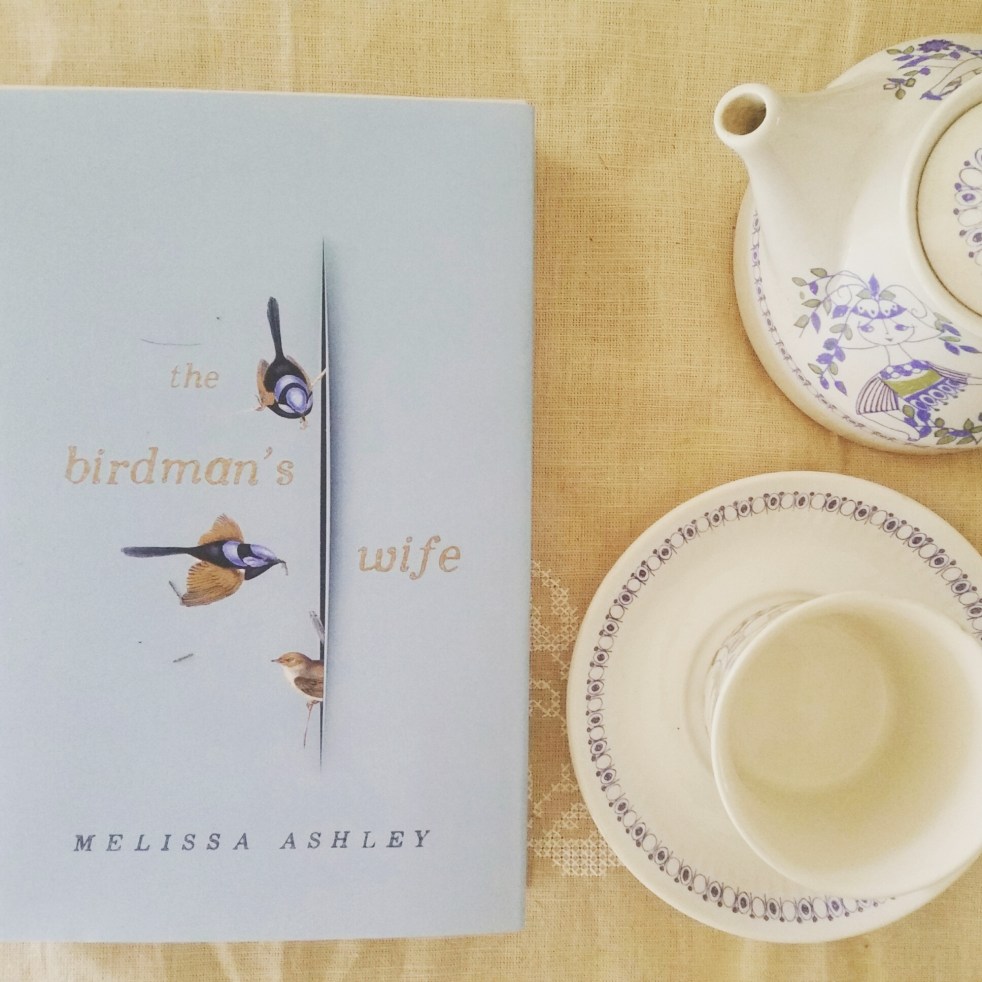
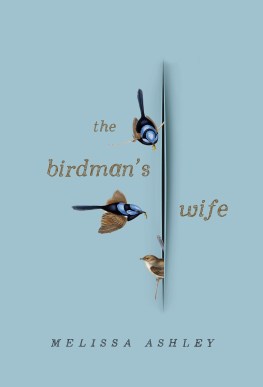
Not only is this book fine fiction, but it is a thing of beauty as an object. It will beckon the reader from the shelves with its pale blue cover featuring fairy wrens, and the surprises when the book is opened and dustcover removed. A fitting production for an outstanding first novel.

http://www.compulsivereader.com/2016/11/05/a-review-of-the-birdmans-wife-by-melissa-ashley/

About the reviewer: Sue Bond is a writer and reviewer living in Brisbane.

Review

Review: The Birdman’s Wife by Melissa Ashley and The Atomic Weight of Love by Elizabeth J. Church by Dorothy Johnston

http://www.smh.com.au/entertainment/books/review-the-birdmans-wife-by-melissa-ashley-and-the-atomic-weight-of-love-by-elizabeth-j-church-20161103-gshg3x.html
the-birdman%27s-wife-coverThe first point I noted about The Birdman’s Wife is that Elizabeth Gould, not her husband John, the famous ornithologist, painted the pictures of birds I knew and loved as a child. While Elizabeth was credited by her initials, alongside John’s, for creating over 650 hand-coloured lithographs for a number of publications, including The Birds of Australia, very little is known about the artist; she was overshadowed by her larger-than-life husband. Melissa Ashley’s task, as she says in an author’s note, is to bring to life, through fiction, what the factual accounts have overlooked.

The Atomic Weight of Love by Elizabeth J. Church. 

The Birdman’s Wife is written in the first person and Elizabeth’s interior life is well, at times poignantly, expressed. Readers first meet her in 1828, at the Zoological Society in London, where John Gould has rented rooms and Elizabeth’s brother, Charles, is working for him as a stuffer. Elizabeth and John, who has invited her to sketch from his collection, immediately strike a rapport. Meeting in the workshop is significant because the narrative is full of descriptions of killing, dismembering, stuffing and displaying birds and other animals. Elizabeth mainly draws from dead ones, though the times when she does manage to sketch from life are a joy to her. Not only killing, but capturing and attempting to keep wild creatures as pets – almost all of them die – is related as a common and unquestioned practice. Though Elizabeth shows more compassion than most, these scenes reveal her as a woman of her times. Her marriage to John, however, is depicted as a genuine partnership and collaboration.

All the female characters in The Birdman’s Wife are delicately and sensitively drawn, from Elizabeth’s mother to Daisy, her first maid after she is married, to Lady Franklin, wife of the Governor of Van Diemen’s Land, who befriends Elizabeth, recognising a kindred spirit, after the Goulds arrive at Hobarton. At the end of Elizabeth’s life – she died aged 37, of puerperal fever after the birth of her eighth child – she comes to realise what being an artist has meant to her, in lyrical passages that combine her love of nature and keen observance of bird life with the special place she has created for herself. “I painted and I studied and, in this constant striving, became me.”

<I>The Atomic Weight of Love</i> by Elizabeth J. Church.Elizabeth’s curiosity about the natural world links her, across more than a century, to Meridian Wallace, the main female character in The Atomic Weight of Love, who goes bird-watching on her own and is not the slightest bit interested in playing with dolls. Meridian is a brilliant student who falls in love with a physics lecturer 20 years her senior, marries and then follows him to Los Alamos, postponing, then finally abandoning her graduate studies in ornithology. In the middle decades of the 20th century, Meridian is not forced to endure successive pregnancies – she never has children of her own – but she submits to the husband with whose intellect she first fell in love.

During decades of frustration and regret, Meridian does not abandon scientific study, but faithfully observes and records an extended family of crows. Her description of a crow funeral is particularly moving. Both authors are skilled at depicting their protagonists as many-layered, complex women, whose thirst for knowledge, and for the creative expression of that knowledge, survive against overwhelming odds.

John Gould is sufficiently present in Ashley’s novel, a believable mixture of qualities, beside whom Alden Whetstone in Elizabeth J. Church’s novel seems an enigmatic character. Whetstone is invited to work on the Manhattan Project, then stays on at Los Alamos after the war. Of necessity, his work is secret, but his change from the scientist who delighted in teaching and sharing his ideas, to a grumpy, punitive husband, is harder to fathom.

Meridian finally finds fulfilment in helping young women realise their potential. The Atomic Weight of Love spans tumultuous decades – Hiroshima, the Vietnam War, the women’s movement – but the author glosses over the many changes these events brought to people’s lives, not only those people who were involved in them directly.

Both novels contain many fine descriptions of the natural world, and are beautifully produced. The Birdman’s Wife is a delight to handle, a hardback with the endpapers displaying some of Elizabeth Gould’s finest work.

Dorothy Johnston’s latest novel is Through a Camel’s Eye.

Review

Book Review – ‘The Birdman’s Wife’

birdmans-wife-9781925344998_hrTitle: The Birdman’s Wife
Author: Melissa Ashley
Genre: Fiction (historical)
Release Date: 1st October, 2016
Rating: ★★★★★

“Artist Elizabeth Gould spent her life capturing the sublime beauty of birds the world had never seen before. But her legacy was eclipsed by the fame of her husband, John Gould. The Birdman’s Wife at last gives voice to a passionate and adventurous spirit who was so much more than the woman behind the man.
Elizabeth was a woman ahead of her time, juggling the demands of her artistic life with her roles as wife, lover, helpmate, and mother to an ever-growing brood of children. In a golden age of discovery, her artistry breathed wondrous life into countless exotic new species, including Charles Darwin’s Galapagos finches.
In The Birdman’s Wife a naïve young girl who falls in love with an ambitious genius comes into her own as a woman, an artist and a bold adventurer who defies convention by embarking on a trailblazing expedition to the colonies to discover Australia’s ‘curious’ birdlife.(Simon & Schuster)

So I need to first get out of the way my gushing over the cover. While I’m happy to have read this book, my one regret is that I read it in digital format; as soon as next payday rolls around I’ll be taking myself off to get a hardcopy of it. There are some of Elizabeth Gould’s illustrations in the book and after seeing photos of it on Twitter, I really feel like I missed out. So if you’re going to read this, you must get your hands on a physical copy.

The inside of the book was just as lovely as the outside. Melissa Ashley’s writing is beautiful and really evoked a sense of time and place both in London and in Australia, the latter in particular:

“I recall the Australian eucalypts stretching their coppery limbs towards the sun, the cedars boasting girths the width of a coach. I remember the parrots of that great continent, painted every hue of the rainbow, whole clouds squawking past, and a sky so huge you could see it curve at the edges.”

The narrative felt natural and not at all forced, and it made it easy for me to settle in and block the world out for a little while. This was an especially big thing for me, as the narrative is from a first person perspective which I sometimes find difficult to read, mostly because the voice doesn’t always seem real. But this was never an issue when reading The Birdman’s Wife.

I found the life of Elizabeth Gould completely fascinating and she truly was an admirable woman. She was an artist, wife, mother, and convention breaker in a time when her expected place was in the home. Although this is a fictionalised account, it doesn’t change the fact that it’s a real shame that Elizabeth is less well-known than her husband. While it was quite fortunate that she married a man who recognised that she had talent and he enabled her to put that talent to use, the reality was that they were a team and without her artwork and dedication he may not have been successful as he was.

The book gets quite detailed in relation to the collection and taxidermy of the birds, which I personally found interesting, but it may not be everyone’s cup of tea. I actually thought it provided a great contrast between Elizabeth and John: she taking the less destructive route of recording the birds through art (that being said, her drawings were largely based on specimens collected by John); while he was the embodiment of the typical Georgian/Victorian attitude towards conservation, i.e., they hadn’t given it a lot of thought at that point – at least not to the extent that we think about it today. That’s not to say that he killed needlessly, but he certainly had more of a focus on collecting than observing.

I had a great time reading this book. Not only was it a pleasure to read, but it catered to my love of nature and my growing interest in natural history. The Birdman’s Wife is probably the worst nightmare for the little birds I share my home with, but I really enjoyed learning about taxidermy practices, as well as Elizabeth’s own methods for painting (particularly the mixing of colours). It’s also worth reading the author’s note at the end, as Ashley tells the story of how her book came about and the things she did as part of her research, including spending some time as a trainee taxidermist to learn all the ins and outs of the occupation. It really was just as interesting as the book itself.

Many thanks to Simon & Schuster and NetGalley for providing me with a review copy.

Review

Review: The Birdman’s Wife by Cass Moriarty

ct-mj1duaaak0ekThe Birdman’s Wife is the debut novel of Melissa Ashley, published by Affirm Press. It has arrived on the literary scene accompanied by a good deal of promotion and publicity – and for good reason. The Birdman’s Wife is a fascinating historical study, a meticulous and well-documented scientific report, an emotional story, and an engaging read.

Elizabeth Gould was a wife and mother, an artist and illustrator, a tenacious, curious, dedicated and adventurous woman. She was the Birdman’s Wife, the Birdman of course being John Gould, the famous father of ornithology, who spent much of the second half of the 1800’s collecting, displaying, cataloguing and publishing wildlife, most particularly native birdlife from the wilds of Australia. John Gould’s life and intellectual pursuits are well-documented; there are countless books by him and about him that depict his scientific endeavours. Less known is the invaluable contribution that his wife Elizabeth gave to his projects. In fact, while she was alive it seems it really was more a case of ‘their’ projects, for evidence points to Elizabeth playing a vital role in the studies they conducted.

In this novel, Melissa Ashley has pored over countless primary and secondary sources, she has travelled near and far, she has rolled up her sleeves and got her hands dirty experiencing taxonomy, she has hunted down descendants and family history, all in order to shine a spotlight on the talents and achievements of Elizabeth Gould. She has spun fiction from the base threads of fact, and what has resulted is a compelling and intriguing insight into Elizabeth’s mind, her actions, her emotions, her family life and her work.
Any book such as this automatically has a spoiler alert: any cursory internet search will reveal that Elizabeth Gould died after bearing her eighth child, at the young age of only 37. And yet this fact does not detract from the intense suspension and pace of the novel; it does not dissuade the reader from frantically turning the pages in order to discover what happens next. And so very much did happen in her relatively short life, and because the novel is written in such an engaging and interesting style we are immediately drawn to the voice of Elizabeth as it rises from the pages from over 150 years earlier; from the very first chapter we care deeply about this woman and her dreams, we fall in love with her, we fret with her about her children, we worry over the quality of her work, we feel her fear and trepidation as she embarks on the epic voyage that will change her life.
Elizabeth meets John Gould by chance. They marry, and discover they have much in common, including a love for animal and birdlife, and a desire to share their knowledge of creatures with others – John through his words and Elizabeth through her drawings. John skins and stuffs specimens; his wife illustrates them, capturing their essence, their colours, their peculiar poses or habits or characteristics. Her magnificent illustrations breathe life into her husband’s lifeless specimens. Together they produce definitive manuals on Australia’s birdlife after a two-year period of study here, the pair travelling (five months by sea) with their eldest son, and leaving their other children in the care of Elizabeth’s mother. She produced over 650 hand-coloured lithographs; she was asked to paint Charles Darwin’s Galapagos Finches. Nearly all of these works were signed by both her husband and herself, as was common at the time, but it was Elizabeth’s talent that really brought the beauty and uniqueness of many species to light.
Access to Elizabeth’s diary and correspondence have allowed Melissa to imagine the details and minutiae of her daily life. Her love for her children – the terrible wrench of leaving them in order to accompany her husband on his travels to the southern continent! Her feminist thoughts, bound by her Victorian constraints. Her artistic ambition, overshadowed always by her husband’s drive and reputation.
This book will appeal to artists, to environmentalists, to bird-lovers, to scientists and to taxonomists. But it also has general appeal to readers, to lovers of a good story. The writing is well-researched, concise and captivating. The story is gripping and enthralling – even though we already know the facts and the ending! Melissa achieves this by making it about the journey, not about the destination. Each new child, every fresh illustration, all of the small, quiet personal achievements, and each major scientific discovery – all are celebrated and enjoyed with equal pleasure.
And as an additional bonus, the beautifully-bound hardback is complete with full-colour endpapers of Elizabeth’s renderings.
I was fortunate to hear Melissa speak at the Queensland Museum & Sciencentre about her research and her forays into the (smelly) world of taxonomy, about her tantalising glimpse of Elizabeth the woman and how she set about discovering the whole of her life story in technicolour. It is clear that Melissa harbours a great love and respect for the bird world, and for those who had the opportunity years ago to make startling discoveries and world-first observations. It is also clear that she has managed to unveil the story behind one of the great and intrepid female characters of history. Surely the phrase ‘behind every great man stands an even greater woman’ must have been coined about Elizabeth Gould. I have seldom found history to be so absorbing and so thrilling, and yet so familiar and so relevant.

Review

REVIEW: Melissa Ashley’s ‘The Birdman’s Wife’

AusRomTodaymelissa-ashley

What AusRom Today thought:

Detail rich, and perhaps rather heavy at times, The Birdman’s Wife is overall a rather compelling read which highlighted the historical tendency for women to be relegated to stand behind their husbands regardless of how much they contributed to his fame. Throughout the novel it is clear that Melissa Ashley’s research is comprehensive and extensive and this extends from her depictions of life in the 1800’s in both London and Australia, life as a woman, wife, and mother during these times, the discoveries made by husband John Gould, and Elizabeth’s life as a professional illustrator and wildlife pioneer in what was essentially a man’s world.

A fascinating read that will endear itself to those interested in historical fiction, issues faced by women historically (arguably still today), ornithology, and the creative arts.

A simply stunning debut novel from a novelist, who given how little Elizabeth Gould was acknowledged in her lifetime, has posthumously shone the spotlight on Gould celebrating her personal and professional achievements in a touching and considered manner.

Review

Isobel Blackthorn review: The Birdman’s Wife

What a delight it is to read stories of historical figures passed over by history probably because they were women. An even greater delight when they are told well, as is very much the case with Melissa Ashley’s The Birdman’s Wife.

30634833

Elizabeth Gould was indeed a remarkable woman. “Inspired by a letter found tucked inside her famous husband’s papers, The Birdman’s Wife imagines the fascinating inner life of Elizabeth Gould, who was so much more than just the woman behind the man.

Elizabeth was a woman ahead of her time, juggling the demands of her artistic life with her roles as wife, lover and helpmate to a passionate and demanding genius, and as a devoted mother who gave birth to eight children. In a society obsessed with natural history and the discovery of new species, the birdman’s wife was at its glittering epicentre. Her artistry breathed life into hundreds of exotic finds, from her husband’s celebrated collections to Charles Darwin’s famous Galapagos finches.

Fired by Darwin’s discoveries, in 1838 Elizabeth defied convention by joining John on a trailblazing expedition to the untamed wilderness of Van Diemen’s Land and New South Wales to collect and illustrate Australia’s ‘curious’ birdlife.

From a naïve and uncertain young girl to a bold adventurer determined to find her own voice and place in the world, The Birdman’s Wife paints an indelible portrait of an extraordinary woman overlooked by history, until now.”

It is only the hardboiled cynic who won’t fall into this story as though in love, won’t be seduced by the intimate narrative style. Here is a story, articulated in a voice commensurate with the era, of a life acutely observed, the sort of story that seems to flow from the pen, belying the many hours and months if not years of research that went into it. It isn’t easy to breathe life into history in fictionalised form. Too often the reader will sense contrivance, or stumble through an unconvincing scene. It’s a fine balance between fact and narration every step of the way and Ashley pulls it off with aplomb.

This is a work imbued with optimism and hope. There is an almost playful romantic quality at first, as a flirtation between Elizabeth and her soon to be husband evolves, yet the story soon departs from romance, as the practicalities and the tragedies of her life unfold, along with what can only be described her life’s work.

The Birdman’s Wife is a story of passion and depth of thought told with an empathy so deep the reader may look up from time to time to find herself in a room filled with specimens, the floor littered with sketches, and Elizabeth herself seated nearby.

Many thanks to NetGalley and Affirm Press for my review copy.

Isobel Blackthorn

Review

The Birdman’s Wife – Book Review by Kali Napier

the-birdman%27s-wife-coverThe spoiler alert in this book review is that it is based on a real-life woman: Elizabeth Gould, the wife of an eminent ornithologist / taxidermist, John Gould. If you look up John Gould, you’ll find his Wikipedia entry, which says, “A bird artist”, describing his monographs as “illustrated by plates that he produced with the assistance of his wife, Elizabeth Gould”.

Further enquiry into Elizabeth’s life yields an Australian Dictionary of Biography entry, written by A.H. Chisholm in 1944: “It would appear that the strain of motherhood, together with the executing of approximately 600 drawings for publications, had sapped her vitality.”

600 drawings? Executing? Not merely assisting? In addition to ‘motherhood’, without explanation that this meant eight births.

Too often I hear (usually from men) that women never did anything in history to write about. What they are generally referring to are those ‘great deeds’ of men who were able to dedicate their lives to and sustain an uninterrupted focus on their area of specialisation. Women’s yearnings were sidelined and their lives circumscribed by multiple childbirth.

A.H. Chisholm wrote a ‘complete’ biography of Elizabeth Gould in 1944. In contrast, Melissa Ashley has written a fictional biography, or biographical fiction, of her in The Birdman’s Wife, which revitalises Elizabeth, colouring in her passions, her struggles, her continual negotiation of the demands of being a working artist and a mother.

This beautifully written novel presents a ‘complete’ picture of a family unit—that one man’s crowning achievements were in fact a family enterprise. John Gould may have been able to strut about like a peacock, but his ‘story’ his more complete when put in context alongside the female of his species, their young, and the materials from which he made his nest.

Early in the novel, approaching her first childbirth, Elizabeth muses:

“I would line the nest for our future collaborations. I was made for foraging. I would gather reeds and sticks, bits of straw and cobweb, mosses and grasses, insect wings and shell particles, torn petals and seed husks, all of which I would weave and press into place. My role for now was to assemble a dwelling in which we might raise our complementary talents. What did it matter if I were the nest-based hen, while John flared his pretty peacock’s tail strutting about Regent’s Park?”

As a work of historical fiction, The Birdman’s Wife does not attempt to make Elizabeth a ‘feisty heroine’ anachronistically questioning the gender inequalities of the day. Instead, her voice feels authentic, and Elizabeth wants to be able to raise a family, make a home, and to draw. But she is conscious that she has ambitions, pushing gently against the gender norms. “By my works, I stood apart. As did Lady Franklin… a woman who, like me, was not following the path society had set out for her, but rather forging her own way.”

Statements by her husband, such as “I have a bird-sketcher of my very own. Trained, talented. And she costs nothing at all” do not have the same effect on her that they would on a modern-day woman. She does not see herself as on a par with Edward Lear, whom her husband employs, rather she is excited at the opportunity for professional development by working alongside the noted lithographer.

Ashley has done Elizabeth Gould a great service for imagining her life within the parameters of what would have been possible in her circumscribed life of multiple childbirth and limited professional opportunities. It is because of these parameters that the reader perceives how incredible it was for Elizabeth to venture with her husband to Australia, making personal sacrifices in leaving the children behind.

This sacrifice is a constant sore spot for Elizabeth, as preoccupied as she is with sketching birds in Australia, bearing more children, raising her eldest, and making friends with Lady Franklin. On more than one occasion she questions: “Did obtaining the one set of observances, for the betterment of natural history, justify the negligence of the everyday milestones reached by my own children?”

This conflict is at the heart of women’s stories, whether historical or contemporary fiction.

“It was an exciting thought that the hen had never been drawn by an illustrator. As if the beauty of the male overwhelmed any interest in the mundane, domestic aspects of the species as a whole. But that was my husband, who never viewed the more spectacular sex in isolation from its mate. John wished to know the behaviour of the entire family, of the larger tribe, and how each individual’s role played out.”

Melissa Ashley’s The Birdman’s Wife, shows how historical fiction can somehow be more ‘complete’ than a biography. As so few women’s lives, inner or outer, have been documented historically, it is critical that fiction enters the interstices of archives, to render in full colour an understanding of the past. That men’s great deeds were interdependent on the women and families around them.

My copy courtesy of Netgalley.

Kali Napier

Review

The Birdman’s Wife by Melissa Ashley

The Vince Review

Inspired by a letter found tucked inside her famous husband’s papers, The Birdman’s Wife imagines the fascinating inner life of Elizabeth Gould, who was so much more than just the woman behind the man.

Elizabeth was a woman ahead of her time, juggling the demands of her artistic life with her roles as wife, lover and helpmate to a passionate and demanding genius, and as a devoted mother who gave birth to eight children. In a society obsessed with natural history and the discovery of new species, the birdman’s wife was at its glittering epicentre. Her artistry breathed life into hundreds of exotic finds, from her husband’s celebrated collections to Charles Darwin’s famous Galapagos finches.

Fired by Darwin’s discoveries, in 1838 Elizabeth defied convention by joining John on a trailblazing expedition to the untamed wilderness of Van Diemen’s Land and New South Wales to collect and illustrate Australia’s ‘curious’ birdlife.

From a naïve and uncertain young girl to a bold adventurer determined to find her own voice and place in the world, The Birdman’s Wife paints an indelible portrait of an extraordinary woman overlooked by history, until now.

Genre: Historical fiction, faction, literary fiction.

MY THOUGHTS:
I requested this title not knowing what to expect. It turns out to be faction novel based on the life of nature artist Elizabeth Gould, and told in her own voice. Elizabeth was married to British ornithologist John Gould, and produced hundreds of scientific illustrations for his works, most of which were birds. This novel is not only thick but dense with detail, so don’t start it if you’re not committed. Having said that, here are all my reasons for ranking it 5 stars.

1) The cameo appearances from other famous historical figures of their time are great fun. There’s Edward Lear, shown as a clever, talented young man with a flair for the comical, and Charles Darwin, a celebrated scientist recently returned from his collecting expedition on the HMS Beagle. He inspires John to want to embark on their own, once in a lifetime Australian expedition. There’s Sir John Franklin, the governor of Tasmania, and his powerful and scientific wife Lady Jane, who even leads expeditions of discovery.

2) Elizabeth’s voice always comes across like that of a nineteenth century woman. She notices the things they’d notice, and doesn’t notice things a more modern woman might. This shows how deeply immersed in her character the twenty-first century author must have been while writing it.

3) The husband/wife partnership is interesting to read, and their essential character differences are highlighted. John is depicted with a good natured manner, yet he’s still a driven fanatic, and taxing task master to his staff of helpers, including his wife. Elizabeth is kind hearted and endlessly grapples with guilt about having to kill birds and animals in the name of science. ‘Few creatures were spared my husband’s ambition.’ She also admits that even though she’s a woman of science, she still enjoys what she calls the ‘myths of unenlightened men’ including stories, legends, folklore and symbols.

4) It’s good to learn the difficulties and expenses nineteenth century artists faced, so we can give them the respect they deserve. Elizabeth used all sorts of rare and wonderful ingredients to make her palette mixes accurate, including the imported urine of Brahmin cows which had been fed special mango leaves. Seriously!

5) The pages of notes by Melissa Ashley at the end shows how this project became her consuming passion. She was already an avid birder, but set herself the task of learning the different, complex art techniques and lithography, to help bring Elizabeth’s voice to life. She even became a volunteer trainee taxidermist, to add authenticity. That’s commitment!

6) I recorded heaps of quotes, but will choose to share just this one, about our passions and how the things we spend our days doing end up becoming our identity. Elizabeth said, ‘I painted, I studied, and in this constant striving, became me.’ Although she died sadly young, it can be argued that she’d lived a fuller life than many ladies in their eighties or nineties. Also, I’ve got to appreciate the way Melissa Ashley gave a voice to this remarkable lady whose name had been eclipsed by her husband’s fame for over a century.

7) One of my favourite features of this book is that it helped cure my own wanderlust and discontentment. The Goulds sacrificed so much to travel to Australia, a journey many thought they were mad to undertake. Elizabeth’s maternal heartstrings were torn when she had to leave her three younger children with relatives for two years, since the gruelling voyage would likely have proven too taxing for them. Yet when they arrived in Australia, their wonder and delight with the flora and fauna which is so familiar to me is described brilliantly. Nowhere else in the world is like it, and I don’t have to go through all they did to appreciate it, since I’m already down here.

The chapters in the story are all named after the different birds that surround me each day. Superb fairy wrens, sulphur crested cockatoos, red wattlebirds, willy wagtails, honey eaters, zebra finches, Major Mitchell cockatoos, just to name a few.  There’s some touching reminders that the nation must remain poles apart from the rest of the world. On the way back, the Goulds’ healthy specimens perished in transit, including kangaroos, wombats, koalas and possums, as well as birds. Once again, what a wonderful ecosystem we Aussies get to enjoy. I wouldn’t have expected a novel named ‘The Birdman’s Wife’ to give my patriotism a boost, but that’s just what it did.

Thanks to Simon and Schuster (Australia) and NetGalley for my review copy.

5 stars.

Paula Vince 

Review

Book Review: Melissa Ashley, The Birdman’s Wife (spoilers)

Paper, Ink and Glue.

Note: I got this book as a netgalley advance copy and I’m exceedingly grateful for that.

Some of the books I get as advanced reading copies are nice. Some I can’t bear to finish. Some, I can’t put down and I want to shout about them from the rooftops. The Birdman’s Wife is one of the latter.

So while I know who the Goulds were, I have no more than a passing interest in ornithology and have never looked at their works. After reading this, I went and googled the lithographs and they are just as exquisite as the novel makes them sound. If you’re not a bird-lover, this book will make you interested in them. If you are, I imagine this book will absolutely enchant you.

It’s the story of Elizabeth Gould, a governess who meets and soon marries ornithologist John Gould, a curator and preserver at the Zoological Association of London. In 1830, John starts on a project to catalog and publish a collection of bird specimens from the Himalayas and Elizabeth agrees to do the illustration. After another four works (and six children, two of whom sadly don’t survive), Elizabeth, John and their eldest child Henry join Elizabeth’s brothers in Australia where they study and collect the local wildlife. Back in London two years (and another child) later, Elizabeth works on ‘Birds of Australia’, an epic work of 600 lithographic plates. This contribution to ornithology (including 328 new species) is what the Gould’s are most know for. Elizabeth then unfortunately dies of childbed fever shortly after the birth of her 8th child, in 1841.

That’s the basic premise of the book and outlined as such, looks stiff and boring.

Luckily, the prose is gorgeous, the flow fast paced and eager and the characters beautifully rendered. Ashley has done an amazing job of getting the reader to dive deep into Elizabeth’s world – not only do you go on her journeys with her, but you do so as an intimate friend. I felt like I was immersed in her life, following along as if Elizabeth herself was talking to me over tea (or a nice port), and the tragic ending caught me a little off guard.

But it’s not just a wonderfully written and easy to read story – it’s a very well researched work, with impeccable science to back it up. Ashley wrote the novel for her PhD, and spent four years doing the work, including becoming a volunteer taxidermist and avid birdwatcher. Science doesn’t make the book boring, instead it enriches it. I knew this was a first novel when I requested it, but Ashley writes as a master (which she indeed is, having received several awards and scholarships for her prose) and effortlessly integrates her research with her storytelling. She is currently (according to her website) researching a book on the “scandalously audacious life of a seventeenth-century French fairy tale writer” which I’m sure will be every bit as delicious as her debut.

I loved the setting of this book, early to mid 19th century Britain and Australia, and I loved even more when birds were mentioned that I knew about. I loved the diary style writing, including the daily ephemera of every day life and conversations with her husband. I loved that Ashley delves into the process of artwork, the vagaries of the muse and the excitement of new technology. I loved the dilemma of leaving her children behind, which is heartwrenching and real and beautifully written. I didn’t love that the book starts when she meets Gould, as I see that as taking some of Elizabeth’s extraordinary personhood away (although, it is called the Birdman’s Wife, so I guess it makes sense to start when she becomes that). I didn’t love that the book wasn’t a million pages longer (although I see the need to keep it under 400 pages). Also, goddammit, I didn’t love that she up and dies. It’s actually quite devastating, which shows Ashley’s skill as a writer – not only do you enter the world of the Gould’s, but you become friendly with them. You forgive John his never ending drive, seeing it as passion. You think fondly of Mary and Daisy, their devotion to Elizabeth. You look forward to seeing the children blossom and grow. And you come to love Elizabeth as a cherished friend, one whose untimely passing is deeply mourned.

To write a book based so heavily in a narrow branch of natural sciences where you still fall in love with the characters is surely the sign of an accomplished and amazing author – Melissa Ashley is certainly that.

5/5 stars

By Shannon

Review

‘Just Kids’ by Patti Smith

‘Just Kids’, by Patti Smith

I was first introduced to Robert Mapplethorpe maplethorpewhen I was 19, sitting with 300 psych students making notes on week three’s ‘human sexuality’ lecture. Next to me slouched my best friend and flatmate, with whom I’d taken the previous semester’s ‘philosophy and sex’. We were both, back in then, in our different ways, utterly obsessed with sex. He spent a lot of time in his room, ‘studying’; I went out on the weekends and met boys. For whole evenings we dissected our crushes and pickups on the broken couch in the lounge, while in the kitchen enormous cockroaches scuttled over the water-damaged mustard cupboards for noodle crumbs. I lent him Anais Nin and he photocopied me anthropology papers about polyandry and wife-sharing. For human beings, monogamy was doomed to failure and with our hormone-soaked minds, we whole-heartedly agreed. Not that either of us knew the first thing about it.

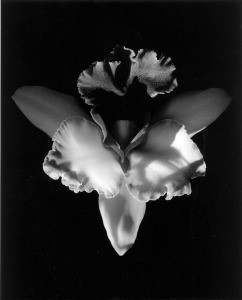
I’ll never forget the high contrast monochrome of Mapplethorpe’s flower photographs. I felt absorbed, excited and enthralled by his blatant celebration of sex organs. The red capillaries in the pitcher plant, the labial folds of the orchid. Plant genitalia conjuring human genitalia, but removed from any interpersonal context. Stripped bare in the studio setting, they appeared vulnerable. Was it their extraordinary interaction with light or was it the fragility of the flowers’ soon to be withered flesh? There was an intimacy in each of Mapplethorpe’s portraits, a stripped back essence that separated the beloved from his parts, that got down to celebrating the basics of attraction and lust and fucking, in whatever its guises. Similes, excerpted from the cultural zones of neurosis and guilt.

Before moving onto Mapplethorpe’s infamous self-portraits, the lecturer gave a preamble, to provide the unformed student mass with a bit of socio-cultural background as to why the photographer depicted himself (a) with devil’s horns, and (b) in BDSM attire with a bullwhip sticking out of his anus. When the slides were finally unveiled, I found myself unmoved by Mapplethorpe’s self-depictions. Having the portrait explained in words before I had the chance to see it, robbed me of the emotional jolt Mapplethorpe wished to provoke. When questioned for a response, my flatmate had little more than a grunt to express his experience. Indeed, when I pestered him further for an opinion he completely clammed up. We were both from Catholic families but were throwing off our upbringings in very different ways. I acted out. He honed the weapons of Western rationalism to cut his way out of the frankincense-thick labyrinth of bodily guilt and denial his religion had trapped him inside. Unlike me, he was innocent, which meant that he had no real way of responding to the portrait’s meaning, his only avenue repression.

I can’t recall if they were shown in the lecture, but in my 20’s I became interested in, if a little intimidated by, Mapplethorpe’s nudes. I loved his project of making the greed for flesh, the energy of lust and libido, explicit. Some of the photographs went too far for my tastes, but others drew me in. I would gaze at a perfectly sculpted deltoid, buttock or abdominal pack for long moments.  Not the most subtle young woman, I stuck Black and White magazine reprints of the less provocative nudes all over the walls of my rented room, alongside my painstakingly hand-copied verses of The Wasteland.

Twenty years later, I returned to Mapplethorpe, via Patti Smith’s memoir ‘Just Kids’. I was never a fan of Patti Smith’s music. I didn’t hate it, but I hadn’t grown up a listener and it passed me by. When I sought out Horses, the moment where I might connect had long passed. It was impossible for me to become enthralled, having spent my late 20’s taking in spoken word and slam poetry performances in an endless round of smoky cafes and pubs. In a Vanity Fair article, I’d stumbled upon Smith’s prose, which was poetic and fresh, muscular and surprising. It opened the lock on my interest in her as a writer.

‘Just Kids,’ makes a study of Manhattan in the seventies, of the pre-gentrification neighbourhoods that bohemians, artists and rockers like Smith and Mapplethorpe lived and created in. Arriving in New York, not long after adopting out her infant daughter, Smith was poor and ill resourced, vulnerable and occasionally destitute. She was naïve and dreamy, trusting and intuitive, a natural poet. However she found friends, places to kip, jobs, which over time, became less degrading. Through it all she worked on her art. I loved the openness of Smith’s personality in her willingness to explore any form or media for self-expression, without proper training and instruction, sometimes even without materials. She’d steal, beg and scavenge the baubles, feathers, glues and paints that her projects required.

‘Just Kids’ is everything you want in the memoir of a rock star poet and so much more. The prose is beautifully written and the narrative is authentic, considered, fascinating, generous, and revealing, all the while keeping a little mystery to itself. Many previously unpublished photographs of Patti Smith and Robert Mapplethorpe, documenting the intimacies of their relationship, are included. I’d read one of Smith’s anecdotes and stare for long moments at the corresponding picture, trying to absorb just what an electrifying couple she and Mapplethorpe made–charismatic, cool, gamine and gauche–all in the one pose. There was a shot of them emerging from a rundown circus on Coney Island; of them lying on a messy bed in their louse-infested apartment in Chelsea; of Smith, alone, surrounded by her favourite objects and items: a piece of jewellery, records, books, a favourite shawl or jacket. I pored over the photographs, as if by gazing at them for long enough, I might connect Smith’s voice on the page with the extraordinary visuals made by her younger self.

An unexpected pleasure in ‘Just Kids’ was Smith’s decision to write generously and graciously about those who had betrayed, hurt or injured her deeply. This included Mapplethorpe, with whom she formed her first, unforgettable intimate relationship. Mapplethorpe’s exploration of his sexuality was complex. Maintaining an intimate relationship with Smith, he wasn’t always honest with her about other lovers. ‘Just Kids’ conclusion voices the impact of Mapplethorpe’s death on Smith–he died of AIDS in 1996. I’m not ashamed to admit that I cried. ‘Just Kids’ is one of those books that I carried around the house with me for a couple of days, reading while I ate, ignoring my kids, the mundane world suspended for the duration of the narrative. Although Smith didn’t have a Catholic upbringing, her explanation of Mapplethorpe’s struggle with the religion he’d been born into and his sexual identity, as seen in his self-portrait as the devil incarnate, filled in the gap I’d felt when I’d first encountered the image.

Finishing Smith’s book, I revisited Mapplethorpe’s photographs of perfect bodies on Google images and experienced a kind of melancholy. So many of Mapplethorpe’s models exhibit a sort of fascist beauty, the symmetry of form admired by the collector, the objectifying aesthete who searches out and then hoards an exquisitely formed object.  Mapplethorpe’s interest in the mechanistic human body, its lust-inducing powers, its strength and harmony of form, its awe-inspiring curves and flexion, can no longer be viewed by me without an awareness of the extraordinary vulnerabilities of our bodied selves. Their unpredictable messages and preoccupations, as if the skin and what lies beneath has its own set of intelligences, its own systems of appraisal. As if it cannot help itself.

My friend, living out his anthropology theory, gave monogamy a go but failed. In his suffering, he nurses hope. My pain’s different. I’m writing a dissertation, which I find alternately absorbing, frustrating and stressful. Before I begin each day, I go to the gym, and subject my body to an intense workout. I can’t help but go hard, unable to stop until I feel an exhilarating endorphin surge. This activity, which I’ve discovered late, is playing out as an intense thrill. It’s almost like an illicit relationship. It’s reconnected me with a body that for so long has felt like little more than hands that cook and tidy, legs that climb stairs, a back that aches at bedtime. A vitality borne out of effort and sacrifice. Sexuality used to be such a dominant force, such a huge part of my identity; looking back at Mapplethorpe’s beautiful nudes I feel a pain that nearly makes me wince.