An adult male ring-tailed possum lay across the footpath, a knot of hair protruding from its anus, tail stiff with rigor mortis. Its eyes were glossy, its tongue fat and pink, fresh blood glistening along the top edge. Ingrid checked her watch. There was still time.
She’d just set out and was cold, but her body warmed as she doubled around and turned back into her street. Rushing the front steps, she unlocked the door and jogged into the kitchen, pulled open a drawer and rummaged for the garbage bags. She sprinted back to the site. Carefully, wary of time, she wrapped the opaque bag around her hands and then levered them, like a scoop, under the possum. She covered the body, careful to seal the edges to prevent bloody spillage, and pressed out the extra air. She ran home clutching the swaddled animal, like it was precious, to her chest. In the kitchen she pulled out two loaves of bread from the freezer and wedged the possum between a lamb roast and container of left-over pasta. Because she’d be away for two weeks, she scribbled ‘work’ on a post-it note and stuck it on the plastic bag. In case there was any confusion. She’d deal with everything when she got back.
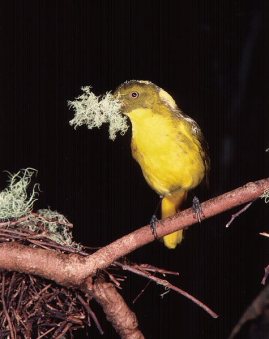
Ingrid remembered because of Rooster’s story. They were on morning tea, driving up Mt Lewis to twitch the Golden Bowerbird. Ingrid and a retired couple from Tassie, Brian and Trish, had forked out 300 dollars apiece for the privilege of viewing the creature in its natural habitat. When it came to species that raised the pulses of bird-watchers, the golden bowerbird held the trifecta. It was endemic to the far north, its range restricted to elevations above 1200 metres. It was highly intelligent, the male building a maypole bower from twigs, lichen and flowers, which it used as a displaying platform to entice females. And, finally, the Golden Bowerbird was exquisitely beautiful.
‘The artist who first painted the species took weeks to mix a colour that reflected the golden sheen of its crown. If we’re lucky,’ said Rooster, eyeing the unusually blue Daintree sky, ‘when the sunlight filters through gaps in the canopy, you might catch a glimpse.’
The painter had mixed egg white, gum Arabic and powdered gold dust to create the effect of the sun shining on its tail. To colour the bright yellow of the belly and wings, she used an old pigment found in her paint box, made from the urine of Brahmin cows reared on a diet of mango leaves.

Rooster, mid-fifties, clad in pocket-dense khaki, had a kind of ruggedness. The flare in his crisp blue eyes hadn’t gone out. Despite the wedding-ring. Must have been the trips he brought birders on, driving to Iron Range in Cape York, to find the continent’s most elusive and spectacular birdlife. While she scanned for lifers with Brian and Trish, Rooster crouched in the path made by his Pajero’s tyres, discreetly smoking roll-your-own’s. He had a speaker and mp3 player clipped to his belt, as if he were about to perform to a gathered audience. But the technology was a last resort. After he’d run through a vocal repertoire of clicks, buzzes, whistles and calls, raised palm splayed for his paying guests to shush.
He’d completed his story and put out his calls, but not enticed the male fern wren into the cleared bush for Ingrid, Trish and Brian to twitch. The species was another North Queensland endemic, cryptic, which none of them had ticked during their holidays. As with the blue-faced parrot finch. Ingrid frowned and adjusted her binoculars, moving the lenses away from the white casing, the tiny empty bag that enclosed the writhing clutch of spider’s babies. It lay discarded in the dirt, puckered and dried, a metaphor for her reproductive misery. The faulty fertility that shamed her. The casing embodied the state of being spent and she wanted nothing more than to turn her face from it.
She’d booked the holiday the day she realised she couldn’t go through with another IVF treatment. Dr L reeled off her choices and for a split second she saw judgement creep in, as if he and his wife, in the same position, would stop here. Revealing that the hope she carried was false. She glanced at Nathan, and he seemed to back up Dr L. It was at her urging that the three of them had become involved in such an expensive, nerve-racking and tearful collaboration. Fuck it. She was done. Driving home in the car, Nate reckoned she’d imagined the flicker cross the specialist’s face. But he didn’t try and talk her out of the decision.
During the wait at work for her leave to come up, she began living differently. In the present rather than the perpetual future. It wasn’t the Buddhist, acceptance and commitment therapy mode she’d practised to survive the havoc of fertility hormones on her moods, but a mindset altogether more urgent and raw. Her focus tuned to a shimmering clarity. She had tolerance for completing each task that befell her desk. It was the fault of her emotional incapacity. She waited too long to make decisions, lingering beyond boredom and tiredness, until she became paralysed and had to drink, eat too much, explode in some other grotesque bodily manner. She had stopped paying attention, unaware that she’d used up all her emotional reserves pushing her body to conceive a child.
The day before flying to Cairns, she was made to draw on the final drops of her resolve. She was determined to not let the northern hairy-nosed wombat get to her. He was the second juvenile male they had through the lab in six weeks. Critically endangered, half of the tiny Epping Forest colony–representing the species’ entire population–had just been translocated to a nature reserve outside St George. Once inhabiting the St George region, the pre-translocation colony of northern hairy-noses totalled one hundred and eighteen individuals. Following devastating floods in 2008, a zoologist and two park rangers had flown by helicopter over the national park to check on the colony. The wombats’ habitat area was immersed and for several nail-biting weeks, no one knew if the colony had survived. The waters drained and investigations determined that the wombat’s burrows had resisted inundation. The unanticipated flood urged the department to relocate half of the colony, in the likelihood of a future catastrophe wiping out the species. Community funds were raised, the St George property prepared, including the erection of a twenty kilometre dog-proof fence, and a blog created to document progress. The three year old male which arrived at the lab that Friday morning–the autopsy, inconclusive–was to be made into a study specimen for the museum’s collection. It was the fourth translocated individual to succumb to death by unknown causes. Ingrid could tell, from the putrid condition of the corpse, that her colleague, Leesa, would have a significant challenge turning the specimen into a skin. Reopened the dissection incisions, Leesa spread the skin to begin taking out the body, but hanks of fur came away in her gloved hands. The wombat was too far gone to taxidermy. The museum would have to be content with collecting tissue samples and articulating its skeleton. Leesa’s revised task was to remove all of the tissue from the bones. She worked under an inadequate extraction chute, using a butcher knife, scalpel and forceps, to detach the tissue, which she deposited in colour-coded plastic bags for the incinerator. When she had removed as much flesh as possible, the bones were taken to another part of the museum and infested with Domestid beetles. This removed more tissue but it wasn’t the end of the process. Following exposure to the Domestid’s, the bones were boiled under pressure and then sent back to the lab in those plastic containers used to store kids’ toys. When Ingrid returned from her break, the sixty kilo specimen would be a yellow rubble of bones, which Leesa would have to scrub clean with a toothbrush. Only then would the Lasorhinus expert be brought in to wire up a skeleton.
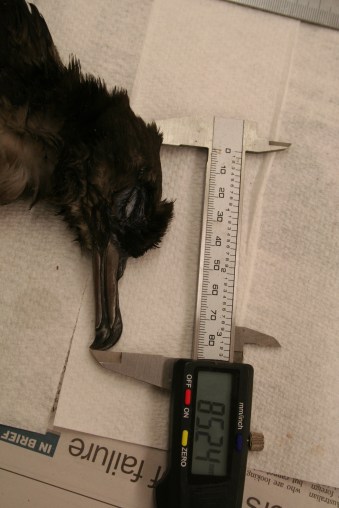
Ingrid, working beside Leesa, did not envy her position. She’d been given the much easier job of preparing a study specimen of a black-shouldered kite. She collected tissue samples from the breast and liver and held the body cavity under an electronic microscope to examine the reproductive organs and determine the sex. She removed the tongue from the back of the mouth, and, as with the tissue samples, deposited it in a numbered vial filled with pure alcohol. Stuffing the specimen had been challenging. It had a head trauma, and bled profusely as she tried to clean the skull. Gobs of blood dripped onto the newspaper lining the workbench, and for a moment it seemed the animal would never stop bleeding. But, as in all the tasks the museum had thrown at her these last weeks– inventorying a stack of birds’ nests, designing a digital key to help identify feathers, restoring a collection of early twentieth century duck specimens–she found her way to the end. Come late afternoon, she’d inserted a rod of dowel into the specimen’s neck cervix, wound hanks of Dacron around it, rubbed in borax, and stitched together the abdomen. She’d entered collection details in the museum’s register and then wrapped gauze around the tucked-in wings. She’d pinned the kite to a Styrofoam board and walked it out back to the storeroom. When she returned from her trip it would be dry and stiff, fixed into position for good.
Green House was an improvement on the promo photographs she’d viewed online. Varieties of ginger and local succulents enlivened the courtyard of her Balinese-style villa. For breakfast she ordered muesli with grated apple, cinnamon and yogurt, so wholesome tasting it felt as if she were cleansing her insides. She zoned out on the cultivated trickle of a waterfall, recalling her old obsession with Hatha Yoga. Like so many of her twenty-something forays into new age spirituality, Yoga was going to be the answer for the empty panic that came when she couldn’t sleep. She stayed after class questioning the whippet-thin instructor about positions. She sent away to India for the classic manual on technique and had been amused and then disillusioned by the illustration of an advanced position. The line drawing showed a practitioner regurgitating a cloth, in order to purify the oesophagus in the manner of wiping a bench clean of crumbs. She no longer regarded yoga the practice of the exceedingly wise.
The shriek of paradise rifle birds, cavorting high in the forest canopy returned her to the present. She spooned clean her bowl, observing an orange-footed scrub fowl–prehensile crest tucked flat–scratch up the manicured garden of her neighbour’s villa. The holiday provided her an opportunity to take photography and bird-watching courses. Ingrid very much wanted to like Rob, the instructor of her photography intensive. He talked quickly, with digressions and asides, so much so that Ingrid became distracted adjusting the aperture, misunderstanding his tips on shutter speed. Rob ran his eyes over the female participants. Physically, he was average–tall and lean, unshaven, some grey in his otherwise black hair. How come she was being hard on him? Because he showed signs of slowing, of not coping, like herself? He dressed the part. But a thin layer of perspiration dampened his neck, as if he were metabolising a late night. He was clinging on by the thinnest of wires. She sensed his effort in facilitating the group, knowing that on other days he would’ve impressed her with his knowledge and enthusiasm. But he was having a bad morning. There was something going on behind the scenes. He had to think, remember, summon his guide persona. Gird himself, for what had become an ordeal.
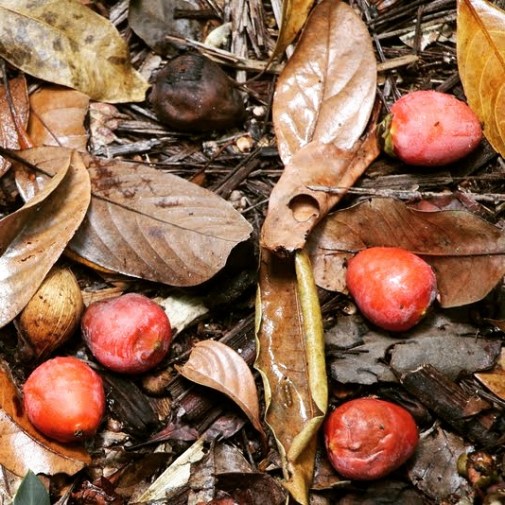
When she could no longer follow the technical side of the talk, she fell to the back of the group. Let them experiment while she reverted to familiar settings. She’d find suitable light and focus on texture and contrast–the bark of a tree, vines that twisted their limbs like plaited dough. Or she’d go for colour, shooting a clump of bush fruit, the tamarillo red of her second serious boyfriend’s bedsheets, fallen in the brown humus. The stems were dried, like tiny pumpkins ready to be picked. They were ridged with sharp notches, which she ran her fingers along. She used a macro lens to frame the yellow waves, contrasting the hard outer casing with the welt of fruit, the nuggets of seed, inside. Were these water-storing fruits edible? They grew near a creek. She recalled picnicking with Nate on the banks of the Brisbane River. They were out canoeing and had discovered bush melons. Nate tugged at the dried yellow vines. They were sepia in colour, deracinated, the essence of dehydration, giving off a tone that signalled to the brain the object had little appeal as food. He pulled them from the grassy banks like wrenching at a vacuum cleaner cord, tugging to get to the hard round orb of the melon. She’d cut it open with a pocket knife, the cut jagged rather than clean, the fruit inside the colour of mint ice cream. The flavour was disappointing, insipid, pallid, but the find was a gift, and made it palatable. After the bush fruits she become bold, lying on the ground to better capture the back-lit round-leafed palms, their fronds a radii of green, light-flecked pleats. When it rained they leaned under the weight of the water collected, stem sagging, almost toppling, until they unbalanced and the water dumped onto the ground after which they sprang back, upright and empty. Open for more.
Rain washed out the lesson and she returned to the cabin wet, mud on her shoes, in need of food and a shower. The sky cleared in the afternoon and she sat out on the villa’s porch, glazed in coconut tanning oil, reading Nicole Krause’s The History of Love. A frappe invigorated with white rum and accessorised with a paper umbrella, perspired on the side table. She folded the book across her saronged knee and gazed at the forest. Not thinking, not sad, her body warmed and rested from the trek back to the resort. A tall man in sports shorts and a polyester shirt grinned at her. She smiled back, a reflex response to his reef tan and straight teeth. Abruptly, he changed direction, hopping up the stairs to her villa. She bent down to the straw in her cocktail and sipped. She hadn’t noticed him in the photography class and he wasn’t part of her afternoon bird-watching club. As he came closer, she saw how young he was. Well, why not? Since giving up on IVF treatments she’d been looking after herself. Running, visiting the gym, eating well. She’d kicked the after work drinks. It was why she’d been out jogging on the morning of her flight.
He embodied health. Youth. But there was also something endearing about him. Smiling, he made eye contact, a hand over his brow to shield the sun. He commented on her drink and introduced himself. And as quickly as she could respond to his proposition–yes, yes, definitely–he was gone, ducked down the stairs in his trendy blue Nikes in pursuit of his next appointment.
What she’d agreed to: a discounted package of massages. Though she wasn’t one for tissue stimulation. She had sensitive spots that when pressed or prodded in the wrong way made her wince and giggle. Holidaying in Phuket, she’d paid for a deep tissue massage with Nate, hiring two Thai masseuses to stretch and pummel and pound their muscles into a jellied mass. Nate dissolved beneath his masseuse’s small hands, but she’d remained uptight and stiff-limbed, so that when the woman tried to balance her whole body on her raised feet, she almost crashed into the partitioning wall. The masseuse’s deep kneading of her thighs brought pain rather than relaxation. Her husband’s eyes glazed like he was stoned, like he’d just come or drunk one too many long island iced teas. Whereas all she’d felt was the flowering of bruises.
The massage table was a simple apparatus, like a portable card table. It had padded vinyl cushions and folded in half to enable transportation for home visits. The room had several large bay windows, the sills decorated with scented candles, vases of browning jasmine and honeysuckle, woven bowls of shells and tropical fruits. Meditation music hummed from hidden speakers, reminding her of the CDs played before lectures at the Theosophical Society, attended in what felt like another life.
He coaxed her onto the table. Using a combination of verbal instruction and eye contact, he had her lying flat on her stomach, eyes closed, towel lowered. Was she going out on the reef? Had she tried the Vietnamese salad? She found herself enjoying responding to his polite questions, allowing her gaze to rove his body. There was much to investigate. How his shorts moved above the mid-thigh when he reached for the Shea butter, the twitching of his quads as he walked around the side of the table, the way his polo shirt sleeves stretched over the curve of his upper arms as he shook out droplets of essential oil.
That first touch from his oiled hands she had to stop herself calling out. He knew his stuff. She felt mortified by the degree to which her body responded. Pleasure rippled over her skin, the sensation intoxicating, stimulated by the connection of fingers that belonged to a man whose body she did not know, had not slept beside for fifteen years, had not alternately loved and hated as its own mirrored reflection, like slippage and projection and cruelty and intolerance and unfairness and then forgiveness, the boundaries of where he ended and she began confused.
When her half hour was up, she didn’t know where to look. Were her cheeks flushed? Her pupils dilated? But she booked the discounted massage for the following day. Leaving the building was a blur. After so long subsisting on the stress of deadlines and a bulging schedule, files taken home on the weekends, insufficient sleep and excess caffeine, the massage brought her a comfort that made her want to weep. Under the influence of IVF hormones, she had to excavate parts of herself she had not known existed. She had to focus through the raw emotion, the chemical tricks of technology designed to make her body conceive. She would sweat, her hands shake. On the worst days she vomited. Applying makeup she found it difficult to love the image that peered back, the bloodshot eyes, the widened pores, the fine wrinkles developing around her lips and nose. She would finish her lipstick in the hallway, feeling her way around the edges of her mouth, unable to look a moment longer at the face of failure, disgust turning her against her own body. Its limp hair and chalky skin, the rashes that came and went in the regions of her shoulders and hips, like simulated storms on the news. Weren’t the hormones supposed to deliver her glowing skin? The patina of youth?
The sex was the worst. She remembered their first trial. She went to a boutique that sold French lingerie and bought a boned black bra and underwear set. That night she dressed up. She play-acted, made her lips red, did her hair, poured wine into goblets. She pranced in high heels and peeled off the layers. He complimented her. Told her she was beautiful. But there was no feeling behind the seduction. It was as erotic as porn, as watching an edgy HBO drama. Afterwards she questioned the sincerity of their bond, why she needed to draw upon it to steady her will. She recalled–consciously, wilfully–the life they had built. How good the two of them were supposed to be together, united against adversity.
She turned intimacy into a ceremony of practicalities; put a bracelet of ritual around it. But it did not involve pleasure. It was the best she could do to get through. When it was over she locked herself in the bathroom and cried. Cried at her stupidity; at her hope and excitement; cried at the cost it incurred, both financial and in terms of their relationship. Cried for the foetus they’d lost at twenty weeks, propelling her to think she could do this, follow this never-ending path of false starts, of stalling and dislodging. Two long years. Assuming they’d done everything when what they wanted was not to be commanded. Her pregnancies wouldn’t hold, wouldn’t fix, wouldn’t take.
Ascending the summit of the mountain, Rooster made a second stop, for them to observe a community of tooth-billed bowerbirds. The males maintained territorially guarded leks, or courting platforms, a cleared space on the floor of the forest which they decorated with the fresh, upturned leaves of the wild pepper tree. When a female fluttered down to investigate, the males sang to attract her attention.
She was surprised at how still the tooth-bills sat at their perches and regretted leaving her camera back at the villa. At the beginning of her trip, she’d entertained fantasies of photographing the region’s birds, posting her creations on Flickr and Facebook. But bird-photography would have to wait for another holiday, another course. Whenever she tried to train her equipment on a novelty bird, she missed the opportunity to study its features, the fiddling with lenses and settings absorbing all her attention. The images she came away with were blurred–a fan of feathers in the left hand corner of the frame, a moving bill, eyes glancing in the wrong direction. She realised she was better off not trying to record a sighting, but rather giving her attention to the animal’s behaviour in real time.
From excising birds’ eyes, she was aware of the large size of many species’ orbits relative to their brains. Many avian genera had superior vision to mammals–raptors and owls, for instance. But humans did alright when it came to detecting motion. We might not have the scoping apparatus of a condor, but we did possess enviable focalising skills. It was a talent she learned to hone during her bird-watching class, entering a zone of concentration, like hunting, she imagined, in which she became acutely aware of the tiniest action–a shiver of leaf, a fleck moving across the sun, a shape crawling along a branch. If she didn’t obtain this level of attentiveness, she had ill luck spotting new species. The class taught her to be still, to crouch and to listen and to wait.
Returned to her villa, she used her heightened awareness to locate her masseur. She wasn’t looking for him or thinking about him, but her vision would radio in, as if her optical intelligence had taken precise measurements–the breadth of his shoulders, the angle at which he held his head, the narrowness of his trunk–to create an interior model, like a digitised 3-D simulation. If he was somewhere in her vicinity she found him, no matter what, applying a scanning technique that hummed away below consciousness.
She went to the first appointment innocent. Four daily massages had her fantasising about slathering him in lime and neroli oil. One evening she had dinner with a fellow photography student, Natalie, a real estate agent from Sydney. Nat, in her mid-thirties, was finalising plans for her autumn wedding. Her eyeliner was thick, her lipstick pale. She was a honey-blonde, thin, and spoke in bursts, her fork airborne as she elaborated about the band she wanted to hire, sliver of steak precariously dangling. Ingrid chewed her Vietnamese salad, leaning deep into the white wicker back of her chair. She half-listened, bent on enjoying the bistro’s vibe: subdued jazz, pepper crab, laughter, linen, cosmopolitans, sunscreen, loafers and jewelled sandals. She had her attention on the guests entering through the restaurant’s glass doors. Between mains and dessert, her masseur appeared. He wore civvies–cut-off denim shorts, cotton shirt, sandals–meeting her eye as he passed the table and showing an easy grin. Which caused a delicious feeling of warmth to curl down her spine. She ordered her third B-52 and offered Nat feedback about the dishes she was considering for her drop-down menu. She watched him, sitting with the other masseurs, sipping pre-dinner drinks. What was to stop him picking up clients? she wondered.
‘Who’s that?’ asked Nat, eyes bulging over her tiramisu.
‘My masseur,’ she said, keeping it cool.
He walked towards her table. Just like that, as with his first proposition, he stood within touching distance. He glanced at her drink, the remains of lemon meringue pie crumbled on her plate, and then up at her face.
‘How’s your back?’ he asked.
Undergoing a massage, she was just a client. Left his room of warm hands and scented flowers, her mind used the memory of touch as the raw ingredient for a narrative of full blown intimacy. Throughout the day she would come to, emerging from a tender exchange–she was always telling him about her day, her problems and issues–in which he gave her every attention and acknowledgement. She even dreamed about him. But with only a few days left, she’d been obsessing over him in a way that was becoming intrusive.
Between sessions, the masseurs hung about the resort café. She’d find him seated, newspaper open, mobile in his hands, drinking coffee. The other masseurs occupied adjacent tables, making jokes, telling stories, shooting the breeze. When she returned from a bird-watching trek or her photography class, and he was there, waiting for a client, she felt herself realign. Filled with purpose. The surge of desire took her fumbling to her cabin door. She imagined him following her. Sailing over the threshold of her apartment, shoulders back, tote bag hoisted against her hips, enjoying the expensive cling of the resort clothes she’d splurged on with her Master Card.
Before leaving for her holiday Nate watched a documentary on polygamy with her. A Californian woman and her husband discussed the workshops they ran to open people to receive new sexual partners. Everything started with touch, gentle talk. There were intimate gestures, soft movements. The attractive, young journalist participated in a workshop, but came away weirded out by the attentions of horny ageing men and ugly women. The female facilitator, no more than thirty, had a strong serve of narcissism directing her personality. She rotated three sexual partners. The first was her husband, with whom she had a child. With her second partner she was writing a book. Her third partner was basically a less attractive version of her husband, the reasons for their relationship unclear, except that it was in the preliminary stages. The reporter shared a spa with the four sex partners. The matriarch lay naked across the bodies of her lovers. One played with her toes, one cupped her elbow, and the last cradled her buttocks. The expression on the woman’s face at this attention was one of extreme smugness. She enjoyed wielding her power. Cynical, Ingrid commented to Nate that a day of reckoning involving a gun was yet to arrive. She couldn’t recall if the men fucked one another, and if they screwed separately or in a group sex arrangement. The documentary switched focus to a free love community in the former East Germany, operating since the late sixties. Members shared every part of their lives, from maintaining cooperative veggie patches to repairing furniture to participating in excruciating meetings in which they discussed the details of their open sex lives in a round table. Ingrid could admire the lengths the members had gone to in maintaining their sexual freedom, if little else. Having an affair, she thought, seemed a much less complicated solution if you were that desperate for a new sex partner.
To reach the Golden Bowerbird’s lair, she had to put her trust in Rooster. He pulled the Pajero off the track, parking next to a bushy flowering tree she didn’t even know the genera of. There was no picnic table, composting toilet or lidded bin. There was no green and silver government funded sign detailing the bowerbird’s natural history. Instead they bent and crouched while Rooster pointed out stinging trees and wait-a-while bushes. They crept through the forest like thieves, binoculars fixed in their harnesses. She found out later that Rooster had marked certain trees, so as not to lose the trail. The damp red earth disoriented her, the intertwining networks of myriad plants an unnamed green blur. She felt an intense lack of knowledge.
Rooster stopped and turned, a finger to his lips. ‘That was the male calling.’
The promise of an encounter with a rarity of nature made her short of breath. Some researchers believed bowerbirds were the closest animal in existence to human beings. More so than primates. They were artists and architects, followers of a unique culture. Brian and Trish were visibly affected, Trish clinging to Brian’s hand. Ingrid peered through the low-hanging branches and boughs, cataloguing the forest smells of mushroom, humus, rot, but making nothing out.
‘There, see?’ said Rooster, indicating to her left.
Beyond the dangling fronds she glimpsed an olive flare of feathers.
‘Ouch!’ said Trish, stumbling.
The creature shrieked and took to the air, disappearing into the high canopy.
Rooster said it was the female, lured by the male’s song. It wouldn’t return for a few minutes, would they like to inspect the bower? The male bowerbird selected two saplings that grew close together, decorating them with sticks over several seasons. Jutting from the first pole was a horizontal branch. ‘Look here,’ said Rooster, drawing their eyes to the white jasmine flowers that had been collected and smeared into the assemblage. The placement of flowers directed the female’s eye. She glanced at the sweet-smelling buds and then at the horizontal bough, upon which the male performed his courting dance, a series of head-shaking, wing-flapping and whole-body jerking movements. He serenaded her, imitating the songs of more than twenty local species. He presented her with sprigs of pepper flower. All in the hope she would submit to copulation with him. When the female wasn’t in attendance, the male spent his time maintaining his bower. He replaced the browning flowers. He swept fallen leaves off the ground. He added new twigs to the maypoles and practiced his dance moves. He gathered bearded lichen to decorate the courting platform. The satin and great bowerbirds had even more tools in their repertoires of seduction, using their bills or a piece of bark to paint crushed berry juice or charcoal onto the bower, further enhancing its beauty in the female’s eye.
What sustained these animals in building their elaborate constructions, for the purpose of obtaining copulations with multiple females? The polygamous males expended their energy maintaining an artificial structure, all for the sexual status it afforded. Researchers had observed females selecting breeding partners on the basis of a bower’s aesthetic qualities. In a way bowerbirds were like brush turkeys. Brush turkeys constructed enormous incubation chambers so as to avoid the time-demands of sitting on a nest. However, they had become slaves, in a sense, to their technological expertise, like the bowerbird, expending the vast majority of their energy on keeping the heat-producing mound in top repair. Both species’ behaviour was so human it made Ingrid smile.

She’d told him her back was great. There’d been a gap, then, a sort of vortex, into which her mind tossed silent possibilities: Come dancing with me. What are you plans for the weekend? Are you going to catch the band? What are you doing later?
He rapped a knuckle on the table and moved on, headed for the line at the bar.
He’d given her a meaningful look, hadn’t he? She went through the exchange later, in her villa. He probably knew its interior better than she. Wasn’t that why he held the job? Wasn’t that why he kept in such great shape? Their fucking would’ve been rough and passionate–clothing caught on lampshades, underwear torn as it was impatiently stripped off. Afterwards they would chat for hours, sprawled on the king-size bed. He would stay the night, keeping watch over her as she slept, before slipping off in the early morning to tend an appointment. She’d check her phone and find a text suggesting they meet at the bar for lunch. She’d spend hours deciding upon her outfit. She’d shout him cocktails, champagne. Sometime in the afternoon she’d invite him back to her villa.
Her failure to act made for a disrupted night’s sleep. What was she waiting for? Why didn’t she go for it? Nate could barely stand the sight of her. There were no children to be scarred by divorce. Why wouldn’t she let go?
She couldn’t get over her disappointment at scaring off the female. But three hundred dollars and a four hour drive up a mountain meant they weren’t turning home just yet. The male returned following a quarter hour wait. She had a good look at him through her binoculars, his magnificent golden and yellow plumage, perched high in the canopy, eyes on his bower, waiting for the female to return. Dappled sunlight fell through a leafy gap, picking up the extraordinary iridescence of his crest. He had a long tail and pale eye, his bill and the shape of his head giving off a quality she recognised in the faces of Satin Bowerbirds.
For all her patience atop Mount Lewis, she dipped on the female bowerbird. Early the next morning, driving to the airport in her hire car, the highway became washed in gold light. Crows flew low over the lanes. The sun shone like a fantastic burning ball in her windscreen. Coming around a curving rise she was momentarily blinded, slowing her speed, looking away from the blazing spread to take in the misted-over swamps. The spilled gold light had an equalising effect. It made her reflect upon the river of her consciousness, arrested in the network of relationships that composed her life. She listened to a song on her MP3 player about a killer kiss and felt tenderness move through her. She wiped a tear from her cheek. Nate loved her. Everything came to an end. She loved him. But there were things about him that she disliked. A significant part of her–hungry, curious, alive–wanted to swim a different stream.
Driving down the mountain, Rooster tried to make light of their missing out on the bowerbird’s courtship dance. Most attempts at seduction, he explained, despite the male’s efforts at maintaining his bower, were unsuccessful. He was too aggressive and the female took flight. In Satin Bowerbirds, the female watched the male’s antics screened behind a wall of sticks. If he caught her observing, he was liable to subject her to a violent attack. Depending upon the age and experience of the female bowerbird, she selected for different qualities in a mate. Younger females were taken by glossy plumage and vigorous posturing, whereas the older, more experienced females made their choices according to the quality of bower-construction. How many fruits laid out on the courtship platform; how neatly-stacked the mound of sticks.
Ingrid’s novel reading gave her away. Geoffrey Eugenides’ The Marriage Plot, Nicole Krause’s History of Love, Yvette Walker’s Letters to the End of Love, Ford Maddox Ford’s Parade’s End. What a surprise to discover love returning as a subject. Would she do better, the second time around? Shouldn’t she dedicate her life to a nobler topic? She suffered from the ‘optimum biases’ discussed on Radio National and at festivals of ideas. It was up there with the 10 year / 1000 hour theory of mastery. Certainly, she’d applied that type of thinking to her will to maintain a pregnancy. Now she viewed it stripped of its accessories and frills, unmasked, a form of contemplation, the prayerful supplicant inviting a divine intervention. Her wretched self had given up. Her small fool of a mind willed that a great and grand force might reach down and bear her up — yes — that was how she felt. How, at age forty, could she experience the same desires and romantic thrills as she had in her early twenties? When her face was smooth, the skin of her thighs and stomach unbroken by scars? How had this side of her failed to evolve and change like the rest? Because her appetite was awakening, her desire for change still scraping the sleep from its eyes, she felt, paradoxically, an intuitive urge to keep her council, to wait and see. But for what? For whom? When?
Leesa once parted the wings of a female satin bowerbird, displaying the bars and speckles on its lemon-lime plumage. She’d called Ingrid over to glory in the banding under its tail. Ingrid would have to examine the museum’s golden bowerbird specimens when she returned to work, to view up close the plumage of that wild creature she’d only been able to glimpse through the lens of her binoculars.
The gold had begun to drain from the sky. For a few last moments she savoured its reach, feeling unbound, untethered, as if all judgements and consequences had dissolved. After all, she did still care for Nate. She couldn’t blame him for their failure to conceive a child. It was just that she no longer had a picture of her future. She was like an unsuccessfully attracted female bowerbird–taken flight rather than negotiate coupling with a showy male.

 It’s lovely to have a new piece of fiction published. It’s been a long time. Check out the latest issue of Review of Australian Fiction, Volume 19, Issue 4, for my short story: “Marilyn’s Feast.”
 Marilyn’s Feast (preview)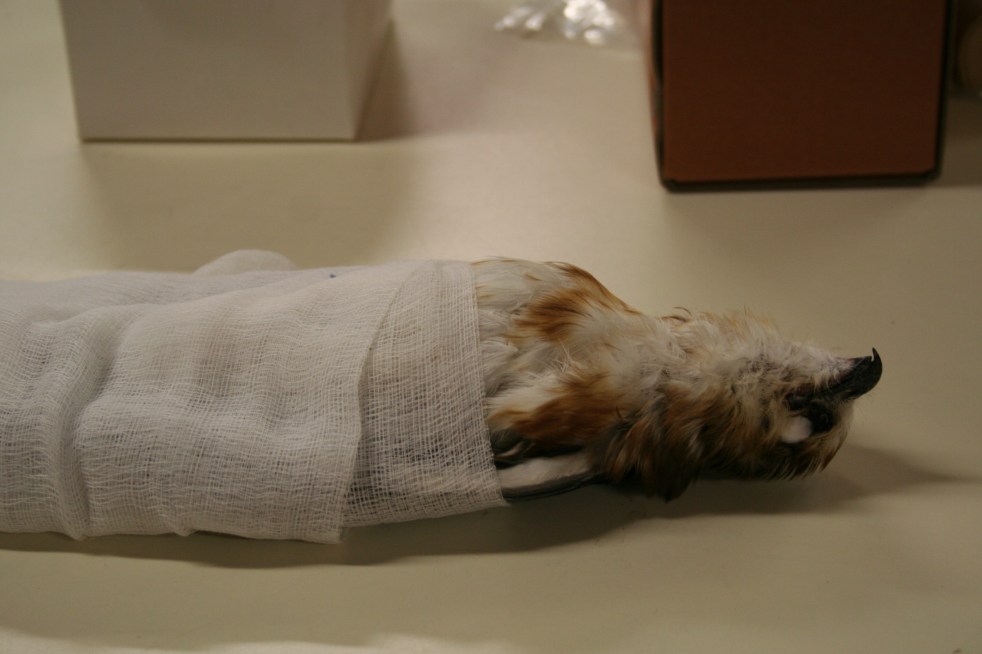

 Finished grooming the outer skin, I insert a measured length of dowel up through the neck and into the cervical cavity at the base of the skull, around which I wind cotton wool and then Dacron, or mattress-stuffing, which puffs out under the skin, plumping like tissue and giving a lifelike appearance. I then thread a needle and begin to stitch the incision running from clavicle to cloaca–the dual purpose opening through which the bird passes reproductive material and waste. I cross its feet at the ankles and use string to tie them around the dowel rod. A label is attached to the string, identifying the bird by scientific name, location, date, and specimen number, all corresponding to details recorded in the zoological register. Fine surgical gauze is then mummy-wrapped around the bird, beginning at the shoulders and moving down to the tail, to enable it to ‘set’ and dry, a process which takes about three weeks. After this, the specimen will keep its shape and can be stored flat in a collection drawer.
 Melissa Ashley