Review

‘Just Kids’ by Patti Smith

‘Just Kids’, by Patti Smith

I was first introduced to Robert Mapplethorpe maplethorpewhen I was 19, sitting with 300 psych students making notes on week three’s ‘human sexuality’ lecture. Next to me slouched my best friend and flatmate, with whom I’d taken the previous semester’s ‘philosophy and sex’. We were both, back in then, in our different ways, utterly obsessed with sex. He spent a lot of time in his room, ‘studying’; I went out on the weekends and met boys. For whole evenings we dissected our crushes and pickups on the broken couch in the lounge, while in the kitchen enormous cockroaches scuttled over the water-damaged mustard cupboards for noodle crumbs. I lent him Anais Nin and he photocopied me anthropology papers about polyandry and wife-sharing. For human beings, monogamy was doomed to failure and with our hormone-soaked minds, we whole-heartedly agreed. Not that either of us knew the first thing about it.
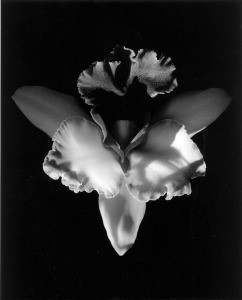
I’ll never forget the high contrast monochrome of Mapplethorpe’s flower photographs. I felt absorbed, excited and enthralled by his blatant celebration of sex organs. The red capillaries in the pitcher plant, the labial folds of the orchid. Plant genitalia conjuring human genitalia, but removed from any interpersonal context. Stripped bare in the studio setting, they appeared vulnerable. Was it their extraordinary interaction with light or was it the fragility of the flowers’ soon to be withered flesh? There was an intimacy in each of Mapplethorpe’s portraits, a stripped back essence that separated the beloved from his parts, that got down to celebrating the basics of attraction and lust and fucking, in whatever its guises. Similes, excerpted from the cultural zones of neurosis and guilt.

Before moving onto Mapplethorpe’s infamous self-portraits, the lecturer gave a preamble, to provide the unformed student mass with a bit of socio-cultural background as to why the photographer depicted himself (a) with devil’s horns, and (b) in BDSM attire with a bullwhip sticking out of his anus. When the slides were finally unveiled, I found myself unmoved by Mapplethorpe’s self-depictions. Having the portrait explained in words before I had the chance to see it, robbed me of the emotional jolt Mapplethorpe wished to provoke. When questioned for a response, my flatmate had little more than a grunt to express his experience. Indeed, when I pestered him further for an opinion he completely clammed up. We were both from Catholic families but were throwing off our upbringings in very different ways. I acted out. He honed the weapons of Western rationalism to cut his way out of the frankincense-thick labyrinth of bodily guilt and denial his religion had trapped him inside. Unlike me, he was innocent, which meant that he had no real way of responding to the portrait’s meaning, his only avenue repression.

I can’t recall if they were shown in the lecture, but in my 20’s I became interested in, if a little intimidated by, Mapplethorpe’s nudes. I loved his project of making the greed for flesh, the energy of lust and libido, explicit. Some of the photographs went too far for my tastes, but others drew me in. I would gaze at a perfectly sculpted deltoid, buttock or abdominal pack for long moments.  Not the most subtle young woman, I stuck Black and White magazine reprints of the less provocative nudes all over the walls of my rented room, alongside my painstakingly hand-copied verses of The Wasteland.

Twenty years later, I returned to Mapplethorpe, via Patti Smith’s memoir ‘Just Kids’. I was never a fan of Patti Smith’s music. I didn’t hate it, but I hadn’t grown up a listener and it passed me by. When I sought out Horses, the moment where I might connect had long passed. It was impossible for me to become enthralled, having spent my late 20’s taking in spoken word and slam poetry performances in an endless round of smoky cafes and pubs. In a Vanity Fair article, I’d stumbled upon Smith’s prose, which was poetic and fresh, muscular and surprising. It opened the lock on my interest in her as a writer.

‘Just Kids,’ makes a study of Manhattan in the seventies, of the pre-gentrification neighbourhoods that bohemians, artists and rockers like Smith and Mapplethorpe lived and created in. Arriving in New York, not long after adopting out her infant daughter, Smith was poor and ill resourced, vulnerable and occasionally destitute. She was naïve and dreamy, trusting and intuitive, a natural poet. However she found friends, places to kip, jobs, which over time, became less degrading. Through it all she worked on her art. I loved the openness of Smith’s personality in her willingness to explore any form or media for self-expression, without proper training and instruction, sometimes even without materials. She’d steal, beg and scavenge the baubles, feathers, glues and paints that her projects required.

‘Just Kids’ is everything you want in the memoir of a rock star poet and so much more. The prose is beautifully written and the narrative is authentic, considered, fascinating, generous, and revealing, all the while keeping a little mystery to itself. Many previously unpublished photographs of Patti Smith and Robert Mapplethorpe, documenting the intimacies of their relationship, are included. I’d read one of Smith’s anecdotes and stare for long moments at the corresponding picture, trying to absorb just what an electrifying couple she and Mapplethorpe made–charismatic, cool, gamine and gauche–all in the one pose. There was a shot of them emerging from a rundown circus on Coney Island; of them lying on a messy bed in their louse-infested apartment in Chelsea; of Smith, alone, surrounded by her favourite objects and items: a piece of jewellery, records, books, a favourite shawl or jacket. I pored over the photographs, as if by gazing at them for long enough, I might connect Smith’s voice on the page with the extraordinary visuals made by her younger self.

An unexpected pleasure in ‘Just Kids’ was Smith’s decision to write generously and graciously about those who had betrayed, hurt or injured her deeply. This included Mapplethorpe, with whom she formed her first, unforgettable intimate relationship. Mapplethorpe’s exploration of his sexuality was complex. Maintaining an intimate relationship with Smith, he wasn’t always honest with her about other lovers. ‘Just Kids’ conclusion voices the impact of Mapplethorpe’s death on Smith–he died of AIDS in 1996. I’m not ashamed to admit that I cried. ‘Just Kids’ is one of those books that I carried around the house with me for a couple of days, reading while I ate, ignoring my kids, the mundane world suspended for the duration of the narrative. Although Smith didn’t have a Catholic upbringing, her explanation of Mapplethorpe’s struggle with the religion he’d been born into and his sexual identity, as seen in his self-portrait as the devil incarnate, filled in the gap I’d felt when I’d first encountered the image.

Finishing Smith’s book, I revisited Mapplethorpe’s photographs of perfect bodies on Google images and experienced a kind of melancholy. So many of Mapplethorpe’s models exhibit a sort of fascist beauty, the symmetry of form admired by the collector, the objectifying aesthete who searches out and then hoards an exquisitely formed object.  Mapplethorpe’s interest in the mechanistic human body, its lust-inducing powers, its strength and harmony of form, its awe-inspiring curves and flexion, can no longer be viewed by me without an awareness of the extraordinary vulnerabilities of our bodied selves. Their unpredictable messages and preoccupations, as if the skin and what lies beneath has its own set of intelligences, its own systems of appraisal. As if it cannot help itself.

My friend, living out his anthropology theory, gave monogamy a go but failed. In his suffering, he nurses hope. My pain’s different. I’m writing a dissertation, which I find alternately absorbing, frustrating and stressful. Before I begin each day, I go to the gym, and subject my body to an intense workout. I can’t help but go hard, unable to stop until I feel an exhilarating endorphin surge. This activity, which I’ve discovered late, is playing out as an intense thrill. It’s almost like an illicit relationship. It’s reconnected me with a body that for so long has felt like little more than hands that cook and tidy, legs that climb stairs, a back that aches at bedtime. A vitality borne out of effort and sacrifice. Sexuality used to be such a dominant force, such a huge part of my identity; looking back at Mapplethorpe’s beautiful nudes I feel a pain that nearly makes me wince.


Review

Small Acts of Disappearance

IMG_4590

Small Acts of Disappearance: Essays on Hunger by Fiona Wright

Giramondo Publishing, 2015

Anorexia Nervosa presents as a visual drama that exceeds the boundaries of language. It fascinates and repulses, hence the Current Affairs exposés and sensationalist memoirs—Marya Hornbacher’s manic Wasted and Portia DeRossi’s Unbearable Lightness: A Story of Loss and Gain, said to be something of an eating disorder manual. Google “anorexia recovery” and you’ll find thousands of links to tales describing the pain of walking away from this most deadly of diseases: anorexia nervosa has a mortality rate of 20%, higher than any other mental illness.

As there are a range of texts that catalogue the “spectacle” of anorexia, so, too, the subject attracts a variety of readers, from the gawping public, to the concerned friend, carer or partner, to the individual sufferer, desperate for comfort and a cure. Indeed, the anorexic devours books on their condition, a possible textual substitute for food, in their efforts to comprehend and outwit its tenacious hold. The force and persistence of anorexia eludes not only the slack-jawed public and the eating-disordered person’s frantic personal networks, but the sufferer herself.

In the collection, Small Acts of Disappearance, Fiona Wright uses the essay form to explore her decade-long experience of living with and confronting anorexia nervosa. The vehicle of the personal essay has been recently enriched by a slew of female writers’ discussions of embodiment and suffering—Rebecca Solnit, Leslie Jamison and Lidia Yuknavitch—to name just three. Wright’s essays on hunger are an addition to this fearlessly insightful group of women writers. In Leslie Jamison’s Empathy Exams—the narrator, not so much investigative journalist as metaphysician of suffering—strives to articulate the empathy she feels for her subjects, while self-castigating her non-debilitating unease. She frets that her project is voyeuristic, that she narcissistically exaggerates her own discomforts in an attempt to identify with the men and women whom she interviews, and the narratives that she weaves from their painful confessions.

This is not the case with Wright, who, in ten essays—set in hospital, Colombo, group therapy, Berlin, and in the land of reading—trains her fierce intellect on reflecting upon her eating disorder, divulging from the first paragraph her residency on the planet of the dangerously unwell. This may seem like a flippant observation, but, as a fellow inhabitant, I interrogated every one of Wright’s sentences for evidence that I might identify with her experiences. Did she possess the street cred of a serious mental illness? As her kin, the text’s psychological environment was an important gauge in determining the commitment of my reading, informing not only my intellectual engagement, but my emotional investment in Wright’s story.

Deciding that Wright’s voice passed the test of credible suffering, my next round of sceptical enquiry provoked the question, is she well? Has she recovered? Has she found a cure? The narrator’s position on the spectrum of health and sickness meant a lot to me. I needed to know if I could trust the intimacy of her writing, the unflinching honesty of her descriptions of sickness, the insights she served up with respect to her beguiling and confusing beliefs and behaviours. For, as Wright discovers, anorexia, and mental illness in general, is a slippery sort of being, endlessly inventive in its narratives and plots, its devices and strategies, to secure the sufferer’s unwavering attention. The network of suspicions, beliefs and fears that eating disorders create multiply inside the self like a virus. Its promises and rewards wriggle their way in, silently reproducing at the level of moment-to-moment thinking, such that one’s former self, by incremental changes in conviction, cognition and action, is gradually replaced by an alien not-self.

An example of anorexic-thinking is provided by Wright, in a statement she repeats several times in Small Acts’ opening essays. Admitting there is a problem in her relationship with food, in the weight she has lost, Wright seeks therapy, firm in the belief that she is isn’t a real anorexic: “I spent years determined to stay on the outside. Because I wasn’t, I was sure, one of those women” (20). In the essay “In Hospital,” in which Wight joins an outpatient programme for anorexics, she is placed in close contact with, “One woman (who) hadn’t had a bath in seven years…another would spend 800 dollars on groceries and seven hours vomiting each night…one would eat under-cooked chicken…in the hope she’d get salmonella” (22-23). In the narrator’s belief system, she is a special case, not really anorexic, her problems stemming from the involuntary vomiting eating causes her. She has myriad allergies, causing her to lose weight from narrowing her diet to a restricted range of foods. In the essay, “In Increments,” Wright reflects: “Sometimes I think that my physical illness, together with my personality, the length of time it took for the doctor to find a diagnosis while my body and brain adapted to malnutrition, were all together a perfect storm that broke, at some point in time that I’ll never quite pinpoint, and left this devastation in its wake” (74).

As a reader, my bulldust antennae flickered. That’s a lie! I shouted in judgemental silence.  You’re still sick. I trotted out my experiences of somatic illness. In the past year I’d suffered panic attacks, several of which were, to use the nineteenth-century terminology, undeniably ‘hysterical’. One presented as an epileptic fit, which sent me to hospital, after a ‘reaction’ to psychiatric medication I didn’t want to take. Another manifested as a somatic heart-attack, which came on after being given a piece of devastating news. The pain was felt in my body, my thoughts and emotions weirdly detached. I know intimately, the mystery of how one’s convictions—delusions?—can cause havoc in the limbs, digestive and endocrine systems. Wright’s refusal to recognise her eating disordered behaviour in the rituals and obsessions of the women in her outpatient programme reminded me of the protests of another anorexic, whose story I read online, a classics scholar at Cambridge who fervently believed she was not one of those women either. The scholar regarded eating disorder sufferers who were hospitalised with scorn and revulsion. As far as she was concerned, so long as she could sit exams (despite an increasing inability to eat), she’d not taken out a mortgage in the suburbs of the unwell.

In the same essay, “In Hospital,” the narrator further reflects, somewhat paradoxically, that she also “bore [the anorexic] women a strange kind of witness; a split kind of witness…where I didn’t want to be involved, didn’t think myself included, but couldn’t help but recognise myself reflected in the stories they told” (23). As a first step, Wright becomes a researcher in the discipline of eating disorders, collapsing the subject/object divide, surrendering her attachment to her anorexia to become a kind of double observer, recording and cataloguing the obsessions she’s developed around food and eating; her ritualistic behaviours before eating; the torturous feelings that arise following a meal. Like a diligent student, she reads up on the literature, uncovering studies on the effects of hunger on the body and analysing recovery statistics. She bravely admits her loneliness, isolation and confusion. Yet, several years after admitting she has an eating disorder, she has been repeatedly hospitalised. Despite therapy, programmes and the overturning of denial, despite months of hard work, most frustratingly she has not recovered. Intellectualising her behaviours and beliefs, thinking her way through her eating disorder by way of rationalisation, by measuring, recording and noting, appears to be an impoverished means of attack. “The horrible irony,” observes Wright, “is that eating disorders only happen to people who like definition and delineation, who like clarity and knowing where they stand, part of the process of moving past the illness is to learn that recovering can only be undefined, slow and without schedule, and riddled with mistakes and mess and temporary measures” (77).

A therapist advises her to get out of her head and “into [her] body” (144). She learns that her confusion and frustration are “important, generative,” and that she must stop “trying to understand, … stop narrating” (144). Strange advice for a writer who uses research and reason, analysis and synthesis, to arrive at clarity. About two-thirds into Small Acts, a noticeable shift in the narrator’s preoccupations becomes evident. Having taken her counsellor’s advice, Wright begins to explore her external environments, the worlds beyond her meticulously examined interiority. She writes of flatting and drinking, of enjoying lunches with her mother. In the essays “Books I” and “Books II,” she unravels the protagonists in Christina Stead’s The Man Who Loved Children and Carmel Bird’s Bluebird Café experiences of eating disorders, discussing the socio-cultural and familial networks that contribute to the characters’ unremitting sense of being a misfit in their communities, not to mention their very skins.

“The average time for recovery from an eating disorder is said to be seven years – the same length of time it takes for all of the cells in a human body to be replaced” (130). Without pinpointing, as Wright claims early in the book, the moment when her eating disorder began to take pathological hold, there is also no specific jolt of revelation, of epiphany, which picks her up and flies her towards wellness. Letting go of the stranglehold of anorexia is an incremental series of small acts, thoughts, and choices towards other people and activities, away from her alienated, isolated self. Wright realises that her belief that her illness was a case of her body letting her down—the unforced vomiting, the myriad allergies—might not be the whole story; her powerful intellect may also be implicated. As a reader, I finally breathed out, my vigilant search for lies and side-stepping come to a close. I began to marvel at Wright’s achievements, in both her text and her recovery. Small Acts inhabits the unstable territory of sickness with such verisimilitude, parts of the collection read as if she still lingers in these deserts. The narrator bears witness to the many stages in reconstructing the set of oneself, both within and without, the frame of serious mental illness. Wright’s remarkable narrative empathy, self-reflection and control, in turns lucid and cringingly vulnerable, gives hope to the afflicted sufferer and to the warily desperate friend, partner, carer and medico.

Small Acts navigates the island of mental illness, its most arresting topography the force with which it denies its victims self-acceptance, ease and a safe place in the world. But, as Wright notes, anorexia serves a purpose. The disease shores up vulnerability and uncertainty, it delivers a sense of agency and control. Hunger puts an individual on high alert, intensifying her sensory experiences and attenuating her consciousness—for reasons of survival, prolonged hunger is a crisis, which must be dealt with prior to every other need—and yet, paradoxically, the anorexic’s resistance to this biological demand rewards her with a sense of mastery and superiority, over her own (and others’) weakness and lack of will.

In concluding, Wright observes the fragility of her humanity: “I’m terribly afraid of living like this, sub-clinically, long-term. I know that I still have to fight hard for my own health, but also that sometimes I still don’t want to. I miss the simplicity of illness sometimes. Because the more acute pain is in trying to get better – and it’s a pain that’s chronic too – and in stripping away the protection, the insulation, the certainty that my hunger gave me” (173). Small Acts charts a metamorphosis in tiny increments, the damaged self undertaking the task of sloughing the disguise of mental illness, an unfathomably powerful rival to imperfect authenticity. Like Psyche’s ants’ job of winnowing enormous piles of grains to undo Venus’ bewitchment, the tentative steps taken in Small Acts produce a rare elegance and determined gait. Wright is a superb writer with an uncommon courage and will; her essays on hunger are an extraordinary gift.