Interview

Booktopia: Ten Terrifying Questions

ctm2tztusaaq9lw-jpg-large
The Birdman’s Wife is a little window into the discovery of Australia’s wonderful birds.

The Booktopia Book Gurus asks Melissa Ashley Ten Terrifying Questions

1.    To begin with why don’t you tell us a little bit about yourself – where were you born? Raised? Schooled?

I was born in New Zealand and at 7 years of age moved to Australia with my parents and siblings. We lived in Sydney for a short while, and then moved to Brisbane. I was moved around a lot as a child, attending more than 10 schools, and living in the same number of houses.

I think, in a way, this has helped me as a writer. It’s given me a sense of impermanence and adventure. A deep knowledge that there are many lives to be lived. And to not ever get too comfortable.

I glance back at my freewheeling childhood with a big grin, a wash of guilt and a bit of a shudder.

It was a mad blur of adventure: hanging out unsupervised near waterholes; burning around the neighbourhood on our 10 speed racers and BMX bikes sans helmets and sunscreen; riding go-carts down a street known as ‘killer hill’; jumping from the roof of the lower storey of a friend’s home into the swimming pool. We told ghost stories on the school oval and believed in aliens and spontaneous human combustion. We read Trixie Belden and Sweet Valley High and Judy Blume’s Forever.

Someone was always falling off their bike or skinning their knee – but we just got on with it. A scab or signed cast was a badge of courage, honour, pride.

2.    What did you want to be when you were twelve, eighteen and thirty? And why?

When I was twelve I wanted to be a journalist. My lovely father bought me software for our brand-spanking new Commodore 64 computer – The Newsroom I think it was called – with templates and clipart to produce a broadsheet type document. And so I started writing a newspaper for our neighbourhood. It lasted a sum total of two issues and was called ‘The Aussie Informer.’ It was only years later that I cottoned on to why my mother suggested I try a different title.

At eighteen, fascinated by altered states, mysticism and psychosis, I decided my future lay in psychology. (I did some strange reading in grade 12 holed up in my bedroom playing Disintegrationby The Cure over and over.) I completed a double major in psychology as my undergrad degree but after a year volunteering at Lifeline, realised I was not cut out to be a counsellor.

At 30, I came to the end of my short career as a poet. My only book of poetry, The Hospital for Dollswas published around this time. For years I had believed that unless I had my first book out by 30, I was somehow not a REAL writer. But it was at 30 that I decided that fiction was for me. The lines of my poems kept getting longer and longer and suddenly they were blocks of prose. And I hung around too many real and talented poets to kid myself indefinitely. So I unlaced my poetry Doc Martins and began writing my first novel.

3.    What strongly held belief did you have at eighteen that you do not have now?

That I knew it all!

4.    What were three works of art – book or painting or piece of music, etc – you can now say, had a great effect on you and influenced your own development as a writer?

I love Bernini’s sculpture The Ecstasy of St Teresa; it’s in a little church in Rome. The very cheeky psychoanalyst Jacques Lacan once suggested that the expression on the saint’s face, rather than showing her overtaken by mystical bliss, was actually more mundane: she was having an orgasm. In high school, my artistic sister drew a wonderful detail, in stipple of St Theresa’s thrown-back head, and this made it stick in my mind. Travelling in Rome in my early 20s, I sought out the church in which the sculpture lived and was brought to tears. My love of its beauty has only deepened over the years.

Anne Sexton’s signature poem Her Kind, about being a female writer whose weird talent and uncertain social position makes her identify with witches. ‘I have gone out, a possessed witch’. Anne Sexton was a bewitching woman, drop dead gorgeous, sassy and seductive and I will never forget listening to a recording of her reading Her Kind at the State Library. I was shocked beyond words by her gravelly, cold, nasal voice. Yet what power it conveyed, what experience!

anne-sexton

I absolutely adore Ovid’s tale of Apollo and Daphne; Apollo chases the nymph Daphne through the forest, wishing to carry her off. Determined to keep her freedom, Daphne transforms herself into a tree. The motif of the nymph’s fleshy body slowly transformed into bark and leaves, her hands and arms spreading into branches, still weaves through fairy tales, poetry and literature today. I can’t fully explain it, what fate, to become a tree in the woods, but the myth has a magnetic pull on my imagination. I suppose somewhere in my understanding of the archetype, I imagine her throwing off her mantle of leaves and emerging, transformed and powerful, a woman now, in command of herself and untouchable.

5.    Considering the innumerable artistic avenues open to you, why did you choose to write a novel?

To be perfectly honest, I think it was some kind of irrational madness. An obsessive determination. AsSamuel Beckett famously observed: I’m simply no good at anything else. I think writing a novel is such an incredible challenge, a journey into the unknown, developing unique relationships with characters and story, it’s agony of course, but such indescribable magic when the scene or chapter you’ve been chasing, trying to wrestle into place, suddenly falls together. There is something mysterious about writing, it’s a lesson I have to learn again and again. It is sort of the key, I suppose. It’s like making beer, or firing ceramic. You have all the ingredients, you make the product, but then in the process or heating or fermenting, a little miracle occurs. You can never tell what the finished chapter or scene will be. And maybe this is what keeps people writing. This is such an incredible reward. Something satisfying between you and the page. So deep, so private, so exhilarating.

socialmediaimage-6

6.    Please tell us about your latest novel…

John Gould, the famous 19th ornithologist known as ‘The Birdman,’ is renowned for creating the most sublime images of birds from all over the world. But few people know that his wife, Elizabeth Gould, was the artist who drew, illustrated, designed and lithographed more than 600 of the exquisite hand-coloured lithographs he produced. Yet her legacy has been overshadowed by her husband’s fame.

Elizabeth was a woman ahead of her time, juggling her work as an artist with her role as mother to an ever-growing brood of children. She was a passionate and adventurous spirit, defying convention by embarking on a two-year expedition to the Australian colonies with her husband to collect and illustrate our unique birds and plants. At a time when the world was obsessed with discovering natural wonders, Elizabeth was at its epicentre, working alongside legends like Edward Lear and Charles Darwin. The Birdman’s Wife tells her amazing story.

7.    What do you hope people take away with them after reading your work?

A sense of delight and fascination – for the extraordinary woman Elizabeth was and the contribution she made by bringing to life the beauty of birds that people had never seen before – and a love of birds! A little window into the discovery of Australia’s wonderful birds.

8.    Whom do you most admire in the realm of writing and why?

It’s hard to narrow it down to one particular person. I admire writers like Stephen King and Joyce Carol Oates and Neil Gaiman who are incredibly prolific and productive. Envy really. But the writers I think I most love, are those whose imaginative worlds are rich and unique, a newly discovered planet, and life on these unique places stays with me for years and years.

Two of my favourite authors weave fairy tales into their novels: the late Angela Carter, author of The Bloody Chamber; and the wonderful A. S. Byatt, author of Possession.

9.    Many artists set themselves very ambitious goals. What are yours?

I always worry about time. I’m in my forties, so I better get cracking. I would love to write a novel every three years. To publish more wonderful stories about fascinating characters. At present I’m entranced by historical fiction. But I love contemporary literature too, so who knows where the future will lead. There’s a memoir in me, I hope, I have the story, but I’m saving it for later down the track.  Ah, carried away just thinking about it!

10.    What advice do you give aspiring writers?

Don’t worry about your ‘natural talents’. Try not to think about time overly much. I have come to believe that one of the most important qualities of a writer is patience. Whether emerging or developed, the need for it never goes away. Keep trying, keep learning. Embrace criticism and feedback. Keep reading! At the end of the day, becoming a writer, continuing to write, making it a career, is about putting yourself forward, about not giving up. Tenacity. Determination. And lots and lots of writing and revising.

Thank you for playing, Melissa!

by |October 7, 2016

Interview

Interview with Rebecca Levingston on Weekends, ABC 612

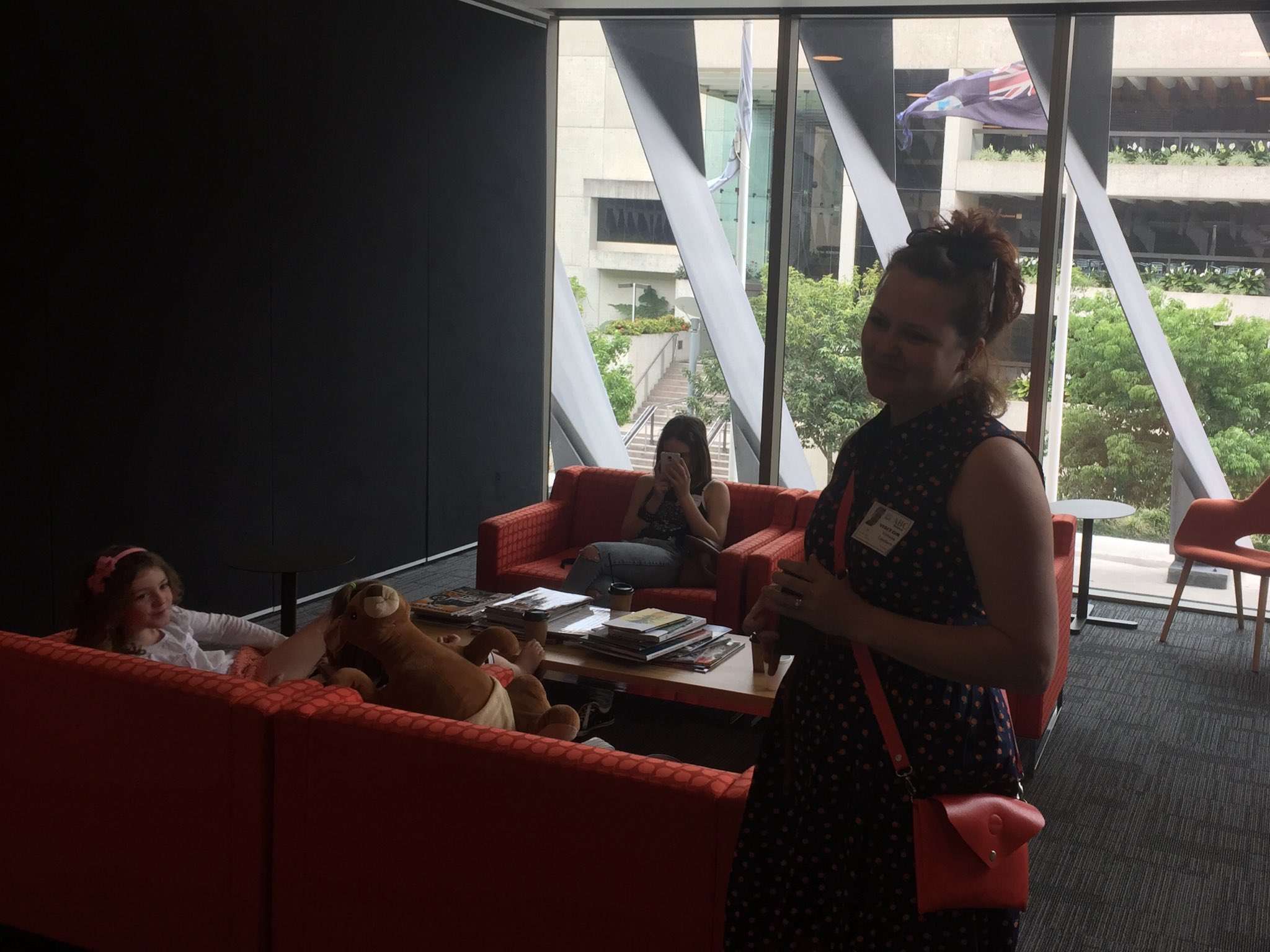
Photo by Vikki Lambert, excited and a little fluttery.

On Sunday, October 9, I was invited by ABC Radio’s Rebecca Levingston to speak on her program Brisbane Weekends. It was a little nerve-wracking, being my first live interview for radio. I had a wonderful support squad, Emma Rusher, Vikki Lambert, Sylvie Dionysius (my daughter) and the lovely Harriet and Camille (who took a few selfies with the Bananas in Pyjamas).
For some time I’ve been listening to interviewees on radio shows, in particular Ratio National, with great attention to voice and process. I think I went okay, at the end of everything, the lovely producer gave me a bottle of water, and we chatted about Donald Trump – a great way to distract one’s nerves.

Rebecca and I had a great chat about taxidermy, A.S. Byatt, poetry, and historical research.

I survived, apart from one or two too many ‘ums’ – I will have to practise an intelligent pause for the future – but all in all it was an exciting experience. We had a debrief with lunch and coffee afterwards in a cafe on Grey Street, South Brisbane.

Photo by Emma Rusher, mums and kids in the green room.

Thanks to the awesome Emma Rusher at House of Rusher for making it happen, to my champion supporter Vikki Lambert and her sweet family, and of course, the wonderful team at the ABC.

You can listen to the podcast of the interview here:

https://soundcloud.com/612abcbrisbane/the-birdmans-wife

Interview

Good Reading Magazine interviews Melissa Ashley: Meet the woman responsible for John Gould’s Fame

Good Reading MagazineMelissa-Ashley-276x300.png

Elizabeth Gould’s artistry and technical skill as an illustrator breathed life into hundreds of newly discovered species, and was crucial modern ornithology and classification. She illustrated the species of finches that gave rise to Charles Darwin’s theory of evolution and produced hundreds of the lithographs of birds that made her husband, John, famous. In The Birdman’s Wife, Melissa Ashley has imagined the life of Elizabeth as a mother, birdwatcher and artist, giving well-deserved recognition to this incredible historical figure. Melissa tells gr about her passion for Australian birdlife, her dealings with taxidermy, and how falling in love with a poet lead her to write this book.

Why do you think Elizabeth Gould’s story and skill as an illustrator have been largely uncelebrated, and what made you decide to dedicate an entire book to rectifying this lack of recognition?

John Gould, the famous 19th ornithologist, created one of the most enduring brands in natural history as ‘The Birdman’ and the ‘father’ of Australian ornithology and is renowned for creating the most sublime images of birds the world had ever seen before. But few people know that his wife, Elizabeth Gould, was the artist who illustrated and designed more than 600 of the exquisite hand-coloured images he is famous for. Yet her legacy has been overshadowed by his fame. Almost two hundred years of analysis of John Gould and his contributions to ornithology and zoological illustration have created a colossal figure. Conversely, time and time again, Elizabeth has been consigned to his shadow. Elizabeth was viewed as either John Gould’s faithful and supportive wife, or his willing assistant and acolyte. Onto these interpretations were projected all kinds of stereotypical feminine qualities, that she was delicate, polite, elegant and deferent. Some critics even go so far as to suggest that she sacrificed her very life for her husband’s pursuits.

But the real Elizabeth was a woman of substance and a woman ahead of her time, juggling her work as an artist with her role as wife and mother to an ever-growing brood of children. Yet her creative output was extraordinary. She was a passionate and adventurous spirit, defying convention by embarking on a two-year expedition to the Australian colonies with her husband to collect and illustrate our unique birds and plants. At a time when the world was obsessed with discovering natural wonders, Elizabeth was as at its epicentre, working alongside legends like Edward Lear and Charles Darwin. Yet in many of the books about John Gould it would be impossible to find this woman. At last in The Birdman’s Wife I have been able to tell her amazing story and overturn some of the outdated misconceptions about her.

What motivated you to imagine and evoke Elizabeth’s life with fiction rather than as a biography?

It all started when I fell in love with a poet, and with his poem about a bird. We became avid birdwatchers together. Writers, too. When he rescued a ringneck parrot and we adopted it as a pet, a friend gave me a book about caring for parrots and a biography about John Gould. That was how I discovered that his wife, Elizabeth, created the beautiful images of birds he wrote about in his exquisitely illustrated folios. She was portrayed as such a shadowy figure yet her work as an artist was so key to his fame and the history of birds that I became enthralled with her. I began researching Elizabeth’s life in earnest and the more I learned about her, the more determined I became to uncover her story.

I’ve always loved stories about women who are overlooked by history, and I find creative artistic relationships fascinating – Frida Kahlo and Diego Rivera; Mary Shelley and Percy Bysshe Shelley; Robert and Elizabeth Barrett Browning – so Elizabeth and John Gould’s intimate creative relationship added an extra spark of interest. Elizabeth Gould was such an intriguing enigma that I became convinced that she would be the ideal protagonist for an historical novel and so I made her the subject of my PhD in creative writing. Writing a novel rather than biography allowed me to fill in the gaps of her narrative, to imagine and bring to life what it might have felt like to be a mother to six children, a busy career woman and an adventuress in the early 19th century. It’s not possible to achieve the level of lyricism and emotional depth I wanted to bring to the story in a biography. For me, it was never a question of writing biography. From the get-go I wanted to write a fictional reimagining and revitalisation of her incredible experiences and personality.

How did you go about imagining her voice and personality to the extent that you were able to focalise through her? What was she like?

180px-Elizabeth_Gould.jpg

I’m a researcher by training and I love nothing more than digging into files and archives. For Elizabeth’s story that meant 1830s London and Australia; ornithology, zoological illustration, voyages of exploration, childbearing practices. I came to a stage where I felt I had spent enough time with printed books. I needed to follow in the footsteps of my heroine and get out into the field, go birdwatching, learn bird-stuffing and, ideally, to handle archival materials that Elizabeth Gould made herself, which I was finally able to do in the State Library of NSW. The discovery of her letter book in John Gould’s papers helped me to make the jump from the biographical Elizabeth to imagining her emotional journey, her personal experiences and challenges, and finding her voice as the narrator of The Birdman’s Wife.

Elizabeth was a naïve young woman when she fell in love with a passionate and ambitious genius but she came into her own as a woman, an artist and a mother. She was fierce and loyal, a loving mother and a loving partner. She was a talented artist, with an artist’s flair not only for the visual but what lies beneath. She loved poetry and literature and the symbolism of birds rather than just the science behind them. Her letters showed she was was clever and witty, and her strength of character is clear in her ability to get on with life for the sake of her family after losing two of her children. Elizabeth’s experiences as a working mother will certainly resonate with many modern readers but her achievements, her warmth and humour, her loving nature and her willingness to take risks, so unusual for a woman of her time, make her an irresistible and exciting character for a novel.

What forms of research were the most useful in yielding details about Elizabeth? Did you discover anything that surprised you?

I researched by reading biographies, histories of the discovery of Australian birds, and also went on field trips to the Upper Hunter Valley and Hobart, where Elizabeth spent most of her two year expedition in Australia. Thanks to a travel grant from the University of Queensland, I was able to visit a little town in Kansas called Lawrence, where the largest Gouldian archive in the world is held. There I found countless resources, manuscripts, original versions of Elizabeth and John’s beautiful folios, and a swathe of correspondence from researchers into the Goulds’ lives. I discovered that the Goulds’ son, Charles, a character in The Birdman’s Wife, wrote a book called Mythical Monsters, where he tried to argue that creatures like the hydra and the gorgon had really existed and were now extinct. I also found documents related to the deaths of Elizabeth’s sons, John Henry Gould and Franklin Gould – characters in the novel as well – who both died of dysentery while at sea. They perished in separate incidents and the detailed reports from the chaplains and surgeons aboard their ships regarding the medicines and religious rites they received helped me to write about Elizabeth’s experience of childbed fever.

What do you think drew the Goulds – and yourself – to the investigation and illustration of birdlife?

My passion for birds and how they fascinate and inspire us. I am an avid birdwatcher and I am fascinated by antique etchings and prints of birds; I love the illustrations’ awkward grace. In 2004, the discovery of a cache of 56 paintings of Australian birds and plants by George Raper, a midshipman and navigator on the First Fleet, seized my imagination. The watercolour paintings were uncovered in England during an inventory of the estate of Lord Moreton, the Earl of Ducie. Intrigued by the illustration of a laughing kookaburra, one of the evaluators brought the buried collection to light. Once part of Sir Joseph Banks’ First Fleet materials, the collection had passed into the Ducie family and lain untouched for two hundred years. This was a truly astounding find. Although Raper’s paintings were naïve, his attention to the details and colours of the birds’ wings and feathers was extraordinary. By this time my birdwatching had intensified into a near obsession, and I began to travel great distances to encounter new species, which I would excitedly add to my ‘life list’, a record of birds seen for the very first time. The excitement of this pursuit led to me wonder what it might have felt like for George Raper and his fellow First Fleet bird enthusiasts’ when they encountered Australia’s unique birds, so utterly different to the species of Britain and Europe, for the first time.

The appeal of delving into Elizabeth Gould’s forgotten history, of trying to imagine how it must have felt for them to see, paint and collect species that had never been encountered before, connected to my own thrill when twitching a new species of bird for the first time. Elizabeth began illustrating birds for John well before they embarked on their publishing venture. So John was already aware of her great skill. The crucial experience for John and Elizabeth was meeting 18-year-old Edward Lear. The young artist was going to publish a monograph on parrots, vowing to illustrate every caged parrot in England. Upon viewing his magnificent lithographs of macaws and black cockatoos, Gould – already making a good living as a taxidermist and museum curator – became inspired to undertake his own publishing and illustrating venture, employing Elizabeth as his artist. Elizabeth was a crucial part of John’s enterprise from the very beginning. Indeed, I think it is safe to say that if Elizabeth wasn’t willing or such a skilled artist, Gould would never have attempted the project.

Are many of the species brought to life by Elizabeth’s artistry now extinct?

There are two that I can think of; the Norfolk Island Kaka, a ground parrot like the Kea from New Zealand. Never particularly abundant on the island – it had been hunted for food by Polynesians who travelled to Norfolk Island to gather food – as well as the starving penal colony that arrived on the island in 1788 and further decimated the scant population. The last kaka to perish was a caged pet, expiring in London in 1851. Elizabeth’s lithograph of the species is very special, both in an artistic and a scientific sense. Not only is the illustration utterly beautiful – it’s featured in the endpapers of The Birdman’s Wife – but it’s one of the last records of this extinct species.

The other is the Huia, a New Zealand endemic. This black, yellow-beaked bird was hunted to extinction thanks to a 19th century passion for its feathers, worn by women – like ostrich plumage – in their fashionable hats. King George was seen with a Huia feather in his hat, which ignited demand for the sleek black feathers. Although John Gould killed species for science, he only took what was needed. He strongly disapproved of using bird feathers for fashion. On his expedition to Australia he criticised the settlers’ cruel treatment of black swans, which were trapped and killed in large numbers for their downy under-feathers, for use in pillows and other insulation.

You learned to produce taxidermied bird skins at Queensland University –could you describe this process briefly? Do you view taxidermy as a rather morbid practice?

Not at all. A bit strange and smelly by all means. A strong stomach is required. I took a behind the scenes tour of the Queensland Museum’s zoological collection, thinking that this would be a great opportunity to view the scientific side of taxidermy, and also to see some taxidermied birds up close. The preparation of scientific birdskins for the musuem’s collections are carried out by volunteers. At the end of the tour, one of them challenged me to come along and learn more about taxidermy. And so I became a volunteer trainee bird-stuffer – as they referred to it in the 19th century – submitting myself to the pungent and visceral task of preparing scientific study skins.

I would enter the zoological vertebrate laboratory of a Wednesday morning and take up my stool at a shared worktable. Neatly arranged at my place was a stuffing kit—toothbrush, Dacron (more commonly used to stuff mattresses), paper towels, cornflour, clamps, forceps, scalpel, bonecrusher—and a plastic bag containing a thawed specimen from the museum’s enormous storage freezer: a black-shouldered kite, a barn owl or grey petrel, its thick skin making it easier to remove the body or ‘meat’, as Gould’s stuffers referred to a specimen’s tissue and bones. Slicing into skin, removing muscle and fat, separating joints and scraping ligaments from bone, with my hands and senses I learned the processes John Gould followed to prepare specimens for Elizabeth to sketch.

taxidermy

Which illustration of Elizabeth’s is the most brilliant?

I have to say my favourite illustration is the resplendent quetzal, a trogon from Central America. To this day the Guatemalans still name their currency after the species. Elizabeth illustrated the resplendent quetzal from a stuffed skin around 1836, and I devoted part of a chapter to exploring her almost mystical experience in attempting to capture and paint a faithful likeness of this incredible bird. Quetzals were believed to have magical qualities by the ancient Mayans and were revered as living gods. It was forbidden to kill a quetzal and only the most powerful chiefs were permitted to wear its glorious tapering tail feathers. High priests travelled into the remote cloud forests to capture the males and pluck tail feathers before releasing them to grow more.

It was a challenge to render the brilliance of the resplendent quetzal in words so I’m happy to say that readers of The Birdman’s Wife can fully appreciate the beauty it beauty by seeing Elizabeth’s painting in the endpapers. We have also featured it on a bookmark.

What are some of your favourite Australian bird species to observe? Is there a particularly rare species on your bird-watching bucket list that you’d be thrilled to spot in the wild?

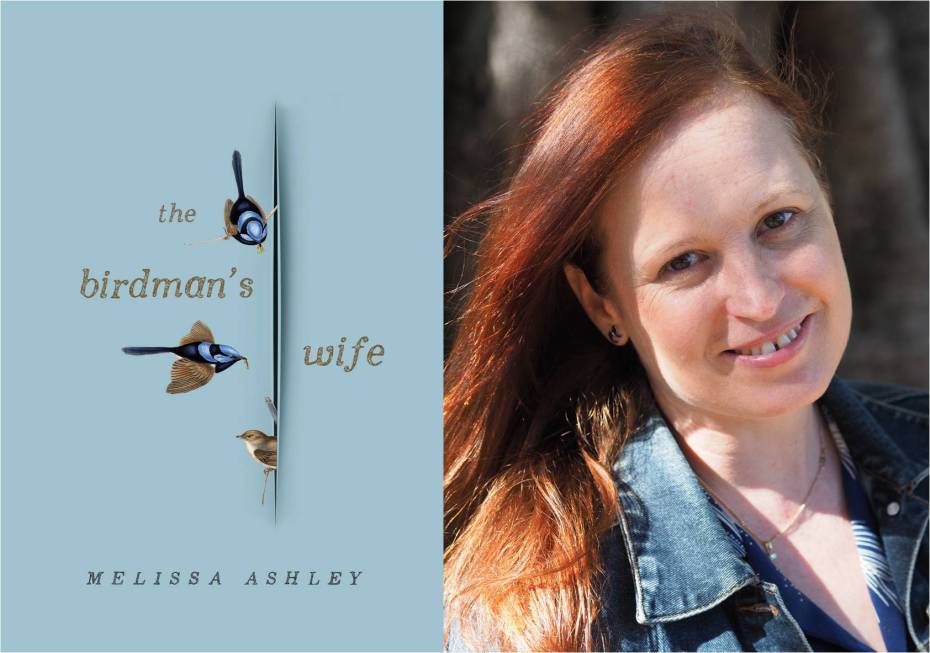
One of my favourite Australian birds, the beloved and easily recognisable superb fairy wren – the male has such an iridescent blue and black upper body – is featured as the cover of The Birdman’s Wife, as well as on the cloth cover of the case of the book.When researching the novel at the John Gould Ornithological Collection in the Spencer Research Library in Kansas, I came across the original pencil design that Elizabeth made of the beautiful species. I love the life in the lithograph, the male bringing a worm to the juvenile in its nest, and think it’s a great example of Elizabeth’s illustrative genius.

One of the most fun parts of birdwatching is using it as an excuse to travel to remote places. I once drove 800 kilometres west of Brisbane to a bird sanctuary to see four of our magnificently coloured arid parrots: the mulga, the ringneck, the pink cockatoo and Bourke’s parrot. I have a chapter in The Birdman’s Wife about a funny little bird known as the plains wanderer. It’s a rare species, found in arid South Australia, and has an ancient lineage with no living relatives. It was only recently, with the aid of DNA, analysis that ornithologists were able to agree upon its classification in the taxonomic tree of birds. I would dearly love to see this strange little critter in the wild.

13692655_10209613170342152_2518697375758487952_n.jpg

Could you share with us a favourite sentence or teaser paragraph from The Birdman’s Wife?

‘Drawing was my central preoccupation: perfecting my designs directed the compass of my hours. Pencils, my sloped desk, a study skin, its eyes replaced by cotton wool, were all the materials I required. The plumage brushed and set in place, I flipped the specimen onto its back and sketched the feet, imagining the creature flitting about, incubating eggs, defending territory. Later, as I grew accustomed to my subject’s morphology and was ready to experiment with composition, I mused on other thoughts. My mind drifted. For a time I was so taken by the work of looking – of switching my eyes from the materiality of the bill to the intricacy of the cere – little else existed. It was a kind of marvelling, because in trying to replicate a bird’s form with my brush, I came to admire and to know it. I painted and I studied and, in this constant striving, became me.” (pp. 329)

The Birdman’s Wife is published by Affirm Press.

Source: Meet the woman responsible for John Gould’s Fame Good Reading Magazine

https://goodreadingmagazine.wordpress.com/2016/10/05/meet-the-woman-responsible-for-john-goulds-fame/

Interview

AUTHOR OF THE MONTH: Melissa Ashley

AUSROM.jpg

Thank you ausromtoday.com for featuring me on your gorgeous website.

AUTHOR OF THE MONTH: Melissa Ashley What at first began as research for a PhD dissertation on Elizabeth Gould has now eventuated into your debut novel, The Birdman’s Wife. What sparked…

Source: AUTHOR OF THE MONTH: Melissa Ashley

Interview

The Next Big Thing: Reboot

Ten Questions from Inga Simpson, award-winning author of Mr Wigg, Nest and Where the Trees Were.  

The Interview

  1. What is the working title of your current/next book?

Elizabeth Gould: A Natural History

  1. Where did the idea come from?

My partner rescued a ring-neck parrot from a tennis court and a couple of bird-loving friends lent us a book about how to look after your pet parrot. They also gave me a biography of John Gould, the nineteenth century ornithologist and book publisher who classified Charles Darwin’s famous finches. In 1830 John Gould began publishing luxury folios of bird lithographs, employing his wife, Elizabeth, as principal artist.  Splashing his name all over the spine and cover, he gained most of the credit for his wife’s hard work, acknowledged in the fine print inside. In the late 1830s the Goulds, based in London, travelled to Australia to collect, describe and draw our bird species for the seven volume,Birds of Australia (1840-1848). Tragically, less than a year after Elizabeth’s return to England, she died in childbirth from puerperal fever. I closed Tree’s biography desperate to know more about Elizabeth’s incredible illustrations and tragically short life.

  1. What genre does your book fall under?

Historical fiction. It’s a fictional memoir, narrated by Elizabeth Gould, detailing the highlights and struggles of her career as a nineteenth century natural history artist.

  1. What actors would you choose to play the part of your characters in a movie rendition?

Emily Blunt as Elizabeth Gould, Jude Law as John Gould–he was a charming rascal.

  1. What is the one-sentence synopsis of your book?

A Victorian woman’s adventures illustrating the New World’s charismatic birds.  [Still fine-tuning this one!]

  1. Will your book be self-published or represented by an agency?

An agency.

  1. How long did it take to write your first draft?

About nine months. I’m now redrafting and revising.

  1. What other books would you compare this story to within your genre?

Tracy Chevalier’s ‘Remarkable Creatures’; A.S. Byatt’s ‘Morpho Eugenia’; Kate Grenville’s ‘Sarah Thornhill’; and, Patrick White’s ‘Voss‘.

  1. Who or what inspired you to write this book?

I felt strongly that Elizabeth’s story needed telling. The more l delved into her life, the more her husband’s reputation appeared to eclipse her extraordinary achievements. It seemed important to move Elizabeth out of John Gould’s reflective glare. Elizabeth devoted five years of her career to illustrating Australia’s unique birdlife. ‘The Birds of Australia’ was a massive project, eleven years in the making, with 681 beautifully illustrated plates. More than 200 new species were described. Elizabeth is acknowledged for designing and lithographing 84 plates, but I’ve found evidence that she composed designs for many more. What would Elizabeth’s artistic reputation be, I wonder, had she lived longer?

  1. What else about the book might pique the reader’s interest?

To write Elizabeth Gould’s fictional memoir I’ve carried out heaps of research–travelling to Kansas to view original drawings and designs; learning taxidermy–birds only–at the Queensland Museum. My next adventure will be to take a boat trip from Southport out to the continental shelf to photograph albatross and storm petrels up close. All of this, I hope, will give authenticity and texture to ‘Elizabeth Gould: A Natural History.’