In late October I had the pleasure of dropping in to Booktopia’s Sydney offices to sign copies of The Bee and the Orange Tree and to record a podcast with Ben Hunter and Olivia Fricot on delving into the life of 17th century French writer Marie Catherine d’Aulnoy.
Melissa Ashley is a writer, poet, birder and academic who tutors in poetry and creative writing at the University of Queensland. She has published a collection of poems, The Hospital for Dolls, short stories, essays and articles. Author of The Birdman’s Wife, Melissa is now back with The Bee and the Orange Tree, a beautifully lyrical and deeply absorbing portrait of a time, a place, and the subversive power of the imagination.
Booktopia’s Ben and Olivia sat down with Melissa to discuss her new book and where she got her inspiration from, history, her research and so much more.
Books mentioned in this podcast:
The Bee and the Orange Tree by Melissa Ashley —> bit.ly/34e8ppc
Hosts: Ben Hunter and Olivia Fricot
Guest: Melissa Ashley
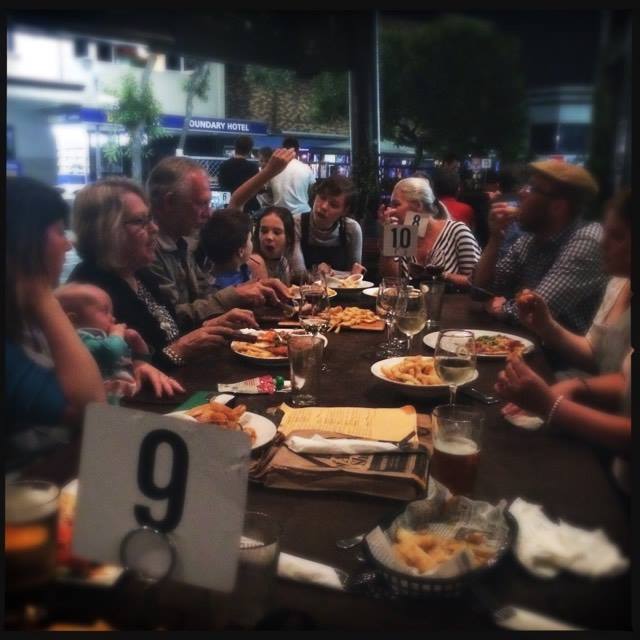
Thank you to everyone who came along to the launch of The Birdman’s Wife at Avid Reader. It was a wonderful evening with much love in the room. I had the time of my life!
I’ve posted the beautiful speech Inga Simpson wrote to launch The Birdman’s Wife into the world.
Launch speech for Melissa Ashley’s The Birdman’s Wife. 13 October 2016 Avid Reader by Inga Simpson
The glorious Inga Simpson of Where the Trees Were, Nest and Mr Wigg
Melissa’s beautiful book, The Birdman’s Wife, has already had a quite a bit of attention around the place but as we all know, a book isn’t really launched until it’s launched at Avid Reader, among friends and family and your fellow Queensland writers. So thank you to Avid for having us and to all of you for coming along.
A lot of you here already know Melissa but for those who don’t, she has began her writing life as a poet, publishing a collection called The Hospital For Dolls, which was very well received. She has also published stories, essays and articles. But luckily for us, she has made the move to novelist, realising that we have more fun, lead happier lives, and earn more money. She recently completed her PhD in creative writing and teaches at UQ. The Birdman’s Wife was part of that PhD. It is her first novel. And what a beautiful novel it is.
The extraordinary Fiona Henderson of Affirm Press who made it all happenever-calm Emma
I was was really chuffed when Melissa asked me to launch this book. Not just because I’m fond of birds but because I know this story. And I know what a journey it has been for Melissa: the research, the writing, and the book’s path to publication. I met Melissa at UQ. We were both doing PhDs, there was some common ground in our research, around natural history and environmentalism, and we had a supervisor in common, who thought we should talk. I’m really glad we did. As some of you know, doing a PhD is a major journey in itself, and part of the process – because it takes such a long time – seems to be the universe throwing you some major life events during your candidature just to see how much you can take. The upside is the conversation, camaraderie, support – the friendship of your fellow students. And I really admire Melissa’s strength in getting through her PhD journey, and am so pleased with this happy ending, that makes it all worthwhile, that this story, The Birdman’s Wife, has found its way out into the world.
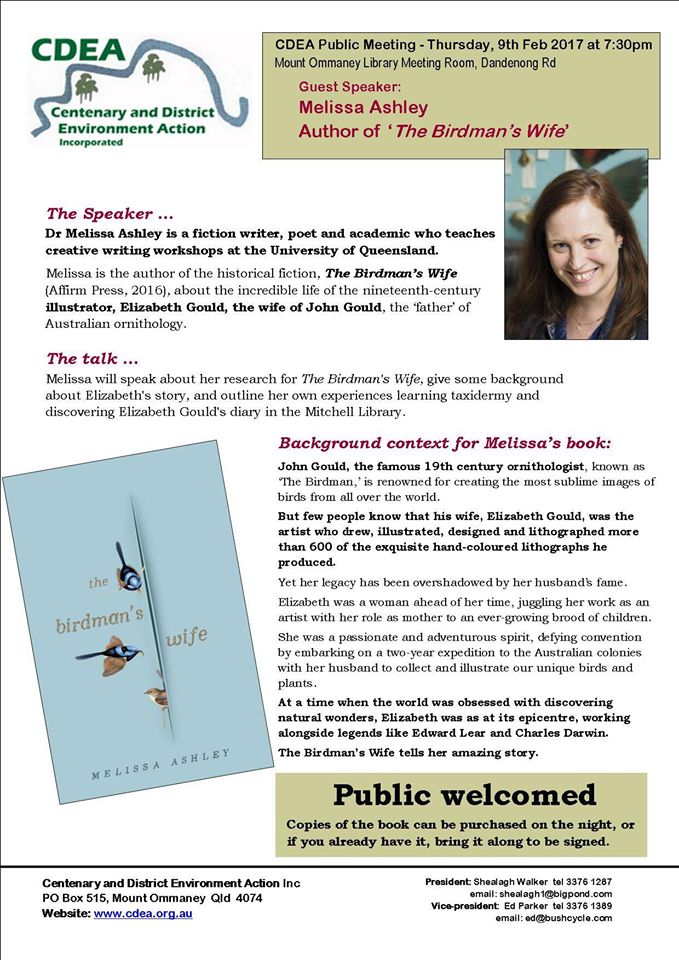
So the story. A Birdman’s Wife is a fictional biography of Elizabeth Gould, the wife of the famous 19th Century ornithologist, John Gould. He was and still is known worldwide as ‘The Birdman’ and ‘The Father of Australian Ornithology,’ renowned for creating the most detailed and beautiful hand-coloured lithographs of birds the world had seen. But few people know that his wife, Elizabeth, was the principal artist. It was Elizabeth who created more than 600 of the hand-coloured plates published in Gould’s luxury bird folios.
Vanessa Page making me giggle.
Like many of the birds Elizabeth drew, the more colourful male got all the glory and attention. The Birdman’s Wife pulls her out of the workroom and onto the world’s page. She was a remarkable artist, and a remarkable woman, ahead of her time. Elizabeth defied the conventions of the day, leaving behind her three youngest children to join John on a two year expedition to Australia to collect, study and illustrate our unique bird species.
In many ways this is a familiar story, a woman in the shadow of her husband, juggling her art with her roles as mother, wife, business partner. It still resonates today. Finding the time and focus to write is still a struggle for many women, negotiated around other careers, and our roles as mothers, wives and partners. It’s still harder for us to believe in our work, in ourselves, and to put to ourselves in the spotlight.
Elizabeth Gould lived during a time when the world was obsessed with discovering and classifying the natural wonders of the new world. She was right at the centre of it, working with Edward Lear, John Gilbert, and Charles Darwin, who was so impressed by her art works that he invited her to illustrate his Galapagos finches.
Suzy, Tara and Lizzie, bookclub queens
I’m big on verbs, doing words, as effective description, and I couldn’t help but admire the way that so many of the verbs in this book relate to birds: winging, fluttering, flitting, flying, nesting, plucking. And in a book about a bird illustrator, that’s exactly as it should be.
Juliette Ashley, recording the fun
Melissa’s research for this book has been meticulous and extraordinary – paralleling the work Elizabeth put into her illustrations. The historical and natural history contexts and details, particularly in relation to birds, taxidermy, and her drawing and printing processes. Melissa actually learned taxidermy herself, which I’m hoping she’ll tell us a bit about.There are plenty of gloriously gruesome details in relation to taxidermy in the book: removing slivers of flesh, stuffing stomachs, and stitching up the holes left by shotgun pellets.
Fiona and James of Avid Reader holding down the fort
Melissa is a bit of twitcher, a birdwatcher that is, and her live bird descriptions are the highlight of this book for me. Just beautiful and again, a fitting match for Elizabeth’s drawings. From green parrots tottering across the grass warbling to each other as they dig for seed, to the superb fairy wren with his feet curled on a branch “like a miniature coat-hanger’s hook.” Melissa describes the male fairy wrens making high-pitched trills, while the females make “quieter weaving whispers” in response. And that’s so true of fairy wrens – but I wonder if it isn’t perhaps also a metaphor, too, for women artists.
There’s another parallel, I think, in the timing of this book. A tapping into the Zeitgeist. Like in Elizabeth Gould’s day, the world is currently very interested in natural history. Not so much discovering new species, but trying to stop them slipping into extinction. Trying to reconnect with nature.
Kids enjoying the night
So, although set during the 1800s, The Birdman’s Wife speaks to us today. Melissa has brought to life a voice from the past, Elizabeth Gould’s voice. This book has, at its heart, a sense of wonder at the natural world and for the creative process – of passion and creativity that needs to be expressed – just as fiercely by women as men.
After party at Archive
And on that note, I’d like to call Melissa into the spotlight, and declare The Birdman’s Wife officially launched!
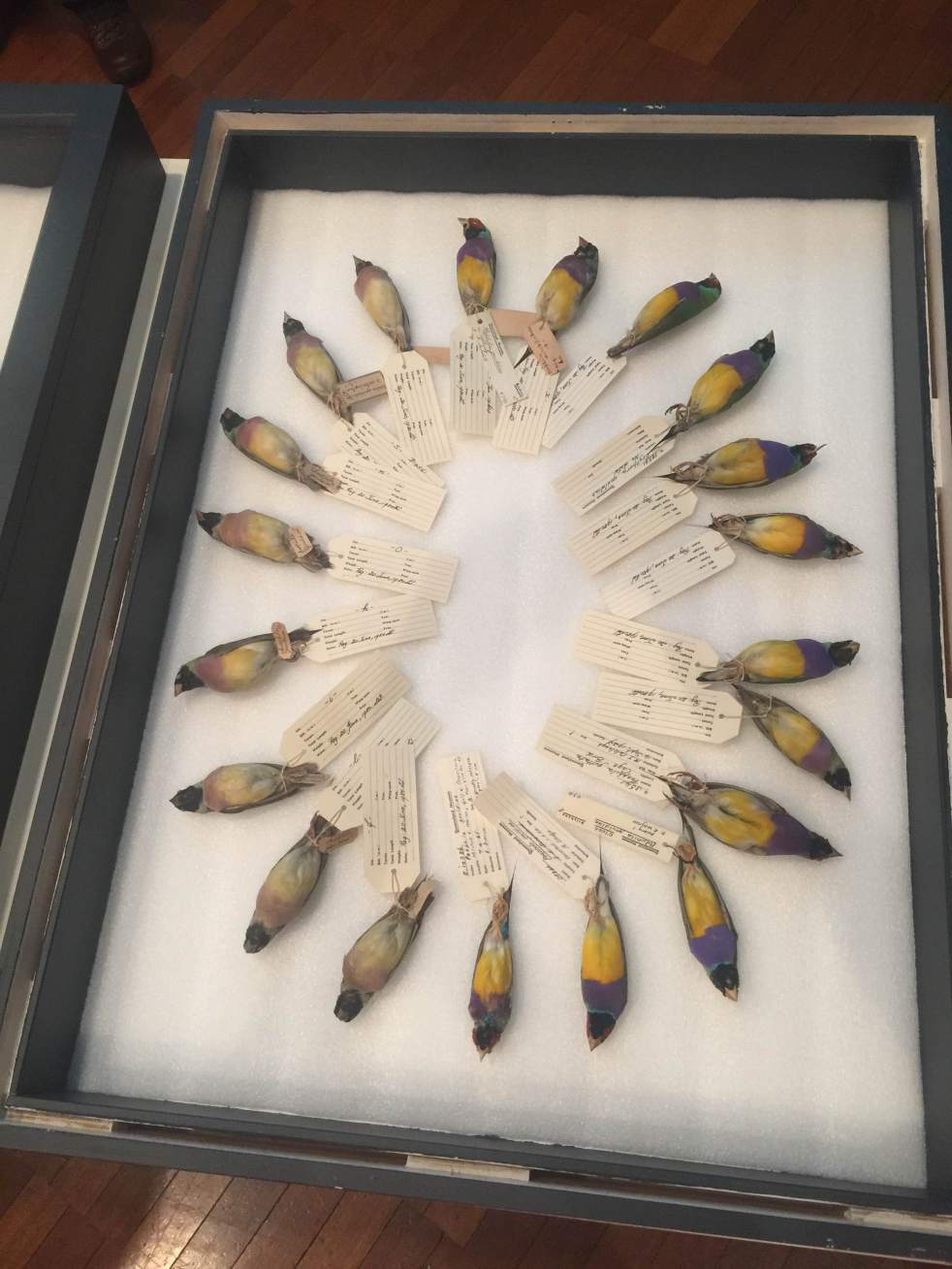
The Zoological Vertebrate Library photo by Emma Rusher
I’m excited to be at the Queensland Museum today because it’s here that I discovered a treasure trove of incredible sources that helped me bring to life Elizabeth Gould, the heroine of my book, The Birdman’s Wife. Along with discovering the Museum’s archival materials, my association with the museum led to the opportunity to meet one of Elizabeth Gould’s descendants. So the museum’s a very special place to me.
John Gould, the famous 19th ornithologist, known worldwide as ‘The Birdman’ and ‘The Father of Australian Ornithology,’ is renowned for creating the most sublime hand-coloured lithographs of birds the world has ever seen. But few people know that his wife, Elizabeth Gould, acted as his principal artist during the first 11 years of the family business. It was Elizabeth who created more than 600 of the hand-coloured plates published in his luxury bird folios. Yet her legacy has been overshadowed by her husband’s fame. Not only did John Gould’s name feature as the author of the folios the couple produced, but he co-signed his name to all of Elizabeth’s plates. Hence, today, many people assume he was the artistic genius who brought so many amazing birds to life.
Presenting my talk, photo by Emma Rusher
Although born in the early 1800s, in some ways Elizabeth’s experiences parallel those of women today. She can easily be related to, juggling a successful career, and taking up her roles as wife, business partner and mother to a brood of seven children. She was also a passionate adventurer and, despite her demanding and ambitious husband, came into her own as a successful artist. With great courage, Elizabeth defied the conventions of her time, parting from her three youngest children to join John on a two year expedition, voyaging from England to Australia to collect, study and describe our wonderful bird species.
At a time when the old world was obsessed with discovering and classifying the natural wonders of the new world, Elizabeth was as at its glittering epicentre. She worked alongside legends like Edward Lear and Charles Darwin — who was so impressed by her art works that he invited her to illustrate his famous Galapagos finches.
Yet, it’s only within books celebrating her husband’s life and works that Elizabeth can be found. And she’s usually portrayed as a shadowy figure, an assistant or supportive partner to her husband. At last, in The Birdman’s Wife I can tell her amazing story. While I have written a work of fiction, it is based on meticulous research. A feat that could not have been achieved without the help and dedication of organisations like the Queensland Museum.
Hand-coloured lithograph of grey fantail and text by Kali Napier
Birds have always fascinated me as a writer, which over time, led me to a birdwatching hobby. This in turn created an interest in antique bird drawings and paintings. A friend loaned me a biography of John Gould, and it was within its pages that I first learned of his wife, Elizabeth. Her life gripped a hold of my writer’s imagination, and I started to delve further into her story.
The more I searched, the more I wanted to discover. I decided that my interest in Elizabeth’s extraordinary life would be shared by many readers, and so I enrolled in a PhD in creative writing, and set out to reimagine her as the narrator of the historical fiction, The Birdman’s Wife.
As with any such project, research was the most important first step and I spent months swamped in correspondence, diaries and biographies. But there came a time when I felt the need to connect in a more tactile way with Elizabeth’s world. Along with birdwatching and field trips to Tasmania and the Upper Hunter Valley, where the Goulds’ Australian expedition took them. I visited museums and libraries to view and handle original manuscripts, diaries and hand-painted lithographs. As part of my ‘field’ research, I took a behind-the-scenes tour of the Museum’s animal collections.
Behind-the-scenes at the QLD Museum photo by Cass Moriarty
Curator, Heather Janetski showed me the vertebrate laboratory, where each Wednesday a group of dedicated volunteers gathers to prepare scientific study skins of marsupials and birds. I responded to this novel environment with pricked ears – it was rich ground for my writer’s imagination. At the conclusion of the tour, one of the volunteers challenged me to return the following week and try my hand at making a stuffed birdskin myself. Surprised at the suggestion, I thought about it and realised what a good idea it was, and signed up to become a Wednesday volunteer.
Feather Board, photo by Cass Moriarty
And so I submitted myself to the visceral task of preparing scientific study skins. When I arrived at the lab, I would tie on an apron, don rubber gloves and make my way to the stuffing kit that had been laid out like a fancy dinner setting on the long workbench. Like gleaming cutlery, neatly arranged at my place-setting was a toothbrush, Dacron (more commonly used to stuff mattresses), paper towels, cornflour, clamps, forceps, scalpel and bonecrusher. And the “meal” itself: a ziplock bag containing a thawed specimen dug out of the museum’s storage freezer. Slicing into skin, removing muscle and fat, separating joints and scraping ligaments from bone, with my hands and senses I learned the processes John Gould followed to prepare specimens for Elizabeth to sketch.
Jan, a long-time volunteer at the QLD Museum, working on a whistling duck alongside a jabiru. Photo by Emma Rusher
While removing the ‘meat’ of a barn owl or black-shouldered kite – which was how Gould’s stuffers referred to a specimen’s tissue – I was treated to entertaining stories of volunteers collecting road kill to bring to the museum for preservation, and dramas in the field involving somebody almost falling into a rotting whale carcass washed up on a beach. And, in one of those wonderful little miracles that occur when you least expect it, Jan a long-term volunteer, introduced me to a fellow member of her bookclub, Jenny Crawford, who was married to a descendent of Elizabeth Gould. Jenny and her husband Bruce, who sadly passed away recently, invited me to lunch at their home to share their personal collection of Gouldian treasures with me. They showed me photographs of the homestead ‘Yarrundi’, still standing, where Elizabeth stayed with her brother, Stephen Coxen, and which features so prominently in The Birdman’s Wife. They told me tales about their ancestor, Henry Coxen, who was nicknamed ‘Gammy Coxen,’ because of an injury to his hand, incurred in a shooting accident. Best of all, believing like me, that John Gould had taken his fair share of the limelight, they enthusiastically supported my project of bringing Elizabeth Gould’s life to light.
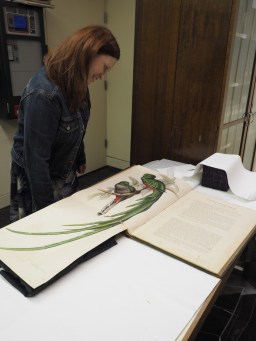
Resplendent Quetzal hand-coloured lithograph QLD Museum library photo by Vikki Lambert
The Queensland Museum’s library treated me to an unforgettable experience of viewing one of their most precious folios. Their rare monograph of the trogan family contains one of the most beautiful hand-coloured lithographs Elizabeth produced, that of the resplendent quetzal. The quetzal forms a key scene in The Birdman’s Wife and also featured in its endpapers. If fact, it is so beautiful, Affirm Press turned it into a bookmark. The lithograph was highly unusual for its time, in that two folio-sized sheets were joined together in order to show off its magnificent tail. As you can see, Elizabeth’s hand-coloured lithograph does full justice to the quetzal’s bizarre, unforgettable form. Along with her incredible drawing, she used a technique of applying powdered metallic dust to the completed watercolour, to capture the iridescence of the quetzal’s plumage when caught in changing light.
In writing The Birdman’s Wife, I enjoyed portraying the exhilaration Elizabeth must have felt creating such a masterpiece. How impatient, how excited she must have been to share her exquisite plate with the bird aficionados who subscribed to the folios the Goulds’ produced.
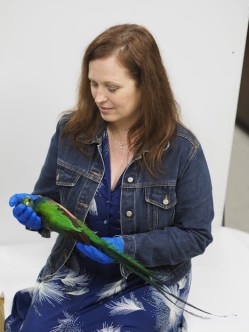
Holding the precious 19th century resplendent quetzal study skin, photo by Vikki Lambert
As an extra treat, Heather Janetski retrieved a precious study skin of the resplendent quetzal from the museum’s zoological collection for me to photograph. The fragile specimen was collected in the 1870s, its faded field tag penned in a careful, flowing script. To prevent insect infestation, 19th century taxidermist’s used a lethal combination of arsenic and lead; thus in handling the skin, I had to wear gloves. I had the oddest sensation cradling the resplendent quetzal specimen, it felt as if I was nursing a days-old infant. Which relates in a lovely way to John Gould’s observation in the text accompanying Elizabeth Gould’s wonderful plate – that male and female quetzals are said to mewl across their forest canopies during mating season, making a sound like a newborn child.
For me, researching and writing Elizabeth Gould’s fictional memoir was a kind of archaeology. I had to uncover enough layers to feel confident to write the narrative of her interior emotional life. Two hundred years of analysis of John Gould and his contributions to ornithology and zoological illustration have created a luminous figure, a colossus even. But time and again, Elizabeth is consigned to his shadow. Biographical descriptions of Elizabeth represent her as her husband’s obedient servant or supportive wife. And, maybe because she lived in Victorian times, all sorts of passive qualities were projected onto the sort of person she might have been: delicate, polite, elegant and deferent. Indeed, a few of John Gould’s biographers’ even suggested that she sacrificed her very life following her husband’s pursuits. Actually, she died in childbirth. Perhaps, more than anything else, in writing The Birdman’s Wife, I set out to overturn these outdated notions. To me, Elizabeth Gould was a woman well-ahead of her time, a person many of us would like to befriend. She was tenacious, courageous, resilient, fiercely loving, talented and adventurous. And it’s high time the spotlight was turned on her adventurous life.
The girls: Many thanks to Cass Moriarty, Kali Napier and Taylor-Jayne Wiltshire for blogging and tweeting the event.



 Thank you to everyone who came along to the launch of The Birdman’s Wife at Avid Reader. It was a wonderful evening with much love in the room. I had the time of my life!






 Melissa Ashley